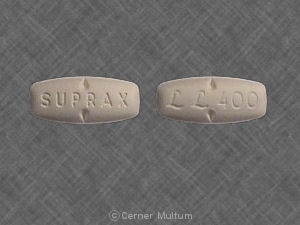
Suprax contains cefixime, a broad-spectrum bactericidal antibacterial agent, and is registered in 17 countries across Europe, the Middle East, North Africa, the Caucasus, and East Asia. The brand is used in the management of a range of bacterial infections rather than confined to a single therapy area.
The indications registered for Suprax include respiratory infections such as bronchitis and pneumonia, urinary tract infections, middle ear infections including chronic forms, and gonorrhoea. As a broad-spectrum antibacterial, cefixime is used where the suspected or confirmed pathogen is sensitive to its mechanism — the structured indication block further down this page lists each registered use in detail for the markets where Suprax is sold.
The country list points to a footprint shaped more by regional regulatory history than by any single market. Suprax is encountered by travellers and expatriates in places as varied as Canada, Egypt, Russia, Italy, China, Turkey, and Lebanon, with packaging, prescription pathways, and pack sizes varying considerably from one jurisdiction to another. A patient who has been prescribed Suprax in one country and is travelling or relocating to another may find the same brand on the shelf, a different cefixime-containing brand, or a locally produced generic.
Other antibacterial agents in the broader bactericidal category exist worldwide under different molecules and brand names, and they are not freely interchangeable — antibiotic selection depends on the specific infection, local resistance patterns, and individual clinical context. A local pharmacist can confirm regional brand names for cefixime, but the decision to start, continue, or substitute any antibacterial therapy belongs with a prescribing healthcare provider.