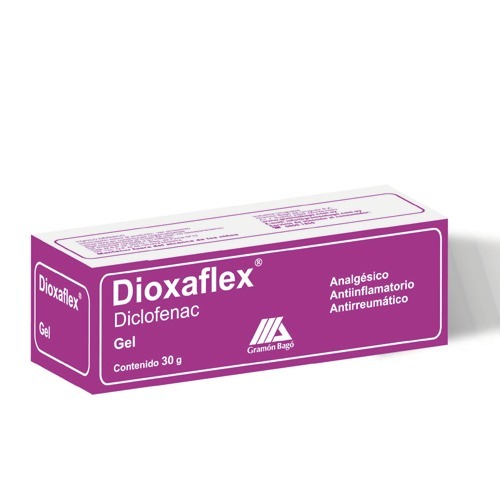
Dioxaflex contains diclofenac, a nonsteroidal anti-inflammatory, and is registered in 10 countries clustered almost entirely across Latin America. The country list — running through Argentina, Peru, Ecuador, Panama, Guatemala, and several other Central American markets — points to a brand that has built its footprint regionally rather than as a global label.
Diclofenac itself is one of the most widely prescribed non-steroidal anti-inflammatory ingredients in the world, used for the management of pain and inflammation across a broad range of indications. Dioxaflex is prescribed in connection with general pain, headache, neuralgia, backache, bursitis, and inflammatory joint conditions including rheumatoid arthritis and ankylosing spondylitis, as well as for symptomatic relief in influenza-associated discomfort. The structured indication block further down this page lists the registered uses recognised in the markets where Dioxaflex is sold.
For travellers and expatriates, the practical point is that the Dioxaflex brand is largely a Latin American label. A patient who has been using it in Argentina or Peru and then travels to Europe, North America, Asia, or Africa will generally not find the same brand on a pharmacy shelf — but diclofenac as an active ingredient is available in essentially every regulated market in the world, often under several different brand names and in several different formulations.
Other ingredients in the broader non-steroidal anti-inflammatory category are also distributed globally, although molecules within the class are not freely interchangeable. A local pharmacist in the destination country is the right starting point for identifying a diclofenac-containing equivalent or a comparable product in the same class. Decisions about starting, switching, or continuing anti-inflammatory therapy — particularly for chronic conditions like rheumatoid arthritis or ankylosing spondylitis — belong with the prescribing healthcare provider rather than with the pharmacy counter.