Overdose
Overdosage of cephalosporins can cause cerebral irritation leading to convulsions. Ceftibuten is readily dialyzable and significant quantities (65% of plasma concentrations) can be removed from the circulation by a single hemodialysis session. Information does not exist with regard to removal of ceftibuten by peritoneal dialysis.
Contraindications
CEDAX (ceftibuten) is contraindicated in patients with known allergy to the cephalosporin group of antibiotics.
Undesirable effects
Clinical Trials
CEDAX (ceftibuten) CAPSULES (adult patients)
In clinical trials, 1728 adult patients (1092 US and 636 international) were treated with the recommended dose of ceftibuten capsules (400 mg per day). There were no deaths or permanent disabilities thought due to drug toxicity in any of the patients in these studies. Thirty-six of 1728 (2%) patients discontinued medication due to adverse events thought by the investigators to be possibly, probably, or almost certainly related to drug toxicity. The discontinuations were primarily for gastrointestinal disturbances, usually diarrhea, vomiting, or nausea. Six of 1728 (0.3%) patients were discontinued due to rash or pruritus thought related to ceftibuten administration.
In the US trials, the following adverse events were thought by the investigators to be possibly, probably, or almost certainly related to ceftibuten capsules in multipledose clinical trials (n = 1092 ceftibuten-treated patients).
ADVERSE REACTIONS
CEFTIBUTEN CAPSULES
US CLINICAL
TRIALS IN ADULT PATIENTS (n = 1092) |
| Incidence equal to or greater than 1% |
Nausea |
4% |
| Headache |
3% |
| Diarrhea |
3% |
| Dyspepsia |
2% |
| Dizziness |
1% |
| Abdominal pain |
1% |
| Vomiting |
1% |
| Incidence less than 1% but greater than 0.1% |
Anorexia, Constipation, Dry mouth, Dyspnea, Dysuria, Eructation,
Fatigue, Flatulence, Loose stools, Moniliasis, Nasal congestion, Paresthesia,
Pruritus, Rash, Somnolence, Taste perversion,Urticaria, Vaginitis |
|
LABORATORY VALUE CHANGES*
CEFTIBUTEN CAPSULES
US CLINICAL TRIALS IN ADULT PATIENTS |
| Incidence equal to or greater than 1% |
↑ BUN |
4% |
| ↑ Eosinophils |
3% |
| ↓ Hemoglobin |
2% |
| ↑ALT (SGPT) |
1% |
| ↑ Bilirubin |
1% |
| Incidence less than 1% but greater than 0.1% |
↑ Alk phosphatase |
|
| ↑ Creatinine |
|
| ↑ Platelets |
|
| ↓Platelets |
|
| ↓ Leukocytes |
|
| ↑ AST (SCOT) |
|
| * Changes in laboratory values with possible clinical significance
regardless of whether or not the investigator thought that the change was
due to drug toxicity. |
CEDAX (ceftibuten) ORAL SUSPENSION (pediatric patients)
In clinical trials, 1152 pediatric patients (772 US and 380 international), 97% of whom were younger than 12 years of age, were treated with the recommended dose of ceftibuten (9 mg/kg once daily up to a maximum dose of 400 mg per day) for 10 days. There were no deaths, life-threatening adverse events, or permanent disabilities in any of the patients in these studies. Eight of 1152 ( < 1%) patients discontinued medication due to adverse events thought by the investigators to be possibly, probably, or almost certainly related to drug toxicity. The discontinuations were primarily (7 out of 8) for gastrointestinal disturbances, usually diarrhea or vomiting. One patient was discontinued due to a cutaneous rash thought possibly related to ceftibuten administration.
In the US trials, the following adverse events were thought by the investigators to be possibly, probably, or almost certainly related to ceftibuten oral suspension in multipledose clinical trials (n = 772 ceftibuten-treated patients).
ADVERSE REACTIONS
CEFTIBUTEN ORAL SUSPENSION
US CLINICAL TRIALS IN PEDIATRIC PATIENTS (n = 772) |
| Incidence equal to or greater than1% |
Diarrhea* |
4% |
| Vomiting |
2% |
| Abdominal pain |
2% |
| Loose stools |
2% |
| Incidence less than 1% but greater than 0.1% |
Agitation, Anorexia, Dehydration, Diaper dermatitis, Dizziness, Dyspepsia,
Fever, Headache, Hematuria, Hyperkinesia, Insomnia, Irritability, Nausea,
Pruritus, Rash, Rigors, Urticaria |
|
| * NOTE: The incidence of diarrhea in pediatric patients ≤ 2
years old was 8% (23/301) compared with 2% (9/471) in pediatric patients
> 2 years old. |
LABORATORY VALUE CHANGES*
CEFTIBUTEN ORAL SUSPENSION
US CLINICAL
TRIALS IN PEDIATRIC PATIENTS |
| Incidence equal to or greater than1% |
↑ Eosinophils |
3% |
| ↑ BUN |
2% |
| ↓ Hemoglobin |
1% |
| ↑ Platelets |
1% |
| Incidence less than 1% but greater than 0.1% |
↑ ALT (SGPT) |
|
| ↑ AST (SCOT) |
|
| ↑ Alk phosphatase |
|
| ↑ Bilirubin |
|
| ↑ Creatinine |
|
| * Changes in laboratory values with possible clinical significance regardless
of whether or not the investigator thought that the change was due to
drug toxicity.
|
In Post-marketing Experience
The following adverse experiences have been reported during worldwide post-marketing surveillance: aphasia, jaundice, melena, psychosis, serum sickness-like reactions, stridor, Stevens-Johnson syndrome, and toxic epidermal necrolysis.
Cephalosporin-class Adverse Reactions
In addition to the adverse reactions listed above that have been observed in
patients treated with ceftibuten capsules, the following adverse events and
altered laboratory tests have been reported for cephalosporin-class antibiotics:
allergic reactions, anaphylaxis, drug fever, Stevens-Johnson syndrome, renal
dysfunction, toxic nephropathy, hepatic cholestasis, aplastic anemia, hemolytic
anemia, hemorrhage, false-positive test for urinary glucose, neutropenia, pancytopenia,
and agranulocytosis. Pseudomembranous colitis; onset of symptoms may occur during
or after antibiotic treatment (see WARNINGS).
Several cephalosporins have been implicated in triggering seizures, particularly
in patients with renal impairment when the dosage was not reduced (see DOSAGE
AND ADMINISTRATION and OVERDOSAGE). If seizures associated with drug
therapy occur, the drug should be discontinued. Anticonvulsant therapy can be
given if clinically indicated.
Therapeutic indications
CEDAX (ceftibuten) is indicated for the treatment of individuals with mild-to-moderate
infections caused by susceptible strains of the designated microorganisms in
the specific conditions listed below (see DOSAGE AND ADMINISTRATION and
Clinical Studies sections).
Acute Bacterial Exacerbations of Chronic Bronchitis due to Haemophilus
influenzae (including β-lactamase-producing strains), Moraxella catarrhalis
(including β-lactamase-producing strains), or Streptococcus pneumoniae
(penicillin-susceptible strains only).
NOTE: In acute bacterial exacerbations of chronic bronchitis clinical
trials where Moraxella catarrhalis was isolated from infected sputum
at baseline, ceftibuten clinical efficacy was 22% less than control.
Acute Bacterial Otitis Media due to Haemophilus influenzae (including
β-lactamase-producing strains), Moraxella catarrhalis (including
β-lactamase-producing strains), or Streptococcus pyogenes.
NOTE: Although ceftibuten used empirically was equivalent to comparators
in the treatment of clinically and/or microbiologically documented acute otitis
media, the efficacy against Streptococcus pneumoniae was 23% less than
control. Therefore, ceftibuten should be given empirically only when adequate
antimicrobial coverage against Streptococcus pneumoniae has been previously
administered.
Pharyngitis and Tonsillitis due to Streptococcus pyogenes.
NOTE: Only penicillin by the intramuscular route of administration has
been shown to be effective in the prophylaxis of rheumatic fever. Ceftibuten
is generally effective in the eradication of Streptococcus pyogenes from
the oropharynx; however, data establishing the efficacy of the CEDAX (ceftibuten) product
for the prophylaxis of subsequent rheumatic fever are not available.
Pharmacokinetic properties
Absorption
Cedax Capsules
Ceftibuten is rapidly absorbed after oral administration of CEDAX (ceftibuten) Capsules. The plasma concentrations and pharmacokinetic parameters of ceftibuten after a single 400-mg dose of CEDAX (ceftibuten) Capsules to 12 healthy adult male volunteers (20 to 39 years of age) are displayed in the table below. When CEDAX (ceftibuten) Capsules were administered once daily for 7 days, the average Cmax was 17.9 µg/mL on day 7. Therefore, ceftibuten accumulation in plasma is about 20% at steady state.
Cedax Oral Suspension
Ceftibuten is rapidly absorbed after oral administration of CEDAX (ceftibuten) Oral Suspension. The plasma concentrations and pharmacokinetic parameters of ceftibuten after a single 9-mg/kg dose of CEDAX (ceftibuten) Oral Suspension to 32 fasting pediatric patients (6 months to 12 years of age) are displayed in the following table:
| Parameter |
Average Plasma Concentration (in µg/mL of ceftibuten after a single
400-mg dose) and Derived Pharmacokinetic Parameters (± 1 SD)
(n = 12 healthy adult males) |
Average Plasma Concentration (in µg/mL of ceftibuten after a single
9-mg/kg dose) and Derived Pharmacokinetic Parameters (± 1 SD)
(n = 32 pediatric patients) |
| 1.0 h |
6.1 (5.1) |
9.3 (6.3) |
| 1.5 h |
9.9 (5.9) |
8.6 (4.4) |
| 2.0 h |
11.3(5.2) |
11.2(4.6) |
| 3.0 h |
13.3(3.0) |
9.0 (3.4) |
| 4.0 h |
11.2(2.9) |
6.6(3.1) |
| 6.0 h |
5.8(1.6) |
3.8 (2.5) |
| 8.0 h |
3.2(1.0) |
1.6(1.3) |
| 12.0 h |
1.1 (0.4) |
0.5 (0.4) |
| Cmax, µg/mL |
15.0(3.3) |
13.4(4.9) |
| Tmax, h |
2.6 (0.9) |
2.0(1.0) |
| AUC, µg•h/mL |
73.7(16.0) |
56.0(16.9) |
| T½, h |
2.4 (0.2) |
2.0 (0.6) |
| Total body clearance (CI/F) mL/min/kg |
1.3(0.3) |
2.9 (0.7) |
The absolute bioavailability of CEDAX (ceftibuten) Oral Suspension has not been determined. The plasma concentrations of ceftibuten in pediatric patients are dose proportional following single doses of CEDAX (ceftibuten) Capsules of 200 mg and 400 mg and of CEDAX (ceftibuten) Oral Suspension between 4.5 mg/kg and 9 mg/kg.
Distribution
Cedax (ceftibuten) Capsules
The average apparent volume of distribution (V/F) of ceftibuten in 6 adult subjects is 0.21 L/kg (± 1 SD = 0.03 L/kg).
Cedax (ceftibuten) Oral Suspension
The average apparent volume of distribution (V/F) of ceftibuten in 32 fasting pediatric patients is 0.5 L/kg (± 1 SD = 0.2 L/kg).
Protein Binding
Ceftibuten is 65% bound to plasma proteins. The protein binding is independent of plasma ceftibuten concentration.
Tissue Penetration
Bronchial secretions
In a study of 15 adults administered a single 400-mg dose of ceftibuten and scheduled to undergo bronchoscopy, the mean concentrations in epithelial lining fluid and bronchial mucosa were 15% and 37%, respectively, of the plasma concentrations.
Sputum
Ceftibuten sputum levels average approximately 7% of the concomitant plasma ceftibuten level. In a study of 24 adults administered ceftibuten 200 mg bid or 400 mg qd, the average Cmax in sputum (1.5 µg/mL) occurred at 2 hours post dose and the average Cmax in plasma (17 µg/mL) occurred at 2 hours post dose.
Middle-ear fluid (MEF)
In a study of 12 pediatric patients administered 9 mg/kg, ceftibuten MEF area under the curve (AUC) averaged approximately 70% of the plasma AUG. In the same study, Cmax values were 14.3 ± 2.7 µg/mL in MEF at 4 hours post dose and 14.5 ± 3.7 µg/mL in plasma at 2 hours post dose.
Tonsillar tissue
Data on ceftibuten penetration into tonsillar tissue are not available.
Cerebrospinal fluid
Data on ceftibuten penetration into cerebrospinal fluid are not available.
Metabolism and Excretion
A study with radio labeled ceftibuten administered to 6 healthy adult male volunteers
demonstrated that cis-ceftibuten is the predominant component in both
plasma and urine. About 10% of ceftibuten is converted to the trans-isomer.
The trans-isomer is approximately 1/8; as antimicrobially potent as the
cis-isomer.
Ceftibuten is excreted in the urine; 95% of the administered radioactivity
was recovered either in urine or feces. In 6 healthy adult male volunteers,
approximately 56% of the administered dose of ceftibuten was recovered from
urine and 39% from the feces within 24 hours. Because renal excretion is a significant
pathway of elimination, patients with renal dysfunction and patients undergoing
hemodialysis require dosage adjustment (see DOSAGE AND ADMINISTRATION).
Food Effect on Absorption
Food affects the bioavailability of ceftibuten from CEDAX (ceftibuten) Capsules and CEDAX (ceftibuten) Oral Suspension.
The effect of food on the bioavailability of CEDAX (ceftibuten) Capsules was evaluated in 26 healthy adult male volunteers who ingested 400 mg of CEDAX (ceftibuten) Capsules after an overnight fast or immediately after a standardized breakfast. Results showed that food delays the time of Cmax by 1.75 hours, decreases the Cmax by 18%, and decreases the extent of absorption (AUC) by 8%.
The effect of food on the bioavailability of CEDAX (ceftibuten) Oral Suspension was evaluated
in 18 healthy adult male volunteers who ingested 400 mg of CEDAX (ceftibuten) Oral Suspension
after an overnight fast or immediately after a standardized breakfast. Results
obtained demonstrated a decrease in Cmax of 26% and an AUC of 17% when CEDAX (ceftibuten)
Oral Suspension was administered with a high-fat breakfast, and a decrease in
Cmax of 17% and an AUC of 12% when CEDAX (ceftibuten) Oral Suspension was administered with
a low-calorie nonfat breakfast (see PRECAUTIONS).
Bioequivalence of Dosage Formulations
A study in 18 healthy adult male volunteers demonstrated that a 400-mg dose
of CEDAX (ceftibuten) Capsules produced equivalent concentrations to a 400-mg dose of CEDAX (ceftibuten)
Oral Suspension. Average Cmax values were 15.6 (3.1) µg/mL for the capsule
and 17.0 (3.2) µg/mL for the suspension. Average AUC values were 80.1
(14.4) µg•hr/mL for the capsule and 87.0 (12.2) µg•hr/mL
for the suspension.
Name of the medicinal product
Cedax
Fertility, pregnancy and lactation
Teratogenic effects - Pregnancy Category B
Ceftibuten was not teratogenic in the pregnant rat at oral doses up to 400
mg/kg/day (approximately 8.6 times the human dose based on mg/m2/day).
Ceftibuten was not teratogenic in the pregnant rabbit at oral doses up to 40
mg/kg/day (approximately 1.5 times the human dose based on mg/m2/day)
and has revealed no evidence of harm to the fetus. There are no adequate and
well-controlled studies in pregnant women. Because animal reproduction studies
are not always predictive of human response, this drug should be used during
pregnancy only if clearly needed.
Qualitative and quantitative composition
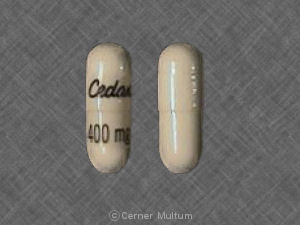
CEDAX Capsules, containing 400 mg of ceftibuten (as ceftibuten dihydrate) are white, opaque capsules imprinted with the product name and strength, are available as follows:
20 Capsules/Bottle (NDC 65224-800-22)
Store the capsules between 2° and 25°C (36° and 77°F).
Replace cap securely after each opening.
CEDAX (ceftibuten) Oral Suspension is an off-white to cream-colored powder that, when reconstituted
as directed, contains ceftibuten equivalent to 90 mg/5 mL or 180 mg/5 mL, supplied
as follows:
90 mg/5 mL
18 mg/mL 60-mL Bottle (NDC 65224-802-02)
18 mg/mL 90-mL Bottle (NDC 65224-802-03)
18 mg/mL 120-mL Bottle (NDC 65224-802-04)
180 mg/5 mL
36 mg/mL 30-mL Bottle (NDC 65224-804-30)
36 mg/mL 60-mL Bottle (NDC 65224-804-02)
Prior to reconstitution, the powder must be stored between 2° and 25°C
(36° and 77°F). Once it is reconstituted, the oral suspension is stable
for 14 days when stored in the refrigerator between 2° and 8°C (36°
and 46°F).
For inquires call 1-800-793-2145. Manufactured by Schering Corporation Miami Lakes, FL 33014, USA. Distributed
by Pernix Therapeutics, LLC Gonzales, LA 70737, USA. Revised 04/10
Special warnings and precautions for use
WARNINGS
BEFORE THERAPY WITH THE CEDAX (ceftibuten) PRODUCT IS INSTITUTED, CAREFUL INQUIRY SHOULD
BE MADE TO DETERMINE WHETHER THE PATIENT HAS HAD PREVIOUS HYPERSENSITIVITY REACTIONS
TO CEFTIBUTEN, OTHER CEPHALOSPORINS, PENICILLINS, OR OTHER DRUGS. IF THIS PRODUCT
IS TO BE GIVEN TO PENICILLIN-SENSITIVE PATIENTS, CAUTION SHOULD BE EXERCISED
BECAUSE CROSS HYPERSENSITIVITY AMONG BETA-LACTAM ANTIBIOTICS HAS BEEN CLEARLY
DOCUMENTED AND MAY OCCUR IN UP TO 10% OF PATIENTS WITH A HISTORY OF PENICILLIN
ALLERGY. IF AN ALLERGIC REACTION TO THE CEDAX (ceftibuten) PRODUCT OCCURS, DISCONTINUE THE
DRUG. SERIOUS ACUTE HYPERSENSITIVITY REACTIONS MAY REQUIRE TREATMENT WITH EPINEPHRINE
AND OTHER EMERGENCY MEASURES, INCLUDING OXYGEN, INTRAVENOUS FLUIDS, INTRAVENOUS
ANTIHISTAMINES, CORTICOSTEROIDS, PRESSOR AMINES, AND AIRWAY MANAGEMENT, AS CLINICALLY
INDICATED.
Pseudomembranous colitis has been reported with nearly all antibacterial
agents, including ceftibuten, and may range in severity from mild to life threatening.
Therefore, it is important to consider this diagnosis in patients who present
with diarrhea subsequent to the administration of antibacterial agents.
Treatment with antibacterial agents alters normal flora of the colon and may
permit overgrowth of clostridia. Studies indicate that a toxin produced by Clostridium
difficile is one primary cause of "antibiotic-associated colitis".
After the diagnosis of pseudomembranous colitis has been established, appropriate
therapeutic measures should be initiated. Mild cases of pseudomembranous colitis
usually respond to drug discontinuation alone. In moderate to severe cases,
consideration should be given to management with fluids and electrolytes, protein
supplementation, and treatment with an antibacterial drug clinically effective
against Clostridium difficile.
PRECAUTIONS
General
As with other broad-spectrum antibiotics, prolonged treatment may result in the possible emergence and overgrowth of resistant organisms. Careful observation of the patient is essential. If superinfection occurs during therapy, appropriate measures should be taken.
The dose of ceftibuten may require adjustment in patients with varying degrees
of renal insufficiency, particularly in patients with creatinine clearance less
than 50 mL/min or undergoing hemodialysis (see DOSAGE AND ADMINISTRATION).
Ceftibuten is readily dialyzable. Dialysis patients should be monitored carefully,
and administration of ceftibuten should occur immediately following dialysis.
Ceftibuten should be prescribed with caution to individuals with a history of gastrointestinal disease, particularly colitis.
Carcinogenesis, Mutagenesis, Impairment of Fertility
Long-term animal studies have not been performed to evaluate the carcinogenic
potential of ceftibuten. No mutagenic effects were seen in the following studies:
in vitro chromosome assay in human lymphocytes, in vivo chromosome
assay in mouse bone marrow cells, Chinese Hamster Ovary (CHO) cell point mutation
assay at the hypoxanthine-guanine phosphoribosyl transferase (HGPRT) locus,
and in a bacterial reversion point mutation test (Ames). No impairment of fertility
occurred when rats were administered ceftibuten orally up to 2000 mg/kg/day
(approximately 43 times the human dose based on mg/m2/day).
Pregnancy
Teratogenic effects - Pregnancy Category B
Ceftibuten was not teratogenic in the pregnant rat at oral doses up to 400
mg/kg/day (approximately 8.6 times the human dose based on mg/m2/day).
Ceftibuten was not teratogenic in the pregnant rabbit at oral doses up to 40
mg/kg/day (approximately 1.5 times the human dose based on mg/m2/day)
and has revealed no evidence of harm to the fetus. There are no adequate and
well-controlled studies in pregnant women. Because animal reproduction studies
are not always predictive of human response, this drug should be used during
pregnancy only if clearly needed.
Labor and Delivery
Ceftibuten has not been studied for use during labor and delivery. Its use during such clinical situations should be weighed in terms of potential risk and benefit to both mother and fetus.
Nursing Mothers
It is not known whether ceftibuten (at recommended dosages) is excreted in human milk. Because many drugs are excreted in human milk, caution should be exercised when ceftibuten is administered to a nursing woman.
Pediatric Use
The safety and efficacy of ceftibuten in infants less than 6 months of age has not been established.
Geriatric Patients
The usual adult dosage recommendation may be followed for patients in this age group. However, these patients should be monitored closely, particularly their renal function, as dosage adjustment may be required.
Dosage (Posology) and method of administration
The recommended doses of CEDAX (ceftibuten) Oral Suspension are presented in the table below.
CEDAX (ceftibuten) Oral Suspension must be administered at least 2 hours before or 1 hour
after a meal.
| Type of infection (as qualified in the INDICATIONS AND USAGE section
of this labeling) |
Daily Maximum Dose |
Dose and Frequency |
Duration |
| ADULTS (12 years of age and older): Acute Bacterial Exacerbations of
Chronic Bronchitis due to H. influenzas (including β-actamase-producing
strains), M. catarrhalis (including β-lactamase-producing strains),
or Streptococcus pneumonias (penicillin-susceptible strains only).
(See INDICATIONS - NOTE.) Pharyngitis and tonsillitis due to S.
pyogenes. Acute Bacterial Otitis Media due to H. influenzae (including
β-lactamase-producing strains), M. catarrhalis (including β-lactamase-producing
strains), or S. pyogenes. (See INDICATIONS - NOTE.) |
400 mg |
400 mg QD |
10 days |
| PEDIATRIC PATIENTS: laryngitis and tonsillitis due to S. pyogenes.
Acute Bacterial Otitis Media due to H. influenzae (including β-lactamase-producing
strains), and M. catarrhalis including β-lactamase-producing
strains), or S. pyogenes. (See INDICATIONS - NOTE.) |
400 mg |
9 mg/kg QD |
10 days |
| CEFTIBUTEN ORAL SUSPENSION PEDIATRIC
DOSAGE CHART |
| CHILD'S WEIGHT |
90 mg/5 mL |
180 mg/5mL |
| 10 kg 22 Ibs |
1 tsp QD |
1/2 tsp QD |
| 20 kg 44 Ibs |
2 tsp QD |
1 tsp QD |
| 40 kg 88 Ibs |
4 tsp QD |
2 tsp QD |
Pediatric patients weighing more than 45 kg should receive the maximum daily
dose of 400 mg.
Renal Impairment
CEDAX (ceftibuten) Capsules and CEDAX (ceftibuten) Oral Suspension may be administered at normal doses in the presence of impaired renal function with creatinine clearance of 50 mL/min or greater. The recommendations for dosing in patients with varying degrees of renal insufficiency are presented in the following table.
| Creatinine Clearance (mL/min) |
Recommended Dosing Schedules |
| > 50 |
9 mg/kg or 400 mg Q24h
(normal dosing schedule) |
| 30-49 |
4.5 mg/kg or 200 mg Q24h |
| 5-29 |
2.25 mg/kg or 100 mg Q24h |
Hemodialysis Patients
In patients undergoing hemodialysis two or three times weekly, a single 400-mg dose of ceftibuten capsules or a single dose of 9 mg/kg (maximum of 400 mg of ceftibuten) oral suspension may be administered at the end of each hemodialysis session.
Directions for Mixing CEDAX (ceftibuten) Oral Suspension
DIRECTIONS FOR MIXING CEDAX (ceftibuten) ORAL SUSPENSION
| Final Concentration |
Bottle Size |
Amount of Water |
Directions |
| 90 mg per 5 mL |
60 mL |
Suspend in 53 mL of water |
First tap the bottle to loosen powder. Then add water in two
portions, shaking well after each aliquot. |
| 90 mL |
Suspend in 78 mL of water |
| 120 mL |
Suspend in 103 mL of water |
| 180 mg per 5 mL |
30 m |
Suspend in 28 mL of water |
| 60 mL |
Suspend in 53 mL of water |
After mixing, the suspension may be kept for 14 days and must be stored in the refrigerator. Keep tightly closed. Shake well before each use. Discard any unused portion after 14 days.
Interaction with other medicinal products and other forms of interaction
SIDE EFFECTS
Clinical Trials
CEDAX (ceftibuten) CAPSULES (adult patients)
In clinical trials, 1728 adult patients (1092 US and 636 international) were treated with the recommended dose of ceftibuten capsules (400 mg per day). There were no deaths or permanent disabilities thought due to drug toxicity in any of the patients in these studies. Thirty-six of 1728 (2%) patients discontinued medication due to adverse events thought by the investigators to be possibly, probably, or almost certainly related to drug toxicity. The discontinuations were primarily for gastrointestinal disturbances, usually diarrhea, vomiting, or nausea. Six of 1728 (0.3%) patients were discontinued due to rash or pruritus thought related to ceftibuten administration.
In the US trials, the following adverse events were thought by the investigators to be possibly, probably, or almost certainly related to ceftibuten capsules in multipledose clinical trials (n = 1092 ceftibuten-treated patients).
ADVERSE REACTIONS
CEFTIBUTEN CAPSULES
US CLINICAL
TRIALS IN ADULT PATIENTS (n = 1092) |
| Incidence equal to or greater than 1% |
Nausea |
4% |
| Headache |
3% |
| Diarrhea |
3% |
| Dyspepsia |
2% |
| Dizziness |
1% |
| Abdominal pain |
1% |
| Vomiting |
1% |
| Incidence less than 1% but greater than 0.1% |
Anorexia, Constipation, Dry mouth, Dyspnea, Dysuria, Eructation,
Fatigue, Flatulence, Loose stools, Moniliasis, Nasal congestion, Paresthesia,
Pruritus, Rash, Somnolence, Taste perversion,Urticaria, Vaginitis |
|
LABORATORY VALUE CHANGES*
CEFTIBUTEN CAPSULES
US CLINICAL TRIALS IN ADULT PATIENTS |
| Incidence equal to or greater than 1% |
↑ BUN |
4% |
| ↑ Eosinophils |
3% |
| ↓ Hemoglobin |
2% |
| ↑ALT (SGPT) |
1% |
| ↑ Bilirubin |
1% |
| Incidence less than 1% but greater than 0.1% |
↑ Alk phosphatase |
|
| ↑ Creatinine |
|
| ↑ Platelets |
|
| ↓Platelets |
|
| ↓ Leukocytes |
|
| ↑ AST (SCOT) |
|
| * Changes in laboratory values with possible clinical significance
regardless of whether or not the investigator thought that the change was
due to drug toxicity. |
CEDAX (ceftibuten) ORAL SUSPENSION (pediatric patients)
In clinical trials, 1152 pediatric patients (772 US and 380 international), 97% of whom were younger than 12 years of age, were treated with the recommended dose of ceftibuten (9 mg/kg once daily up to a maximum dose of 400 mg per day) for 10 days. There were no deaths, life-threatening adverse events, or permanent disabilities in any of the patients in these studies. Eight of 1152 ( < 1%) patients discontinued medication due to adverse events thought by the investigators to be possibly, probably, or almost certainly related to drug toxicity. The discontinuations were primarily (7 out of 8) for gastrointestinal disturbances, usually diarrhea or vomiting. One patient was discontinued due to a cutaneous rash thought possibly related to ceftibuten administration.
In the US trials, the following adverse events were thought by the investigators to be possibly, probably, or almost certainly related to ceftibuten oral suspension in multipledose clinical trials (n = 772 ceftibuten-treated patients).
ADVERSE REACTIONS
CEFTIBUTEN ORAL SUSPENSION
US CLINICAL TRIALS IN PEDIATRIC PATIENTS (n = 772) |
| Incidence equal to or greater than1% |
Diarrhea* |
4% |
| Vomiting |
2% |
| Abdominal pain |
2% |
| Loose stools |
2% |
| Incidence less than 1% but greater than 0.1% |
Agitation, Anorexia, Dehydration, Diaper dermatitis, Dizziness, Dyspepsia,
Fever, Headache, Hematuria, Hyperkinesia, Insomnia, Irritability, Nausea,
Pruritus, Rash, Rigors, Urticaria |
|
| * NOTE: The incidence of diarrhea in pediatric patients ≤ 2
years old was 8% (23/301) compared with 2% (9/471) in pediatric patients
> 2 years old. |
LABORATORY VALUE CHANGES*
CEFTIBUTEN ORAL SUSPENSION
US CLINICAL
TRIALS IN PEDIATRIC PATIENTS |
| Incidence equal to or greater than1% |
↑ Eosinophils |
3% |
| ↑ BUN |
2% |
| ↓ Hemoglobin |
1% |
| ↑ Platelets |
1% |
| Incidence less than 1% but greater than 0.1% |
↑ ALT (SGPT) |
|
| ↑ AST (SCOT) |
|
| ↑ Alk phosphatase |
|
| ↑ Bilirubin |
|
| ↑ Creatinine |
|
| * Changes in laboratory values with possible clinical significance regardless
of whether or not the investigator thought that the change was due to
drug toxicity.
|
In Post-marketing Experience
The following adverse experiences have been reported during worldwide post-marketing surveillance: aphasia, jaundice, melena, psychosis, serum sickness-like reactions, stridor, Stevens-Johnson syndrome, and toxic epidermal necrolysis.
Cephalosporin-class Adverse Reactions
In addition to the adverse reactions listed above that have been observed in
patients treated with ceftibuten capsules, the following adverse events and
altered laboratory tests have been reported for cephalosporin-class antibiotics:
allergic reactions, anaphylaxis, drug fever, Stevens-Johnson syndrome, renal
dysfunction, toxic nephropathy, hepatic cholestasis, aplastic anemia, hemolytic
anemia, hemorrhage, false-positive test for urinary glucose, neutropenia, pancytopenia,
and agranulocytosis. Pseudomembranous colitis; onset of symptoms may occur during
or after antibiotic treatment (see WARNINGS).
Several cephalosporins have been implicated in triggering seizures, particularly
in patients with renal impairment when the dosage was not reduced (see DOSAGE
AND ADMINISTRATION and OVERDOSAGE). If seizures associated with drug
therapy occur, the drug should be discontinued. Anticonvulsant therapy can be
given if clinically indicated.
DRUG INTERACTIONS
Theophylline
Twelve healthy male volunteers were administered one 200-mg ceftibuten capsule twice daily for 6 days. With the morning dose of ceftibuten on day 6, each volunteer received a single intravenous infusion of theophylline (4 mg/kg). The pharmacokinetics of theophylline were not altered. The effect of ceftibuten on the pharmacokinetics of theophylline administered orally has not been investigated.
Antacids or H2-receptor antagonists
The effect of increased gastric pH on the bioavailability of ceftibuten was evaluated in 18 healthy adult volunteers. Each volunteer was administered one 400-mg ceftibuten capsule. A single dose of liquid antacid did not affect the Cmax or AUC of ceftibuten; however, 150 mg of ranitidine q12h for 3 days increased the ceftibuten Cmax by 23% and ceftibuten AUC by 16%. The clinical relevance of these increases is not known.
Drug/Laboratory Test Interactions
There have been no chemical or laboratory test interactions with ceftibuten
noted to date. False-positive direct Coombs' tests have been reported during
treatment with other cephalosporins. Therefore, it should be recognized that
a positive Coombs' test could be due to the drug. The results of assays using
red cells from healthy subjects to determine whether ceftibuten would cause
direct Coombs' reactions in vitro showed no positive reaction at ceftibuten
concentrations as high as 40 µg/mL.