Home / Medicine / Niaspan

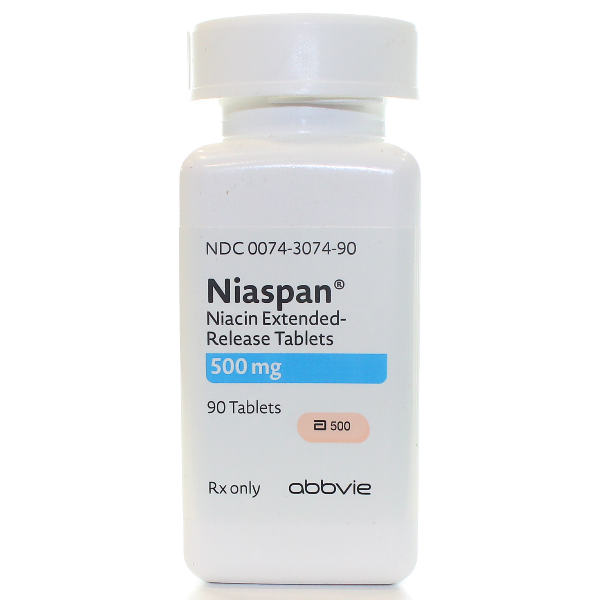
Niaspan

Niaspan contains nicotinic acid, a lipid-modifying agent, and is registered in 12 countries spread across several distinct regional markets. Its footprint sits in the middle range — wider than a regional brand but narrower than the most heavily internationalised cardiovascular products — and includes markets in North America, Europe, the Middle East, South America, and Southeast Asia.

Nicotinic acid is used in the management of lipid disorders such as hyperlipidemia, and is also referenced in the context of arteriosclerosis and atherosclerosis, angina pectoris, and encephalopathy. The molecule is recognised in several pharmacological categories at once: alongside its lipid-lowering role, it is also classified among vasodilators, metabolic agents, microcirculatory improvers, and as a replenishment for vitamin PP (B3) deficiency. The structured indication and classification block lower on this page lays out each registered use as recorded in the source data.

Because Niaspan's twelve registered markets are scattered geographically — including the United States, Canada, the Netherlands, Turkey, Thailand, Peru, and Hong Kong — travellers and expatriates encountering the brand in one country may not find the same packaging in the next. Nicotinic acid itself, however, circulates widely under other brand names and as a generic in many markets, and a local pharmacist can confirm what is stocked regionally.

Other lipid-modifying agents from different pharmacological families are available in essentially every regulated market and play overlapping roles in lipid management, although they are not interchangeable without medical input. Anyone using Niaspan, considering it, or trying to identify a local equivalent abroad should treat the question as a clinical one and bring it to a healthcare provider familiar with their lipid profile and broader cardiovascular history.
Frequently asked questions

What conditions does Niaspan treat?

Niaspan is used in the management of lipid disorders such as hyperlipidemia, and is referenced in the context of arteriosclerosis and atherosclerosis, angina pectoris, and encephalopathy. Nicotinic acid is also recognised as a treatment for vitamin PP (B3) deficiency. The structured indication block further down this page details each registered use of Niaspan as recorded for the markets where it is sold.

Which active substance is in Niaspan?

Niaspan contains nicotinic acid, classified as a lipid-modifying and lipid-lowering agent, with additional recognised roles as a vasodilator, metabolic agent, microcirculatory improver, and replenishment for vitamin PP (B3) deficiency. Nicotinic acid is the same molecule whether sold under the Niaspan brand or under other names — internationally, the active ingredient circulates under several commercial labels and as a generic preparation.

In how many countries is Niaspan available?

Niaspan is registered in 12 countries, scattered across several distinct regions rather than concentrated in one. Examples include the United States, Canada, the Netherlands, Turkey, Thailand, Peru, Israel, and Hong Kong. If your country is not represented in this list, a local pharmacist can usually confirm whether nicotinic acid is available in that market under a different brand name or as a generic preparation.

Are there other medications with the same active ingredient as Niaspan?

Nicotinic acid is sold under several brand names worldwide and is also available in generic form in many markets. Other lipid-modifying agents from different pharmacological families are available in essentially every regulated country and play overlapping roles in the management of lipid disorders, although they are not freely interchangeable. To identify a local nicotinic acid product, search the active ingredient on Pill2Trip or ask a pharmacist.

Should I consult a doctor before taking Niaspan?

Yes. Niaspan is a prescription medication in most of the markets where it is registered, and lipid-lowering therapy is calibrated to a patient's lipid profile, cardiovascular history, and concurrent medications. This matters particularly for travellers and people relocating between countries, since prescription rules, available brands, and generic options vary across regulatory regimes. Any decision to start, stop, switch, or substitute Niaspan should involve a healthcare provider.