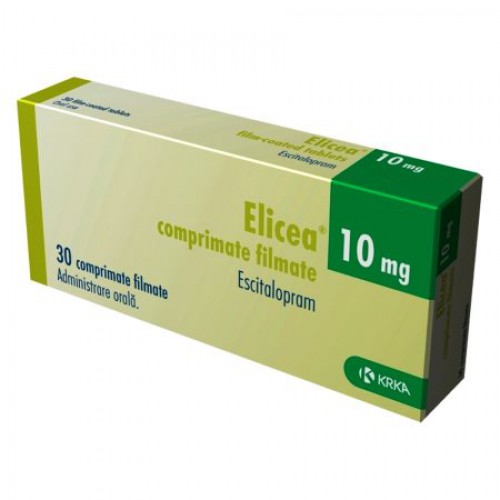
Elicea contains escitalopram, an antidepressant that belongs to the selective serotonin reuptake inhibitor family within the broader psychoanaleptic category. The brand is registered in 13 countries, with a footprint concentrated across Central and Eastern Europe and the Baltic region — markets such as Poland, Croatia, Estonia, Russia, and Romania. A traveller arriving in Western Europe, North America, or much of Asia is unlikely to encounter the Elicea name on a pharmacy shelf, even though the underlying molecule is one of the most widely prescribed antidepressants in the world.
Escitalopram is prescribed for a range of mood and anxiety-related conditions, including depression, generalized anxiety disorder, panic disorder with or without agoraphobia, obsessive-compulsive presentations, and specific phobias. Its mechanism involves blocking the reuptake of serotonin, which is why it sits within the SSRI subset of antidepressants. The structured indication list further down this page details the registered uses recognised in the markets where Elicea is sold.
Outside its Central and Eastern European cluster, the SSRI class is well represented under other brand names and, in most countries, under generic escitalopram itself. A patient who has been stabilised on Elicea and is now travelling, relocating, or seeking a refill abroad will usually find escitalopram available in the destination country, but it will likely be packaged under a different commercial name. A local pharmacist familiar with the regional formulary is the right person to identify the equivalent product.
Because antidepressant therapy is highly individualised and prescription rules differ markedly between countries, any decision to continue, change, or substitute escitalopram should rest with the prescribing healthcare provider rather than being made at a pharmacy counter alone.