Home / Medicine / Efloran

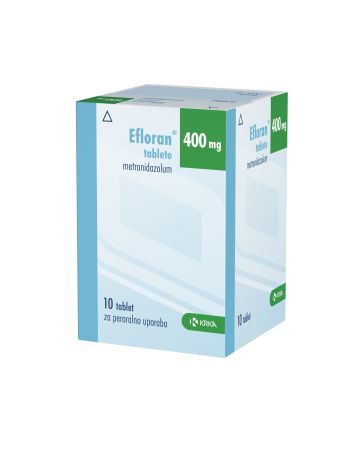
Efloran

Travellers familiar with Efloran from Central and Eastern Europe are unlikely to encounter the same brand elsewhere — it is registered in only eight countries. The footprint clusters tightly across the Balkans, the Baltic region, and parts of the former Soviet space, including Croatia, Bulgaria, the Czech Republic, Georgia, and Russia. Outside this corridor the brand is essentially absent from pharmacy shelves.

The active ingredient in Efloran is metronidazole, a molecule with a long-established place in international medicine. It is classified across several pharmacological categories, including antiprotozoal and bactericidal agents, and is also used within the antibiotics-and-chemotherapeutics group for certain dermatological applications. Efloran is prescribed for a range of indications listed in the structured section below, covering anaerobic bacterial infections, certain protozoal conditions, dental and gingival infections, abdominal infections such as peritonitis and abscess, sepsis, pneumonia in selected contexts, and bacterial vaginosis.

Although the Efloran brand itself has a regional character, metronidazole as an active ingredient is registered in nearly every regulated pharmaceutical market in the world. A patient who has been prescribed Efloran in Bosnia & Herzegovina or Slovakia and is travelling onward will generally find metronidazole available in the destination country, but it will likely appear under a different brand name. A local pharmacist is well-placed to identify the regional equivalent and confirm whether the formulation matches what was originally prescribed.

Other antibacterial and antiprotozoal agents used for similar indications also exist worldwide, although they are not freely interchangeable with metronidazole — clinical context determines which molecule is appropriate. Anyone taking Efloran, considering a substitute abroad, or trying to continue a course while crossing borders should treat that decision as one for a healthcare provider rather than a pharmacy-counter swap.
How does this drug class actually work?
Read the plain-language explainer in Pharmacology Academy (Antibiotics) →

Frequently asked questions

What conditions does Efloran treat?

Efloran is prescribed for a range of bacterial and protozoal infections, including anaerobic infections, peritonitis, abscess, sepsis, pneumonia in selected contexts, dental and gingival infections, and bacterial vaginosis. Its active ingredient sits within antiprotozoal and bactericidal categories and is a long-established option for these indication groups. The structured indication section below this introduction lists every registered use of Efloran in the markets where it is sold.

Which active substance is in Efloran?

Efloran contains metronidazole, a molecule classified across antiprotozoal and bactericidal categories and also used within the antibiotics-and-chemotherapeutics group for certain dermatological applications. Metronidazole is one of the most widely available active ingredients in international medicine and circulates worldwide under a variety of brand names, even in countries where the Efloran brand itself is not registered.

In how many countries is Efloran available?

Efloran is registered in eight countries, concentrated across Central and Eastern Europe and the Caucasus. Examples include Croatia, Russia, the Czech Republic, Georgia, Bulgaria, Lithuania, and Slovakia. Outside this regional cluster the specific brand is rarely encountered, although metronidazole as an active ingredient is broadly available internationally. If your country is not on this list, a local pharmacist can confirm what metronidazole-containing products are stocked there.

Are there alternatives to Efloran?

Metronidazole is sold under many brand names worldwide, so a patient travelling outside Efloran's registered markets can usually obtain the same active ingredient under a different label. Other antibacterial and antiprotozoal agents addressing overlapping indications also exist internationally, although they are not directly interchangeable with metronidazole. To identify a regional equivalent, search the active ingredient on Pill2Trip or ask a pharmacist for guidance about locally available options.

Is Efloran a prescription medication?

Yes. Antibacterial and antiprotozoal therapy is calibrated to the specific infection, the patient's history, and concurrent medications, and prescription requirements vary between countries. This matters particularly for travellers and expatriates who may need to continue or substitute a course across borders, since the brand on the box can change even when the molecule does not. Any decision to start, continue, or switch should involve a healthcare provider.