Home / Medicine / Calmaben

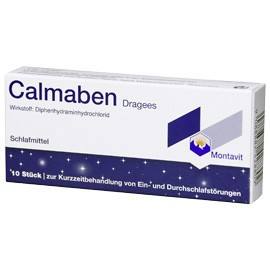
Calmaben

Travellers familiar with Calmaben from Central and Southeastern Europe are unlikely to encounter the same brand elsewhere — it is registered in only six countries. The marketing footprint clusters around Austria, Romania, Serbia, Bulgaria, Slovakia, and Georgia, which makes Calmaben essentially a regional brand rather than a globally distributed one.

The active ingredient is diphenhydramine, a first-generation antihistamine that falls under several overlapping pharmacological categories: antiallergic, systemic antihistamine, sedative, hypnotic, and antipruritic. Diphenhydramine itself is one of the oldest and most internationally recognised antihistamine molecules, even though this particular brand has a narrow regional presence. Calmaben is used in the management of allergic reactions, hay fever and other allergy-related symptoms, cold-associated complaints, and a range of other indications listed in the structured section below this introduction, including uses linked to its sedative profile.

Outside the handful of markets where Calmaben is registered, the brand will not be familiar — but diphenhydramine itself circulates worldwide under a variety of other brand names, in both prescription and over-the-counter contexts depending on the jurisdiction. A traveller who has been using Calmaben at home and needs to identify a local equivalent abroad will usually find diphenhydramine-containing products on the market, although packaging, regulatory status, and indications listed on the label can differ from one country to another.

Other antihistamine molecules — both first-generation agents with sedative profiles and newer non-sedating options — are also widely available internationally, though they are not freely interchangeable. A pharmacist in the destination country can act as a translator between regional brand names and is well placed to point to a comparable product. Anyone considering Calmaben, already taking it, or looking for a substitute while travelling should bring that conversation to a healthcare provider rather than rely on brand familiarity alone.
How does this drug class actually work?
Read the plain-language explainer in Pharmacology Academy (H1 antihistamines) →

Overdose

Long-term or too frequent administration of drugs in young children can lead to central nervous system inhibition, hypothermia, coma, and long-term pupil dilation。 Nafazoline can cause a sharp drop in blood pressure and tachycardia。

There are no data on acute overdose of drops locally injected into the conjunctival sac。

Pharmacotherapeutic group

  • H1-Antihistamines

Frequently asked questions

What conditions does Calmaben treat?

Calmaben is prescribed in the management of allergic reactions, hay fever, cold-associated symptoms, and other indications tied to the antihistamine, sedative, and antipruritic properties of its active ingredient. The structured indication section further down this page lists the full set of registered uses recognised in the markets where Calmaben is sold, which also includes applications linked to the sedative-hypnotic profile of the molecule.

Which active substance is in Calmaben?

Calmaben contains diphenhydramine, a first-generation antihistamine that is also classified as a sedative, hypnotic, and antipruritic. Diphenhydramine is one of the longest-established antihistamine molecules internationally and circulates in many countries under a range of other brand names, in both prescription and over-the-counter formats depending on local regulations.

In how many countries is Calmaben available?

Calmaben is registered in six countries, concentrated in Central and Southeastern Europe and the Caucasus: Austria, Romania, Serbia, Bulgaria, Slovakia, and Georgia. Outside this regional cluster the specific brand is not commonly encountered, although diphenhydramine itself is widely sold elsewhere under different names. If your country is not on this list, a local pharmacist can confirm what is available locally.

Are there alternatives to Calmaben?

Diphenhydramine is sold under numerous brand names worldwide, so other products containing the same active ingredient are likely to be available in most countries. Other molecules within the broader antihistamine class — including newer non-sedating options — are also widely marketed, although they are not freely interchangeable. To identify a comparable product, search the active ingredient on Pill2Trip or speak to a pharmacist in your country.

Is Calmaben a prescription medication?

Prescription rules for diphenhydramine-containing products vary considerably between countries — some jurisdictions classify them as prescription-only, while others allow over-the-counter sale, sometimes with restrictions on pack size or indication. Because the molecule has a sedative-hypnotic profile alongside its antihistamine action, individual circumstances matter. A healthcare provider is the right person to advise on whether and how Calmaben fits a particular situation.

Calmaben

Available in 6 countries