Home / Medicine / Benadryl

Benadryl

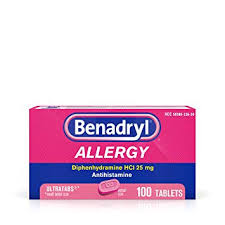
Benadryl is essentially a regional brand in terms of registered footprint, available in eight countries that together stretch across the Americas, southern Europe, and South and Southeast Asia. Its active ingredient in this registration set is diphenhydramine, a first-generation antihistamine with additional sedative, hypnotic, and antipruritic categorisation.

Diphenhydramine is used in the management of allergic reactions, hay fever, and cold-related symptoms, and is also referenced for a broader set of indications including fever, peptic ulcer, parkinsonism, and burping depending on the regulatory context. The structured indication list further down this page captures the full set of registered uses across the markets where Benadryl is sold.

A point worth flagging for international readers: the Benadryl brand name is applied to different active ingredients in different countries. A traveller who knows Benadryl from one market should not assume the product on a pharmacy shelf elsewhere contains the same molecule — in some markets the label covers an entirely different antihistamine, and in others it covers a combination cold preparation. The countries in this particular registration set include Argentina, India, Greece, Thailand, and Canada, but the formulation behind the label can vary even between them.

Other antihistamines in the same broad class are widely available worldwide under many brand names, including more recent non-sedating molecules that are positioned differently in clinical practice. A local pharmacist can identify what diphenhydramine-containing product, if any, is sold in the destination country. Because of the brand-name overlap across non-equivalent products, anyone using Benadryl abroad — or substituting it — should treat the choice as a question for a healthcare provider rather than relying on the familiar label.
How does this drug class actually work?
Read the plain-language explainer in Pharmacology Academy (H1 antihistamines) →

Frequently asked questions

What conditions does Benadryl treat?

Benadryl is used in the management of allergic reactions, hay fever, and cold-related symptoms, and is also referenced for indications such as fever, peptic ulcer, parkinsonism, and burping in some markets. As an antihistamine with sedative properties, its registered uses vary between countries. The structured indication block further down this page details every registered use in the markets where Benadryl is sold.

Which active substance is in Benadryl?

Benadryl contains diphenhydramine, classified among antihistamines for systemic use, with additional categorisation as an antiallergic, sedative, hypnotic, and antipruritic agent. Diphenhydramine is one of the older first-generation antihistamine molecules and circulates worldwide under a number of brand names — the same active ingredient often appears in regional products with different commercial labels.

In how many countries is Benadryl available?

Benadryl is registered in eight countries, spanning several regions: Argentina, India, Canada, Thailand, Greece, Brazil, Peru, and the USA. It is worth noting that the Benadryl brand name is applied to different active ingredients in different markets, so the local product may not match what a traveller knows from home. A pharmacist in your country can confirm what is sold under the label locally.

Are there other medications with the same active ingredient as Benadryl?

Diphenhydramine is sold under several brand names internationally, both as a single-ingredient antihistamine and as a component of combination cold and sleep products. Other molecules within the broader antihistamine class are also widely available, though they differ in sedation profile and clinical positioning and are not freely interchangeable. To identify a local diphenhydramine-containing product, search the active ingredient on Pill2Trip or ask a pharmacist.

Should I consult a doctor before taking Benadryl?

Yes. Although diphenhydramine products are sold over the counter in many countries, prescription rules and the specific formulation marketed under the Benadryl name differ between markets — in some countries the same brand label covers an entirely different active ingredient. Travellers, parents, and anyone taking other medications should confirm with a healthcare provider or pharmacist that the local product is appropriate for their situation.

Benadryl

Available in 8 countries