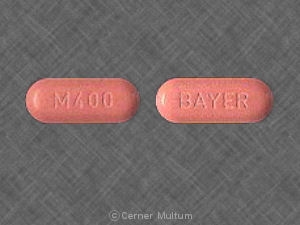
Marketed in 48 countries across Europe, the Americas, Asia, and Oceania, Avelox is a globally distributed brand of moxifloxacin, classified as a bactericidal antibiotic. The molecule is also used in ophthalmic preparations in some markets, which is why moxifloxacin appears in more than one therapeutic category internationally. This page is written for travellers, expatriates, and family members trying to identify Avelox or its equivalent in another country.
Moxifloxacin is prescribed for a range of bacterial infections, including community-acquired pneumonia, bronchitis, certain abscesses, endometritis, and complicated skin and skin structure infections. The structured indication block further down this page lists each registered use in the markets where Avelox carries marketing authorisation, since the wording of approved indications can differ slightly between national regulators.
Because Avelox is widely registered, travellers and expatriates often encounter it abroad — sometimes under the Avelox brand, sometimes as a moxifloxacin-containing generic. Markets where the brand is authorised include Canada, China, Belgium, Chile, Australia, and the Czech Republic, among others. Packaging, prescription rules, and antibiotic stewardship policies vary considerably from one country to another, and a local pharmacist is usually the right first point of contact when trying to match a prescription from home to a product on a foreign shelf.
Other bactericidal antibiotics in adjacent classes are sold in many of the same markets under different molecules and brand names, but antibiotic choice is highly specific to the infection and the patient. Anyone taking Avelox, considering it, or trying to identify a local equivalent should make that decision with a qualified healthcare provider rather than at the pharmacy counter alone.
Shelf life
| Polyolefine bag:
Glass bottle:
| 3 years
5 years
|
Use immediately after first opening and/or dilution.
List of excipients
Sodium chloride
Hydrochloric acid 1N (for pH-adjustment)
Sodium hydroxide solution 2N (for pH-adjustment)
Water for injections
Date of revision of the text
August 2017
Marketing authorisation holder
Bayer plc, 400 South Oak Way, Reading RG2 6AD
Special precautions for storage
Do not store below 15°C.
Nature and contents of container
Polyolefine bags with polypropylene port sealed in aluminium foil overwrap. 250 ml pack available in cartons of 5 and 12 bags.
Colourless glass bottles (type 2) with a chlorobutyl or bromobutyl rubber stopper as closure. The 250 ml bottle is available in packs of 1 bottle and in multipacks containing 5 bottles (5 packs of 1 bottle).
Not all pack sizes may be marketed.
Marketing authorisation number(s)
PL 00010/0613
Special precautions for disposal and other handling
This product is for single use only. Any unused solution should be discarded.
The following co-infusions were found to be compatible with moxifloxacin 400 mg solution for infusion:
Water for injections, Sodium chloride 0.9%, Sodium chloride 1 molar, Glucose 5%/10%/40%, Xylitol 20%, Ringer's solution, Compound Sodium Lactate Solution (Hartmann's Solution, Ringer-Lactate Solution).
Moxifloxacin solution for infusion should not be co-infused with other drugs.
Do not use if there are any visible particulate matter or if the solution is cloudy.
At cool storage temperatures precipitation may occur, which will re-dissolve at room temperature. It is therefore recommended not to store the infusion solution below 15°C.
Date of first authorisation/renewal of the authorisation
First authorisation: 12th November 2009