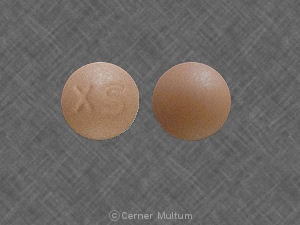
Overdose
No specific information is available on the treatment of
overdosage with XIFAXAN. In clinical studies at doses higher than the
recommended dose (greater than 600 mg per day for TD, greater than 1100 mg per day
for HE or greater than 1650 mg per day for IBS-D), adverse reactions were
similar in subjects who received doses higher than the recommended dose and
placebo. In the case of overdosage, discontinue XIFAXAN, treat symptomatically,
and institute supportive measures as required.
Undesirable effects
Clinical Studies Experience
Because clinical trials are conducted under widely
varying conditions, adverse reaction rates observed in the clinical trials of a
drug cannot be directly compared to rates in the clinical trials of another
drug and may not reflect the rates observed in practice.
Travelers' Diarrhea
The safety of XIFAXAN 200 mg taken three times a day was
evaluated in patients with travelers' diarrhea consisting of 320 patients in
two placebo-controlled clinical trials with 95% of patients receiving three or
four days of treatment with XIFAXAN. The population studied had a mean age of 31.3
(18-79) years of which approximately 3% were ≥65 years old, 53% were male
and 84% were White, 11% were Hispanic.
Discontinuations due to adverse reactions occurred in
0.4% of patients. The adverse reactions leading to discontinuation were taste
loss, dysentery, weight decrease, anorexia, nausea and nasal passage irritation.
The adverse reaction that occurred at a frequency
≥2% in XIFAXAN-treated patients (n=320) at a higher rate than placebo
(n=228) in the two placebo-controlled trials of TD was:
- headache (10% XIFAXAN, 9% placebo)
Hepatic Encephalopathy
The data described below reflect exposure to XIFAXAN in
348 patients, including 265 exposed for 6 months and 202 exposed for more than
a year (mean exposure was 364 days). The safety of XIFAXAN 550 mg taken two
times a day for reducing the risk of overt hepatic encephalopathy recurrence in
adult patients was evaluated in a 6-month placebo-controlled clinical trial
(n=140) and in a long term followup study (n=280). The population studied had a
mean age of 56 (range: 21 to 82) years; approximately 20% of the patients were
≥65 years old, 61% were male, 86% were White, and 4% were Black.
Ninetyone percent of patients in the trial were taking lactulose concomitantly.
The most common adverse reactions that occurred at an incidence ≥5% and
at a higher incidence in XIFAXAN-treated subjects than in the placebo group in
the 6-month trial are provided in Table 1.
Table 1: Most Common Adverse Reactions in HE Trial
| MedDRA Preferred Term |
Number (%) of Patients |
XIFAXAN Tablets 550 mg TWICE DAILY
n=140 |
Placebo
n=159 |
| Peripheral edema |
21 (15%) |
13 (8%) |
| Nausea |
20 (14%) |
21 (13%) |
| Dizziness |
18 (13%) |
13 (8%) |
| Fatigue |
17 (12%) |
18 (11%) |
| Ascites |
16 (11%) |
15 (9%) |
| Muscle spasms |
13 (9%) |
11 (7%) |
| Pruritus |
13 (9%) |
10 (6%) |
| Abdominal pain |
12 (9%) |
13 (8%) |
| Anemia |
11 (8%) |
6 (4%) |
| Depression |
10 (7%) |
8 (5%) |
| Nasopharyngitis |
10 (7%) |
10 (6%) |
| Abdominal pain upper |
9 (6%) |
8 (5%) |
| Arthralgia |
9 (6%) |
4 (3%) |
| Dyspnea |
9 (6%) |
7 (4%) |
| Pyrexia |
9 (6%) |
5 (3%) |
| Rash |
7 (5%) |
6 (4%) |
| * reported in ≥5% of Patients Receiving XIFAXAN and
at a higher incidence than placebo |
Irritable Bowel Syndrome With Diarrhea
The safety of XIFAXAN for the treatment of IBS-D was
evaluated in 3 placebo-controlled studies in which 952 patients were randomized
to XIFAXAN 550 mg three times a day for 14 days. Across the 3 studies, 96% of
patients received at least 14 days of treatment with XIFAXAN. In Trials 1 and
2, 624 patients received only one 14-day treatment. Trial 3 evaluated the
safety of XIFAXAN in 328 patients who received 1 open-label treatment and 2
double-blind repeat treatments of 14 days each over a period of up to 46 weeks.
The combined population studied had a mean age of 47 (range: 18 to 88) years of
whom approximately 11% of the patients were ≥65 years old, 72% were
female, 88% were White, 9% were Black and 12% were Hispanic.
The adverse reaction that occurred at a frequency
≥2% in XIFAXAN-treated patients at a higher rate than placebo in Trials 1
and 2 for IBS-D was:
- nausea (3% XIFAXAN, 2% placebo)
The adverse reactions that occurred at a frequency >2%
in XIFAXAN-treated patients (n=328) at a higher rate than placebo (n=308) in
Trial 3 for IBS-D during the double-blind treatment phase were:
ALT increased (XIFAXAN 2%, placebo 1%)
- nausea (XIFAXAN 2%, placebo 1%)
Less Common Adverse Reactions
The following adverse reactions, presented by body
system, were reported in less than 2% of patients in clinical trials of TD and
IBS-D and in less than 5% of patients in clinical trials of HE:
Hepatobiliary disorders: Clostridium colitis
Investigations: Increased blood creatine
phosphokinase
Musculoskeletal and connective tissue disorders: myalgia
Postmarketing Experience
The following adverse reactions have been identified during
post-approval use of XIFAXAN. Because these reactions are reported voluntarily
from a population of unknown size, estimates of frequency cannot be made. These
reactions have been chosen for inclusion due to either their seriousness, reported
in ≥5% of Patients Receiving XIFAXAN and at a higher incidence than
placebo frequency of reporting or causal connection to XIFAXAN.
Infections And Infestations
Cases of C. difficile-associated colitis have been
reported.
General
Hypersensitivity reactions, including exfoliative
dermatitis, rash, angioneurotic edema (swelling of face and tongue and
difficulty swallowing), urticaria, flushing, pruritus and anaphylaxis have been
reported. These events occurred as early as within 15 minutes of drug
administration.
Pharmacokinetic properties
Absorption
In healthy subjects, the mean time to reach peak
rifaximin plasma concentrations was about an hour and the mean Cmax ranged 2.4
to 4 ng/mL after a single dose and multiple doses of XIFAXAN 550 mg.
Travelers Diarrhea
Systemic absorption of XIFAXAN (200 mg three times daily)
was evaluated in 13 subjects challenged with shigellosis on Days 1 and 3 of a
three-day course of treatment. Rifaximin plasma concentrations and exposures
were low and variable. There was no evidence of accumulation of rifaximin
following repeated administration for 3 days (9 doses). Peak plasma rifaximin
concentrations after 3 and 9 consecutive doses ranged from 0.81 to 3.4 ng/mL on
Day 1 and 0.68 to 2.26 ng/mL on Day 3. Similarly, AUC0-last estimates were 6.95
± 5.15 ng•h/mL on Day 1 and 7.83 ± 4.94 ng•h/mL on Day 3. XIFAXAN is not
suitable for treating systemic bacterial infections because of limited systemic
exposure after oral administration.
Hepatic Encephalopathy
Mean rifaximin exposure (AUC τ) in patients with a
history of HE was approximately 12-fold higher than that observed in healthy
subjects. Among patients with a history of HE, the mean AUC in patients with
Child-Pugh Class C hepatic impairment was 2-fold higher than in patients with
Child-Pugh Class A hepatic impairment.
Irritable Bowel Syndrome With Diarrhea
In patients with irritable bowel syndrome with diarrhea
(IBS-D) treated with XIFAXAN 550 mg three times a day for 14 days, the median Tmax
was 1 hour and mean Cmax and AUCtau were generally comparable with those in
healthy subjects. After multiple doses, AUC was 1.65-fold higher than that on
Day 1 in IBS-D patients (Table 2).
Table 2: Mean (± SD) Pharmacokinetic Parameters of
Rifaximin Following XIFAXAN 550 mg Three Times a Day in IBS-D Patients and
Healthy Subjects
| |
Healthy Subjects |
IBS-D Patients |
Single-Dose (Day 1)
n=12 |
Multiple-Dose (Day 14)
n=14 |
Single-Dose (Day 1)
n=24 |
Multiple-Dose (Day 14)
n=24 |
| C max (ng/mL) |
4.04 (1.51) |
2.39 (1.28) |
3.49 (1.36) |
4.22 (2.66) |
| T max (h) * |
0.75 (0.5-2.1) |
1.00 (0.5-2.0) |
0.78 (0-2) |
1.00 (0.5-2) |
| AUC tau (ng•h/mL) |
10.4 (3.47) |
9.30 (2.7) |
9.69 (4.16) |
16.0 (9.59) |
| Half-life (h) |
1.83 (1.38) |
5.63 (5.27) |
3.14 (1.71) |
6.08 (1.68) |
| * Median (range) |
Food Effect In Healthy Subjects
A high-fat meal consumed 30 minutes prior to XIFAXAN
dosing in healthy subjects delayed the mean time to peak plasma concentration
from 0.75 to 1.5 hours and increased the systemic exposure (AUC) of rifaximin
by 2-fold but did not significantly affect Cmax.
Distribution
Rifaximin is moderately bound to human plasma proteins. In
vivo, the mean protein binding ratio was 67.5% in healthy subjects and 62% in
patients with hepatic impairment when XIFAXAN was administered.
Elimination
The mean half-life of rifaximin in healthy subjects at
steady-state was 5.6 hours and was 6 hours in IBSD patients.
Metabolism
In an in vitro study rifaximin was metabolized mainly by
CYP3A4. Rifaximin accounted for 18% of radioactivity in plasma suggesting that
the absorbed rifaximin undergoes extensive metabolism.
Excretion
In a mass balance study, after administration of 400 mg 14C-rifaximin
orally to healthy volunteers, of the 96.94% total recovery, 96.62% of the
administered radioactivity was recovered in feces mostly as the unchanged drug
and 0.32% was recovered in urine mostly as metabolites with 0.03% as the
unchanged drug.
Biliary excretion of rifaximin was suggested by a
separate study in which rifaximin was detected in the bile after
cholecystectomy in patients with intact gastrointestinal mucosa.
Date of revision of the text
Nov 2016
Fertility, pregnancy and lactation
Risk Summary
There are no available data on XIFAXAN use in pregnant
women to inform any drug associated risks. Teratogenic effects were observed in
animal reproduction studies following administration of rifaximin to pregnant
rats and rabbits during organogenesis at doses approximately 0.9 to 5 times and
0.7 to 33 times, respectively of the recommended human doses of 600 mg to 1650
mg per day. In rabbits, ocular, oral and maxillofacial, cardiac, and lumbar
spine malformations were observed. Ocular malformations were observed in both
rats and rabbits at doses that caused reduced maternal body weight gain.
In the U.S. general population, the estimated background risk of major birth
defects and miscarriage in clinically recognized pregnancies is 2 to 4% and 15
to 20%, respectively. Advise pregnant women of the potential risk to a fetus.
Data
Animal Data
Rifaximin was teratogenic in rats at doses of 150 to 300
mg/kg (approximately 2.5 to 5 times the recommended dose for TD [600 mg per
day], and approximately 1.3 to 2.6 times the recommended dose  for HE [1100 mg per
day], and approximately 0.9 to 1.8 times the recommended dose for IBS-D [1650 mg
per day] adjusted for body surface area). Rifaximin was teratogenic in rabbits
at doses of 62.5 to 1000 mg/kg (approximately 2 to 33 times the recommended
dose for TD [600 mg per day], and approximately 1.1 to 18 times the recommended
dose for HE [1100 mg per day], and approximately 0.7 to 12 times the
recommended dose for IBS-D [1650 mg per day] adjusted for body surface area).
These effects include cleft palate, agnathia, jaw shortening, hemorrhage, eye
partially open, small eyes, brachygnathia, incomplete ossification, and
increased thoracolumbar vertebrae.
A pre and postnatal development study in rats showed no
evidence of any adverse effect on pre and postnatal development at oral doses
of rifaximin up to 300 mg/kg per day (approximately 5 times the recommended
dose for TD [600 mg per day], and approximately 2.6 times the recommended dose
for HE [1100 mg per day], and approximately 1.8 times the recommended dose for
IBS-D [1650 mg per day] adjusted for body surface area).
Special warnings and precautions for use
WARNINGS
Included as part of the PRECAUTIONS section.
PRECAUTIONS
Travelers’ Diarrhea Not Caused By Escherichia Coli
XIFAXAN was not found to be effective in patients with
diarrhea complicated by fever and/or blood in the stool or diarrhea due to
pathogens other than Escherichia coli.
Discontinue XIFAXAN if diarrhea symptoms get worse or
persist more than 24 to 48 hours and alternative antibiotic therapy should be
considered.
XIFAXAN is not effective in cases of travelers' diarrhea
due to Campylobacter jejuni. The effectiveness of XIFAXAN in travelers'
diarrhea caused by Shigella spp. and Salmonella spp. has not been
proven. XIFAXAN should not be used in patients where Campylobacter jejuni,
Shigella spp., or Salmonella spp. may be suspected as causative
pathogens.
Clostridium Difficile-Associated Diarrhea
Clostridium difficile-associated diarrhea (CDAD)
has been reported with use of nearly all antibacterial agents, including
XIFAXAN, and may range in severity from mild diarrhea to fatal colitis.
Treatment with antibacterial agents alters the normal flora of the colon which
may lead to overgrowth of C. difficile.
C. difficile produces toxins A and B which
contribute to the development of CDAD. Hypertoxin producing strains of C.
difficile cause increased morbidity and mortality, as these infections can
be refractory to antimicrobial therapy and may require colectomy. CDAD must be
considered in all patients who present with diarrhea following antibiotic use.
Careful medical history is necessary since CDAD has been reported to occur over
two months after the administration of antibacterial agents.
If CDAD is suspected or confirmed, ongoing antibiotic use
not directed against C. difficile may need to be discontinued.
Appropriate fluid and electrolyte management, protein supplementation,
antibiotic treatment of C. difficile, and surgical evaluation should be
instituted as clinically indicated.
Development Of Drug-Resistant Bacteria
Prescribing XIFAXAN for travelers' diarrhea in the
absence of a proven or strongly suspected bacterial infection or a prophylactic
indication is unlikely to provide benefit to the patient and increases the risk
of the development of drug-resistant bacteria.
Severe (Child-Pugh Class C) Hepatic Impairment
There is increased systemic exposure in patients with
severe hepatic impairment. The clinical trials were limited to patients with
MELD scores <25. Therefore, caution should be exercised when administering
XIFAXAN to patients with severe hepatic impairment (Child-Pugh Class C).
Concomitant Use With P-glycoprotein Inhibitors
Concomitant administration of drugs that are
P-glycoprotein inhibitors with XIFAXAN can substantially increase the systemic
exposure to rifaximin. Caution should be exercised when concomitant use of XIFAXAN
and a P-glycoprotein inhibitor such as cyclosporine is needed. In patients with
hepatic impairment, a potential additive effect of reduced metabolism and
concomitant P-glycoprotein inhibitors may further increase the systemic
exposure to rifaximin.
Nonclinical Toxicology
Carcinogenesis, Mutagenesis, Impairment Of Fertility
Malignant schwannomas in the heart were significantly
increased in male Crl:CD® (SD) rats that received rifaximin by oral gavage for
two years at 150 to 250 mg/kg per day (doses equivalent to 2.4 to 4 times the
recommended dose of 200 mg three times daily for TD, and equivalent to 1.3 to
2.2 times the recommended dose of 550 mg twice daily for HE, based on relative
body surface area comparisons). There was no increase in tumors in Tg.rasH2
mice dosed orally with rifaximin for 26 weeks at 150 to 2000 mg/kg per day
(doses equivalent to 1.2 to 16 times the recommended daily dose for TD and equivalent
to 0.7 to 9 times the recommended daily dose for HE, based on relative body
surface area comparisons).
Rifaximin was not genotoxic in the bacterial reverse
mutation assay, chromosomal aberration assay, rat bone marrow micronucleus
assay, rat hepatocyte unscheduled DNA synthesis assay, or the CHO/HGPRT
mutation assay. There was no effect on fertility in male or female rats
following the administration of rifaximin at doses up to 300 mg/kg
(approximately 5 times the clinical dose of 600 mg per day for TD, and
approximately 2.6 times the clinical dose of 1100 mg per day for HE, adjusted
for body surface area).
Use In Specific Populations
Pregnancy
Risk Summary
There are no available data on XIFAXAN use in pregnant
women to inform any drug associated risks. Teratogenic effects were observed in
animal reproduction studies following administration of rifaximin to pregnant
rats and rabbits during organogenesis at doses approximately 0.9 to 5 times and
0.7 to 33 times, respectively of the recommended human doses of 600 mg to 1650
mg per day. In rabbits, ocular, oral and maxillofacial, cardiac, and lumbar
spine malformations were observed. Ocular malformations were observed in both
rats and rabbits at doses that caused reduced maternal body weight gain.
In the U.S. general population, the estimated background risk of major birth
defects and miscarriage in clinically recognized pregnancies is 2 to 4% and 15
to 20%, respectively. Advise pregnant women of the potential risk to a fetus.
Data
Animal Data
Rifaximin was teratogenic in rats at doses of 150 to 300
mg/kg (approximately 2.5 to 5 times the recommended dose for TD [600 mg per
day], and approximately 1.3 to 2.6 times the recommended dose  for HE [1100 mg per
day], and approximately 0.9 to 1.8 times the recommended dose for IBS-D [1650 mg
per day] adjusted for body surface area). Rifaximin was teratogenic in rabbits
at doses of 62.5 to 1000 mg/kg (approximately 2 to 33 times the recommended
dose for TD [600 mg per day], and approximately 1.1 to 18 times the recommended
dose for HE [1100 mg per day], and approximately 0.7 to 12 times the
recommended dose for IBS-D [1650 mg per day] adjusted for body surface area).
These effects include cleft palate, agnathia, jaw shortening, hemorrhage, eye
partially open, small eyes, brachygnathia, incomplete ossification, and
increased thoracolumbar vertebrae.
A pre and postnatal development study in rats showed no
evidence of any adverse effect on pre and postnatal development at oral doses
of rifaximin up to 300 mg/kg per day (approximately 5 times the recommended
dose for TD [600 mg per day], and approximately 2.6 times the recommended dose
for HE [1100 mg per day], and approximately 1.8 times the recommended dose for
IBS-D [1650 mg per day] adjusted for body surface area).
Lactation
Risk Summary
There is no information regarding the presence of
rifaximin in human milk, the effects of rifaximin on the breastfed infant, or
the effects of rifaximin on milk production. The development and health
benefits of breastfeeding should be considered along with the mother's clinical
need for XIFAXAN and any potential adverse effects on the breastfed infant from
XIFAXAN or from the underlying maternal condition.
Pediatric Use
The safety and effectiveness of XIFAXAN has not been
established in pediatric patients less than 12 years of age with TD or in
patients less than 18 years of age for HE and IBS-D.
Geriatric Use
Of the total number of patients in the clinical study of
XIFAXAN for HE, 19% of patients were 65 and over, while 2% were 75 and over. In
the clinical studies of IBS-D, 11% of patients were 65 and over, while 2% were
75 and over. No overall differences in safety or effectiveness were observed
between these subjects and younger subjects for either indication. Clinical
studies with XIFAXAN for TD did not include sufficient numbers of patients aged
65 and over to determine whether they respond differently than younger
subjects. Other reported clinical experience has not identified differences in responses
between the elderly and younger patients, but greater sensitivity of some older
individuals cannot be ruled out.
Renal Impairment
The pharmacokinetics of rifaximin in patients with
impaired renal function has not been studied.
Hepatic Impairment
Following administration of XIFAXAN 550 mg twice daily to
patients with a history of hepatic encephalopathy, the systemic exposure (i.e.,
AUC τ) of rifaximin was about 10-, 14-, and 21-fold higher in those
patients with mild (Child-Pugh Class A), moderate (Child-Pugh Class B) and
severe (Child- Pugh Class C) hepatic impairment, respectively, compared to that
in healthy volunteers. No dosage adjustment is recommended because rifaximin is
presumably acting locally. Nonetheless, caution should be exercised when
XIFAXAN is administered to patients with severe hepatic impairment.
Interaction with other medicinal products and other forms of interaction
SIDE EFFECTS
Clinical Studies Experience
Because clinical trials are conducted under widely
varying conditions, adverse reaction rates observed in the clinical trials of a
drug cannot be directly compared to rates in the clinical trials of another
drug and may not reflect the rates observed in practice.
Travelers' Diarrhea
The safety of XIFAXAN 200 mg taken three times a day was
evaluated in patients with travelers' diarrhea consisting of 320 patients in
two placebo-controlled clinical trials with 95% of patients receiving three or
four days of treatment with XIFAXAN. The population studied had a mean age of 31.3
(18-79) years of which approximately 3% were ≥65 years old, 53% were male
and 84% were White, 11% were Hispanic.
Discontinuations due to adverse reactions occurred in
0.4% of patients. The adverse reactions leading to discontinuation were taste
loss, dysentery, weight decrease, anorexia, nausea and nasal passage irritation.
The adverse reaction that occurred at a frequency
≥2% in XIFAXAN-treated patients (n=320) at a higher rate than placebo
(n=228) in the two placebo-controlled trials of TD was:
- headache (10% XIFAXAN, 9% placebo)
Hepatic Encephalopathy
The data described below reflect exposure to XIFAXAN in
348 patients, including 265 exposed for 6 months and 202 exposed for more than
a year (mean exposure was 364 days). The safety of XIFAXAN 550 mg taken two
times a day for reducing the risk of overt hepatic encephalopathy recurrence in
adult patients was evaluated in a 6-month placebo-controlled clinical trial
(n=140) and in a long term followup study (n=280). The population studied had a
mean age of 56 (range: 21 to 82) years; approximately 20% of the patients were
≥65 years old, 61% were male, 86% were White, and 4% were Black.
Ninetyone percent of patients in the trial were taking lactulose concomitantly.
The most common adverse reactions that occurred at an incidence ≥5% and
at a higher incidence in XIFAXAN-treated subjects than in the placebo group in
the 6-month trial are provided in Table 1.
Table 1: Most Common Adverse Reactions in HE Trial
| MedDRA Preferred Term |
Number (%) of Patients |
XIFAXAN Tablets 550 mg TWICE DAILY
n=140 |
Placebo
n=159 |
| Peripheral edema |
21 (15%) |
13 (8%) |
| Nausea |
20 (14%) |
21 (13%) |
| Dizziness |
18 (13%) |
13 (8%) |
| Fatigue |
17 (12%) |
18 (11%) |
| Ascites |
16 (11%) |
15 (9%) |
| Muscle spasms |
13 (9%) |
11 (7%) |
| Pruritus |
13 (9%) |
10 (6%) |
| Abdominal pain |
12 (9%) |
13 (8%) |
| Anemia |
11 (8%) |
6 (4%) |
| Depression |
10 (7%) |
8 (5%) |
| Nasopharyngitis |
10 (7%) |
10 (6%) |
| Abdominal pain upper |
9 (6%) |
8 (5%) |
| Arthralgia |
9 (6%) |
4 (3%) |
| Dyspnea |
9 (6%) |
7 (4%) |
| Pyrexia |
9 (6%) |
5 (3%) |
| Rash |
7 (5%) |
6 (4%) |
| * reported in ≥5% of Patients Receiving XIFAXAN and
at a higher incidence than placebo |
Irritable Bowel Syndrome With Diarrhea
The safety of XIFAXAN for the treatment of IBS-D was
evaluated in 3 placebo-controlled studies in which 952 patients were randomized
to XIFAXAN 550 mg three times a day for 14 days. Across the 3 studies, 96% of
patients received at least 14 days of treatment with XIFAXAN. In Trials 1 and
2, 624 patients received only one 14-day treatment. Trial 3 evaluated the
safety of XIFAXAN in 328 patients who received 1 open-label treatment and 2
double-blind repeat treatments of 14 days each over a period of up to 46 weeks.
The combined population studied had a mean age of 47 (range: 18 to 88) years of
whom approximately 11% of the patients were ≥65 years old, 72% were
female, 88% were White, 9% were Black and 12% were Hispanic.
The adverse reaction that occurred at a frequency
≥2% in XIFAXAN-treated patients at a higher rate than placebo in Trials 1
and 2 for IBS-D was:
- nausea (3% XIFAXAN, 2% placebo)
The adverse reactions that occurred at a frequency >2%
in XIFAXAN-treated patients (n=328) at a higher rate than placebo (n=308) in
Trial 3 for IBS-D during the double-blind treatment phase were:
ALT increased (XIFAXAN 2%, placebo 1%)
- nausea (XIFAXAN 2%, placebo 1%)
Less Common Adverse Reactions
The following adverse reactions, presented by body
system, were reported in less than 2% of patients in clinical trials of TD and
IBS-D and in less than 5% of patients in clinical trials of HE:
Hepatobiliary disorders: Clostridium colitis
Investigations: Increased blood creatine
phosphokinase
Musculoskeletal and connective tissue disorders: myalgia
Postmarketing Experience
The following adverse reactions have been identified during
post-approval use of XIFAXAN. Because these reactions are reported voluntarily
from a population of unknown size, estimates of frequency cannot be made. These
reactions have been chosen for inclusion due to either their seriousness, reported
in ≥5% of Patients Receiving XIFAXAN and at a higher incidence than
placebo frequency of reporting or causal connection to XIFAXAN.
Infections And Infestations
Cases of C. difficile-associated colitis have been
reported.
General
Hypersensitivity reactions, including exfoliative
dermatitis, rash, angioneurotic edema (swelling of face and tongue and
difficulty swallowing), urticaria, flushing, pruritus and anaphylaxis have been
reported. These events occurred as early as within 15 minutes of drug
administration.
DRUG INTERACTIONS
Effects Of XIFAXAN On Other Drugs
Substrates Of Cytochrome P450 enzymes
Rifaximin is not expected to inhibit cytochrome P450
isoenzymes 1A2, 2A6, 2B6, 2C9, 2C19, 2D6, 2E1 and CYP3A4 in clinical use based
on in vitro studies.
An in vitro study has suggested that rifaximin induces
CYP3A4. However, in patients with normal
liver function, XIFAXAN at the recommended dosing regimen is not expected to
induce CYP3A4. It is unknown whether rifaximin can have a significant effect on
the pharmacokinetics of concomitant CYP3A4 substrates in patients with reduced
liver function who have elevated rifaximin concentrations.
Effects Of Other Drugs On XIFAXAN
In vitro studies suggested that rifaximin is a substrate
of P-glycoprotein, OATP1A2, OATP1B1 and OATP1B3. Concomitant cyclosporine, an
inhibitor of P-glycoprotein and OATPs, significantly increased the systemic
exposure to rifaximin.
Cyclosporine
Co-administration of cyclosporine, with XIFAXAN resulted
in 83-fold and 124-fold increases in rifaximin mean Cmax  and AUC∞ in
healthy subjects. The clinical significance of this increase in systemic
exposure is unknown.