Home / Medicine / Voltfast

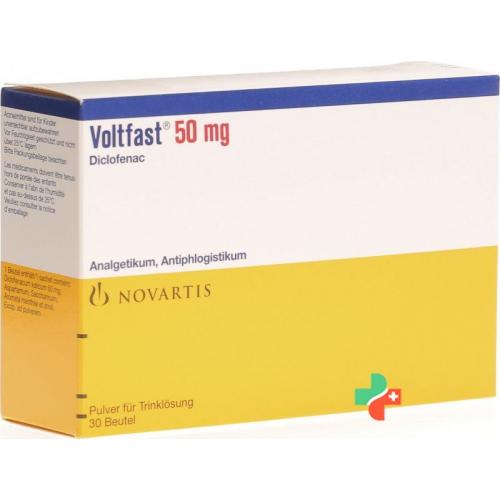
Voltfast

Travellers familiar with Voltfast from markets such as Italy or Switzerland are unlikely to encounter the same brand everywhere — it is registered in only eight countries. The footprint is not tightly regional either: alongside its European presence in Italy, Switzerland, Bulgaria, and Croatia, Voltfast is also marketed in Australia, Lebanon, Oman, and Ecuador, which means the brand turns up in scattered pockets rather than across a coherent geographic cluster.

The active ingredient in Voltfast is diclofenac, classified as a non-steroidal anti-inflammatory with analgesic and antipyretic properties. Diclofenac is prescribed in the management of pain and inflammation across a range of conditions, including rheumatoid arthritis, ankylosing spondylitis, bursitis, neuralgia, backache, headache, and symptomatic relief associated with influenza. The structured indication list further down this page details the registered uses recognised in the markets where Voltfast is sold.

Outside the eight markets where Voltfast itself is registered, diclofenac remains one of the most widely used molecules in its class globally and is available in essentially every regulated market under other brand names and in multiple formulations — oral, topical preparations for joint and muscular pain, and ophthalmic products among them. A reader who has been prescribed Voltfast in one country and is travelling or relocating will generally find diclofenac-containing equivalents on pharmacy shelves in the destination country, even if the specific Voltfast brand is unfamiliar there.

Other molecules within the non-steroidal anti-inflammatory class also circulate internationally, although they are not freely interchangeable with diclofenac. A local pharmacist can act as a translator between brand names and active ingredients, and any decision to start, continue, or substitute therapy belongs with a healthcare provider who knows the patient's history.
How does this drug class actually work?
Read the plain-language explainer in Pharmacology Academy (Non-steroidal anti-inflammatory drugs) →

Frequently asked questions

What conditions does Voltfast treat?

Voltfast is prescribed for the relief of pain and inflammation across a range of situations, including rheumatoid arthritis, ankylosing spondylitis, neuralgia, bursitis, backache, headache, and symptomatic relief associated with influenza. As a non-steroidal anti-inflammatory, it is positioned within the broader category of analgesic, antipyretic, and anti-inflammatory medications. The structured indication block on this page lists each registered use as recognised by the relevant national regulators.

Which active substance is in Voltfast?

Voltfast contains diclofenac, a non-steroidal anti-inflammatory with analgesic, antipyretic, and anti-inflammatory properties. Diclofenac is one of the most widely used molecules in its class internationally and circulates under a number of different brand names depending on the country and the formulation. The same active ingredient appears in oral, topical, and ophthalmic products in various markets.

In how many countries is Voltfast available?

Voltfast is registered in eight countries, with a footprint that spans several regions rather than clustering tightly. Markets include Italy, Australia, Switzerland, Lebanon, Ecuador, Oman, Bulgaria, and Croatia. Travellers whose home country is not on this list will generally still find diclofenac-containing products available locally under different brand names — a pharmacist in the destination country can confirm what is on the shelf.

Are there other medications with the same active ingredient as Voltfast?

Diclofenac is sold under many brand names worldwide and in several formulations, including tablets, topical preparations for joint and muscular pain, and ophthalmic products. Other molecules within the non-steroidal anti-inflammatory class are also widely available, although they are not freely interchangeable — choices within the class depend on the indication and individual circumstances. To identify a local product, search the active ingredient on Pill2Trip or ask a pharmacist.

Should I consult a doctor before taking Voltfast?

Yes. Although non-steroidal anti-inflammatories are familiar medications, prescription status and available formulations of diclofenac vary between countries, and the appropriate choice depends on the underlying condition and the patient's broader medical context. Travellers and people relocating between regulatory regimes should treat any decision to start, continue, or substitute a diclofenac product as one that involves a healthcare provider rather than a self-service decision.