Home / Medicine / Visadron

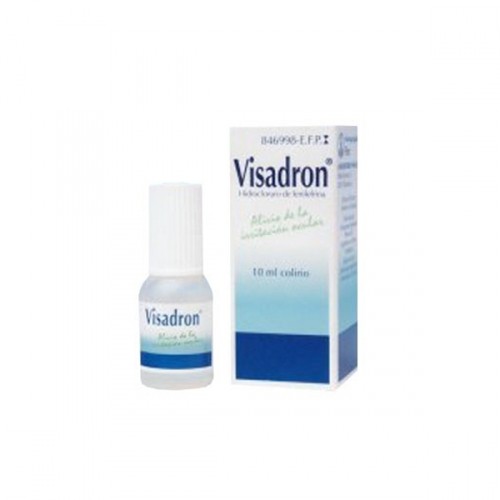
Visadron

Travellers familiar with Visadron from parts of Europe are unlikely to encounter the same brand elsewhere — it is registered in only five countries. The footprint is concentrated in the European Union, with marketing authorisations in the Netherlands, Spain, Portugal, Austria, and Lithuania, and the brand has not been broadly internationalised beyond that cluster.

The active ingredient in Visadron is phenylephrine hydrochloride, classified as an alpha-adrenomimetic with vasoconstrictive properties. Depending on the formulation marketed in a given country, phenylephrine appears in nasal preparations used for the symptomatic relief of nasal congestion associated with colds and influenza, and in ophthalmological preparations where the same vasoconstrictive and mydriatic-cycloplegic action is applied to the eye. The structured indication block further down this page details the registered uses in the markets where Visadron is sold.

Outside its core European markets, the Visadron brand is largely unfamiliar, but phenylephrine itself is one of the most widely circulated decongestant and ophthalmic ingredients in the world. A traveller arriving in another country and looking for an equivalent will generally find phenylephrine-containing nasal sprays, drops, or eye preparations on the local market, although under entirely different brand names and sometimes in different combinations with other ingredients.

A local pharmacist is usually the most practical first stop for translating between brands — particularly given that phenylephrine appears across two quite distinct therapeutic areas, and the right product depends on whether the indication is nasal congestion or an ophthalmic use. Decisions about starting, continuing, or substituting any phenylephrine product, especially for ophthalmic indications, should be made together with a healthcare provider familiar with the patient's situation.

Overdose

Symptoms of overdosage include irritability, restlessness, palpitations, hypertension, difficulty in micturition, nausea, vomiting, thirst and convulsions. In severe overdosage gastric lavage and aspiration should be performed. Symptomatic and supportive measures should be undertaken, particularly with regard to cardiovascular and respiratory systems. Convulsions should be controlled with intravenous diazepam. Chlorpromazine may be used to control marked excitement and hallucinations. Severe hypertension may need to be treated with an alpha-adrenoreceptor blocking drug, such as phentolamine. A beta blocker may be required to control cardiac arrhythmias.

Contraindications

Hypersensitivity to any of the ingredients. Avoid in patients with cardiovascular disease, high blood pressure, diabetes mellitus, closed angle glaucoma, hyperthyroidism, prostatic enlargement and phaeochromocytoma. Patients being treated with monoamine oxidase inhibitors or within 14 days of ceasing such treatment.

Incompatibilities

Not applicable.

Undesirable effects

Adverse effects may include tachycardia, cardiac arrhythmias, palpitations, hypertension, nausea, vomiting, headache and occasionally urinary retention in males.

Reporting of suspected adverse reactions

Reporting suspected adverse reactions after authorisation of the medicinal product is important. It allows continued monitoring of the benefit/risk balance of the medicinal product. Healthcare professionals are asked to report any suspected adverse reactions via the Yellow Card Scheme at www.mhra.gov.uk/yellowcard.

Preclinical safety data

There are no preclinical data of relevance to the prescriber which are additional to that already included in other sections of the SPC.

Pharmacodynamic properties

Phenylephrine is a sympathomimetic agent with mainly direct effects on adrenergic receptors. It has predominantly alpha adrenergic activity and is without stimulating effects on the central nervous system. The sympathomimetic effect of phenylephrine produces vasoconstriction which in turn relieves nasal congestion.

Pharmacokinetic properties

Phenylephrine is readily absorbed after oral administration but is subject to extensive presystemic metabolism, much of which occurs in the enterocytes. As a consequence, systemic bioavailability is only about 40%. Following oral administration, peak plasma concentrations are achieved in 1-2 hours. The mean plasma half life is in the range 2-3 hours. Penetration into the brain appears to be minimal.

Following absorption, the drug is extensively metabolised in the liver. Both phenylephrine and its metabolites are excreted in the urine.

The volume of distribution is between 200 and 500 litres, but there are no data on the extent of plasma protein binding.

Special warnings and precautions for use

This medicine should be used with caution in patients with occlusive vascular disease including Raynaud's Phenomenon.

Do not take for longer than 7 days, unless your doctor agrees.

If symptoms do not go away talk to your doctor.

Keep all medicines out of the reach of children.

Warning: Do not exceed the stated dose.

Patients with rare hereditary problems of galactose intolerance, Lapp lactase deficiency or glucose-galactose malabsorption should not take this medicine.

Effects on ability to drive and use machines

No adverse effects known.

Dosage (Posology) and method of administration

Adults and children over 12 years: One capsule if necessary, up to four times daily.

Children under 12 years: Not recommended.

Elderly: There is no need for dosage reduction in the elderly.

Special precautions for disposal and other handling

Not applicable.
Frequently asked questions

What is Visadron used for?

Visadron is used for the symptomatic relief of nasal congestion associated with the common cold and influenza, including blocked nose. Depending on the local formulation, the same active ingredient also appears in ophthalmological preparations that exploit its vasoconstrictive and mydriatic-cycloplegic action. The structured indication section below this introduction lists the registered uses recognised in each of the markets where Visadron is sold.

Which active substance is in Visadron?

Visadron contains phenylephrine hydrochloride, an alpha-adrenomimetic with vasoconstrictive properties. The same molecule is used internationally both in nasal decongestant preparations and in ophthalmological products, and it circulates worldwide under a wide range of brand names. The active ingredient itself is far more widely available than the Visadron brand, even in countries where this particular brand is not registered.

In how many countries is Visadron available?

Visadron is registered in five countries, all within the European Union: the Netherlands, Spain, Portugal, Austria, and Lithuania. The brand has a narrow regional footprint and is unlikely to be encountered elsewhere under the same name. If your country is not on this list, a local pharmacist can usually identify a phenylephrine-containing product available in that market under a different brand.

Are there other medications with the same active ingredient as Visadron?

Phenylephrine is sold under many brand names worldwide, both in nasal decongestant formulations and in ophthalmic preparations, and is frequently combined with other ingredients in cold and flu products. Other medications within the broader alpha-adrenomimetic and vasoconstrictive categories also exist, although they are not freely interchangeable. To find a regional equivalent, search the active ingredient on Pill2Trip or ask a pharmacist locally.

Should I consult a doctor before taking Visadron?

Yes. Phenylephrine products span two quite different therapeutic areas — nasal decongestion and ophthalmological use — and the appropriate product depends on the indication and the patient's wider circumstances. Prescription rules and over-the-counter availability also differ significantly between countries, which matters for travellers and people relocating. Any decision to start, continue, or substitute a phenylephrine-containing product should involve a healthcare provider.

Visadron

Available in 5 countries