Home / Medicine / Topamax

Topamax

Topamax is a widely registered anticonvulsant brand based on topiramate, with marketing authorisation in 46 countries — a footprint that puts it in front of travellers and expatriates across Europe, the Americas, Asia, and parts of Africa. Its active ingredient, topiramate, is classified as an anticonvulsant and antiepileptic agent.

Topamax is prescribed in two broad therapeutic areas. The first is epilepsy and seizure management, including the prophylaxis of seizures, partial seizures, and seizures associated with Lennox-Gastaut syndrome. The second is the prevention of migraine and certain headache conditions. The structured indication block further down this page lists the registered uses recognised by national regulators in the markets where Topamax is sold.

Because the brand is so broadly distributed, travellers and expatriates frequently encounter the same medication abroad — sometimes labelled Topamax, sometimes as a topiramate-containing generic produced by a local manufacturer. Markets where the brand is registered include Brazil, Germany, China, Canada, and Egypt, but packaging, prescription pathways, and available generics differ from one regulatory regime to another. A pharmacist in the destination country can confirm whether a topiramate product on the local shelf corresponds to the same molecule.

Other medications in the broader anticonvulsant and antiepileptic class are also sold internationally under different active ingredients and brand names, although molecules within the class are not freely interchangeable — each has its own clinical positioning. Decisions about starting, continuing, or substituting an antiepileptic or migraine-prevention medication carry weight that goes beyond brand recognition, and any such decision belongs with a healthcare provider who knows the patient's full history.

Shelf life

3 years.

Incompatibilities

Not applicable.

List of excipients

Core tablet:

Lactose Monohydrate

Pregelatinized Maize Starch

Microcrystalline Cellulose

Sodium Starch Glycolate (Type A)

Magnesium Stearate

Film-coating:

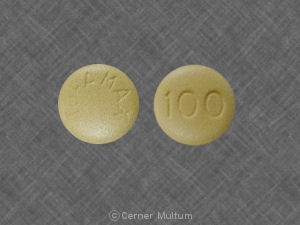
OPADRY® Yellow1, Carnauba Wax

1OPADRY® contains:

Hypromellose

Macrogol

Polysorbate 80

And as colourants, titanium dioxide E171 and iron oxide yellow E172

Preclinical safety data

In nonclinical studies of fertility, despite maternal and paternal toxicity as low as 8 mg/kg/day, no effects on fertility were observed, in male or female rats with doses up to 100 mg/kg/day.

In preclinical studies, topiramate has been shown to have teratogenic effects in the species studied (mice, rats and rabbits). In mice, fetal weights and skeletal ossification were reduced at 500 mg/kg/day in conjunction with maternal toxicity. Overall numbers of fetal malformations in mice were increased for all drug-treated groups (20, 100 and 500 mg/kg/day).

In rats, dosage-related maternal and embryo/fetal toxicity (reduced fetal weights and/or skeletal ossification) were observed down to 20 mg/kg/day with teratogenic effects (limb and digit defects) at 400 mg/kg/day and above. In rabbits, dosage-related maternal toxicity was noted down to 10 mg/kg/day with embryo/fetal toxicity (increased lethality) down to 35 mg/kg/day, and teratogenic effects (rib and vertebral malformations) at 120 mg/kg/day.

The teratogenic effects seen in rats and rabbits were similar to those seen with carbonic anhydrase inhibitors, which have not been associated with malformations in humans. Effects on growth were also indicated by lower weights at birth and during lactation for pups from female rats treated with 20 or 100 mg/kg/day during gestation and lactation. In rats, topiramate crosses the placental barrier.

In juvenile rats, daily oral administration of topiramate at doses up to 300 mg/kg/day during the period of development corresponding to infancy, childhood, and adolescence resulted in toxicities similar to those in adult animals (decreased food consumption with decreased body weight gain, centrolobullar hepatocellular hypertrophy). There were no relevant effects on long bone (tibia) growth or bone (femur) mineral density, preweaning and reproductive development, neurological development (including assessments on memory and learning), mating and fertility or hysterotomy parameters.

In a battery of in vitro and in vivo mutagenicity assays, topiramate did not show genotoxic potential.

Pharmacotherapeutic group

antiepileptics, other antiepileptics, antimigraine preparations, ATC code: N03AX11

Date of revision of the text

13 December 2017

Marketing authorisation holder

Janssen-Cilag Limited

50-100 Holmers Farm Way

High Wycombe

Buckinghamshire

HP12 4EG

UK

Special precautions for storage

Do not store above 25°C. Store the tablets in the original package (blister or bottle) to protect from moisture. Keep the bottle tightly closed to protect the tablets from moisture.

Nature and contents of container

Opaque plastic bottle with tamper-evident closure containing 20, 28, 30, 50, 56, 60 or 100 tablets: bundle pack comprising 200 (2 x 100) tablets. In each bottle, there is a desiccant canister which should not be swallowed.

Blister pack of an aluminium/aluminium foil in strips. Pack sizes of 10, 20, 28, 30, 50, 56, 60 or 100 tablets: bundle pack comprising 200 (2 x 100) tablets. Individual (alu/alu) blister strips are packed inside a folding box.

Not all pack sizes may be marketed

Marketing authorisation number(s)

PL 00242/0303

Special precautions for disposal and other handling

No special requirements.

Date of first authorisation/renewal of the authorisation

Date of first authorisation: 18 July 1995

Date of last renewal: 30 June 2010
Frequently asked questions

What conditions does Topamax treat?

Topamax is prescribed in the management of epilepsy and seizure disorders — including seizure prophylaxis, partial seizures, and seizures associated with Lennox-Gastaut syndrome — as well as in the prevention of migraine and certain headache conditions. The active ingredient belongs to the anticonvulsant and antiepileptic class. The full list of registered indications recognised by national regulators is shown in the structured section below this introduction.

What is the active ingredient in Topamax?

Topamax contains topiramate, classified as an anticonvulsant and antiepileptic agent. Topiramate is the same molecule whether sold under the Topamax brand or as a generic. Internationally, the same active ingredient circulates under several commercial names, particularly in markets where the original patent has expired and multiple manufacturers produce topiramate products in parallel.

In how many countries is Topamax available?

Topamax is registered in 46 countries, spanning Europe, the Americas, Asia, Oceania, and parts of Africa. Examples include Brazil, Germany, China, Australia, Canada, Egypt, and the Czech Republic. If your country is not represented on this list, a local pharmacist can usually confirm whether topiramate is available in that market under a different brand name or as a locally manufactured generic.

Are there other medications with the same active ingredient as Topamax?

Topiramate is sold under several brand names worldwide, particularly in markets where the original patent has expired and generic versions are available. Other medications within the broader anticonvulsant and antiepileptic class also exist, although molecules within the class are not interchangeable without medical guidance — each has a distinct clinical profile. To identify a local topiramate product, search the active ingredient on Pill2Trip or ask a pharmacist.

Should I consult a doctor before taking Topamax?

Yes. Topamax is a prescription medication, and antiepileptic therapy in particular is calibrated carefully to a patient's diagnosis, history, and concurrent medications — the same applies when topiramate is used for migraine prevention. This matters especially for travellers and people relocating internationally, since prescription requirements, available brands, and generic equivalents differ between regulatory systems. Any change should be guided by a healthcare provider who knows the patient.