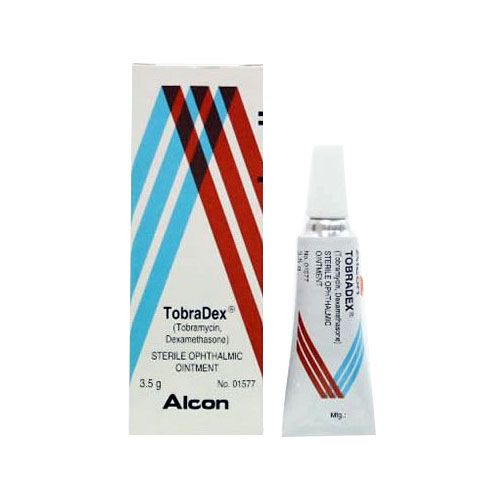
Tobradex pairs tobramycin with dexamethasone — two ingredients in distinct pharmacological classes — within a single ophthalmic preparation aimed at the management of eye conditions where infection and inflammation occur together. Combinations of this kind formalise a pairing that ophthalmologists already use frequently in practice, placing an antibacterial agent and an anti-inflammatory corticosteroid into one product so that both can be applied to the eye in a single step.
Tobramycin belongs to the antibacterial-local category and contributes the antimicrobial component, while dexamethasone is a corticosteroid contributing the anti-inflammatory component. The registered indications for Tobradex include keratitis, blepharitis, and other inflammatory conditions of the eye, alongside settings such as post-traumatic or post-surgical ocular inflammation where bacterial cover is also clinically warranted. The structured indication list further down this page reflects how national regulators have recorded these uses.
Tobradex is marketed in 52 countries, with a footprint that includes Brazil, China, Canada, Egypt, and Belgium among others — a mix of South American, European, North American, African, and Asian markets. Travellers and expatriates moving between these countries may find Tobradex on local pharmacy shelves, although packaging, prescription pathways, and concentrations vary considerably between regulators. In markets where the Tobradex brand is not present, ophthalmic combinations of an aminoglycoside antibiotic with a corticosteroid are typically available under other brand names.
Combination ophthalmic products vary between countries even more than single-ingredient drugs, and ocular antibiotic-steroid therapy is a clinical decision rather than a self-service one. A local pharmacist can clarify regional brand names, but the substitution itself — and any decision to start, continue, or change the medication — properly belongs with an ophthalmologist or prescribing healthcare provider.