Home / Medicine / Spedifen

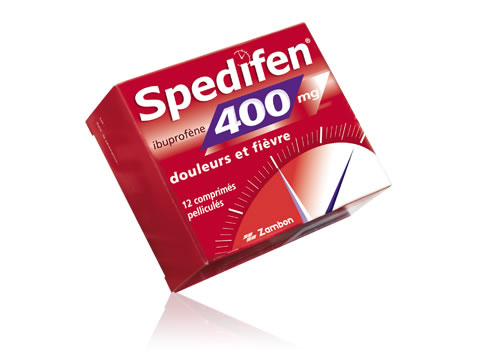
Spedifen

Travellers familiar with Spedifen from a European pharmacy shelf are unlikely to encounter the same brand in most other parts of the world — it is registered in only nine countries. The footprint is unusual in shape, spanning parts of Western and Central Europe alongside several markets in East and Southeast Asia, with no single dominant region.

The active ingredient in Spedifen is ibuprofen, a non-steroidal anti-inflammatory with analgesic and antipyretic properties. It is prescribed for the management of pain, fever, and inflammation across a range of contexts, including dental pain, musculoskeletal complaints such as osteoarthritis and rheumatoid arthritis, and symptomatic relief in upper respiratory conditions like laryngitis and rhinitis. The structured indication block further down this page details the registered uses recognised in the markets where Spedifen is sold.

While the Spedifen brand itself has a narrow distribution — present in places such as Switzerland, Thailand, Hungary, Hong Kong, and Indonesia — ibuprofen as a molecule is one of the most widely available analgesics in the world, sold under a long list of brand names and as a generic in essentially every regulated market. A traveller used to Spedifen will almost always find an ibuprofen-containing product in their destination country, even if the packaging and brand name look entirely unfamiliar.

A local pharmacist is generally the most efficient point of contact for matching Spedifen to a regional equivalent, and can also advise on whether a particular ibuprofen product in that market is sold over the counter or requires a prescription, since this varies by jurisdiction. Anyone considering Spedifen for ongoing pain, inflammatory conditions, or use in a child should treat the choice as a clinical conversation with a healthcare provider rather than a self-directed one.

How does this drug class actually work?
Read the plain-language explainer in Pharmacology Academy (Non-steroidal anti-inflammatory drugs) →

Incompatibilities

Capsules; Coated tablet; Film-coated tablet; Gel for external use; Ointment for external use; Rectal suppositories for children; Substance; Substance-powder; Substance-powder for the preparation of non-sterile dosage forms; Sugar coated tablets; Suspension for ingestion for childrenCapsule, soft; Suppository; Tablets, effervescentSyrup; Tablets of prolonged action, coatedSolution for intravenous administration

None known.

Not applicable

None.

Spedifen solution must not be in contact with any acidic solution such as certain antibiotics or diuretics. A rinse of the infusion line must be performed between each product administration.

Preclinical safety data

Capsules; Coated tablet; Film-coated tablet; Gel for external use; Ointment for external use; Rectal suppositories for children; Substance; Substance-powder; Substance-powder for the preparation of non-sterile dosage forms; Sugar coated tablets; Suspension for ingestion for childrenCapsule, soft; Suppository; Tablets, effervescentSyrup; Tablets of prolonged action, coatedSolution for intravenous administration

No relevant information additional to that already contained elsewhere in the SmPC.

No relevant information, additional to that contained elsewhere in the SPC.

None stated.

There are no preclinical data considered relevant to clinical safety beyond data included in other sections of this Summary of Product Characteristics. With the exception of an acute toxicity study, no further studies have been carried out in juvenile animals with Spedifen.

Special precautions for disposal and other handling

Capsules; Coated tablet; Film-coated tablet; Gel for external use; Ointment for external use; Rectal suppositories for children; Substance; Substance-powder; Substance-powder for the preparation of non-sterile dosage forms; Sugar coated tablets; Suspension for ingestion for childrenCapsule, soft; Suppository; Tablets, effervescentSyrup; Tablets of prolonged action, coatedSolution for intravenous administration

Not applicable.

Not applicable

None.

Administrative data

As for all parenteral products, ampoules of Spedifen should be visually inspected for particulate matter and the integrity of the container prior to use. Ampoules are intended for single use only, any unused portions must be discarded.

Chlorhexidine must not be used to disinfect the neck of the ampoule as it is not compatible with the Spedifen solution. Therefore, for asepsis of the ampoule before use, ethanol 60% or isopropyl alcohol 70% is recommended.

When disinfecting the neck of the ampoule with an antiseptic, to avoid any interaction with the Spedifen solution, the ampoule must be completely dry before it is opened.

The required volume to be given to the infant should be determined according to body weight, and should be injected intravenously as a short infusion over 15 minutes, preferably undiluted.

Use only sodium chloride 9 mg/ml (0.9%) solution for injection or glucose 50 mg/ml (5%) solution to adjust injection volume.

The total volume of solution injected to preterm infants should take into account the total daily fluid volume administered. A maximal volume of 80 ml/kg/day on the first day of life should usually be respected; this should be progressively increased in the following 1-2 weeks (about 20 ml/kg birthweight/day) up to a maximal volume of 180 ml/kg birthweight/day.

Before and after administration of Spedifen, to avoid contact with any acidic solution, rinse the infusion line over 15 minutes with 1.5 to 2 ml of either sodium chloride 9 mg/ml (0.9%) or glucose 50 mg/ml (5%), solution for injection.

After first opening of an ampoule, any unused portions must be discarded.

Any unused product or waste material should be disposed of in accordance with local requirements.
Frequently asked questions

What conditions does Spedifen treat?

Spedifen is prescribed for the management of pain, fever, and inflammation in a range of clinical contexts. Registered indications include dental pain, general pain relief, fever, inflammatory joint conditions such as osteoarthritis and rheumatoid arthritis, and symptomatic management in upper respiratory complaints like laryngitis and rhinitis. The structured indication section below this introduction lists each registered use in the markets where Spedifen is sold.

What is the active ingredient in Spedifen?

Spedifen contains ibuprofen, a non-steroidal anti-inflammatory with analgesic and antipyretic activity. Ibuprofen is one of the most widely used analgesic molecules in the world and circulates internationally under a long list of brand names as well as in generic form. The Spedifen brand is simply one commercial presentation of this widely available active ingredient.

Is Spedifen sold internationally?

Spedifen is registered in nine countries, with a footprint split between parts of Europe and East and Southeast Asia. Examples include Switzerland, France, Thailand, Hong Kong, Hungary, Indonesia, and Poland. Outside this list the specific brand is unlikely to be encountered, although ibuprofen itself is available in nearly every regulated pharmacy market. A local pharmacist can confirm what is stocked in a given country.

Can I find a generic version of Spedifen?

Ibuprofen is one of the most widely sold molecules in the world, available as a generic and under numerous brand names in essentially every regulated market. Other non-steroidal anti-inflammatory medications also exist, although molecules within the class are not freely interchangeable. To identify a local ibuprofen-containing product, search the active ingredient on Pill2Trip or ask a pharmacist in your country.

Is Spedifen a prescription medication?

Whether Spedifen or another ibuprofen product requires a prescription depends on the country, the strength, and the formulation — some markets sell ibuprofen over the counter for short-term use, while higher-strength or specific-indication products are prescription-only. Patients managing chronic inflammatory conditions, or considering ibuprofen for a child, should make product choices with a healthcare provider rather than relying on brand familiarity alone.