Home / Medicine / Seroxat

Seroxat

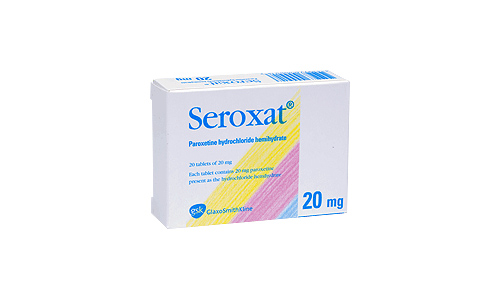
Among paroxetine-based products on the international market, Seroxat is one of the more broadly distributed brands, registered in 40 countries. Its active ingredient is paroxetine, classified within the psychoanaleptics group and used as an antidepressant. The brand is a familiar one for travellers and expatriates who first encountered it in Europe or East Asia and now find themselves looking for the same medication in another regulatory environment.

Paroxetine is prescribed across a relatively wide span of psychiatric indications, including depression, generalized anxiety disorder, obsessive compulsive disorder, panic disorder with or without agoraphobia, and related anxiety presentations. The structured indication block further down this page lists each registered use exactly as it appears in the source data; the categories above are summarised at the level of the therapeutic area rather than at the level of any specific clinical decision.

Because Seroxat circulates across so many markets — examples include Germany, China, Egypt, Finland, and Croatia — travellers will frequently come across it, sometimes under the Seroxat brand and sometimes as a paroxetine-containing generic produced by a local manufacturer. National regulators differ in packaging, pack size, and prescribing pathway, and a pharmacist in the destination country is generally the most efficient route to confirming whether a paroxetine product on the shelf corresponds to what was prescribed at home.

Other antidepressants in the broader psychoanaleptics category are also widely available internationally under various molecules and brand names, but they are not interchangeable with paroxetine without medical input. Continuity of antidepressant therapy across borders — including any change of brand, switch to a generic, or interruption while travelling — is a clinical matter, and decisions about it belong with a treating healthcare provider rather than a pharmacy counter.

Shelf life

10/20/30 mg tablet

3 years.

Oral suspension

2 years (1 month after opening).

Incompatibilities

Not applicable.

List of excipients

10 mg tablet

Tablet core:

Dibasic calcium phosphate dihydrate (E341)

Sodium starch glycolate (Type A)

Magnesium stearate (E470b).

Tablet coating:

Hypromellose (E464)

Macrogol 400

Polysorbate 80 (E433)

Titanium dioxide (E171)

Iron oxide red (E172).

20 mg tablet

Tablet core:

Dibasic calcium phosphate dihydrate (E341)

Sodium starch glycolate (Type A)

Magnesium stearate (E470b).

Tablet coating:

Hypromellose (E464)

Macrogol 400

Polysorbate 80 (E433)

Titanium dioxide (E171).

30 mg tablet

Tablet core:

Dibasic calcium phosphate dihydrate (E341)

Sodium starch glycolate (Type A)

Magnesium stearate (E470b).

Tablet coating:

Hypromellose (E464)

Macrogol 400

Polysorbate 80 (E433)

Titanium dioxide (E171)

Indigo carmine (E132).

Oral suspension

Polacrilin potassium

Dispersible cellulose (E460)

Propylene glycol

Glycerol (E422)

Sorbitol (E420)

Methyl parahydroxybenzoate (E218)

Propyl parahydroxybenzoate (E216)

Sodium citrate dihydrate (E331)

Citric acid anhydrate (E330)

Sodium saccharin (E954)

Natural orange flavour

Natural lemon flavour

Colouring agent sunset yellow FCF (E110)

Simethicone emulsion

Purified water.

Date of revision of the text

23 October 2015

Marketing authorisation holder

SmithKline Beecham Limited

Great West Road

Brentford

Middlesex TW8 9GS.

trading as:

SmithKline Beecham Pharmaceuticals

Welwyn Garden City

Hertfordshire AL7 1EY

And/or

GlaxoSmithKline UK,

Stockley Park West,

Uxbridge,

Middlesex UB11 1BT

Special precautions for storage

10/20/30 mg tablet

Do not store above 30°C.

Store in the original package in order to protect from light.

Oral suspension

Do not store above 25°C.

Nature and contents of container

10 mg tablet

Child-resistant blister packs comprising opaque polyvinyl chloride (PVC) backed with aluminium foil laminated with paper.

Pack sizes: 14 and 28 tablets.

Not all pack sizes may be marketed.

20 mg tablet

Child-resistant blister packs comprising opaque polyvinyl chloride (PVC) backed with aluminium foil laminated with paper. Plastic containers (bottles) made of polypropylene, with polyethylene closures, may also be used.

Pack sizes: 50 x 1 tablet or 4, 10, 14, 20, 28, 30, 50, 56, 60, 98, 100, 250 and 500 tablets.

Not all pack sizes may be marketed.

30 mg tablet

Child-resistant blister packs comprising opaque polyvinyl chloride (PVC) backed with aluminium foil laminated with paper. Plastic containers (bottles) made of polypropylene, with polyethylene closures, may also be used.

Pack sizes: 28, 30, 56 and 60 tablets.

Not all pack sizes may be marketed.

Oral suspension

Amber glass bottle sealed with polypropylene child-resistant cap lined with a polyethylene wad.

A polypropylene measuring cup is included.

Pack size: 150 ml.

Marketing authorisation number(s)

Seroxat Tablets 10 mg: 10592/0218

Seroxat Tablets 20 mg: 10592/0001

Seroxat Tablets 30 mg: 10592/0002

Seroxat Oral suspension:10592/0092

Special precautions for disposal and other handling

No special requirements.

Date of first authorisation/renewal of the authorisation

Seroxat Tablets 10 mg:

Date of first authorisation: 29/07/2005

Date of latest renewal: 27/09/2010

Seroxat Tablets 20 mg and 30 mg:

Date of first authorisation: 11/12/1990

Date of latest renewal: 27/09/2010

Seroxat Oral suspension

Date of first authorisation: 08/01/1997

Date of latest renewal: 27/09/2010
Frequently asked questions

What conditions does Seroxat treat?

Seroxat is prescribed across a range of psychiatric indications, including depression, generalized anxiety disorder, obsessive compulsive disorder, panic disorder, panic attacks, and agoraphobia. Its active ingredient sits within the psychoanaleptics category and is used as an antidepressant. The structured indication list further down this page reflects each registered use as recorded in the regulatory data for the markets where Seroxat is sold.

What is the active ingredient in Seroxat?

Seroxat contains paroxetine, a psychoanaleptic medication used as an antidepressant. Paroxetine is the same molecule whether dispensed under the Seroxat brand or as a paroxetine-containing generic, and internationally the same active ingredient circulates under multiple commercial names depending on the manufacturer and the regulatory market in which the product is registered.

In how many countries is Seroxat available?

Seroxat is registered in 40 countries, spanning Western and Eastern Europe, parts of the Middle East and North Africa, the Caucasus, and parts of East Asia. Examples include Germany, China, Egypt, Finland, Bulgaria, Hong Kong, and Croatia. If your country is not listed in the structured data on this page, a local pharmacist can usually confirm whether paroxetine is available locally under another brand name.

Can I find a generic version of Seroxat?

Paroxetine is sold under several brand names and as generic preparations in many of the markets where Seroxat is registered. Other antidepressants within the broader psychoanaleptics class also exist internationally, although they are not freely interchangeable — different molecules within the class have meaningfully different profiles. To identify a local paroxetine-containing product, search the active ingredient on Pill2Trip or ask a pharmacist.

Should I consult a doctor before taking Seroxat?

Yes. Seroxat is a prescription medication, and antidepressant therapy is calibrated to an individual's history, concurrent medications, and clinical picture. This is particularly relevant for travellers and people relocating between countries, since prescription requirements, available brands, and generic equivalents differ across regulatory regimes. Any decision to start, stop, switch, or substitute paroxetine — including continuity of an existing prescription abroad — should involve a healthcare provider.