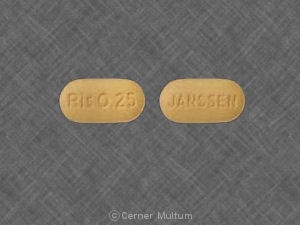
Marketed in 46 countries across the Americas, Europe, Asia, Africa, and Oceania, Risperdal is a globally distributed brand of risperidone, classified as an antipsychotic within the broader psycholeptic category. For an international reader trying to identify the medication abroad — whether as a traveller carrying a prescription, an expatriate adjusting to a new healthcare system, or a family member helping a relative — the wide footprint usually means an equivalent product is reachable, though not always under the same name.
Risperdal is prescribed in the management of several psychiatric and neurodevelopmental conditions, including schizophrenia, bipolar disorder, behavioural symptoms in dementia, delirium, certain presentations associated with intellectual disability, and conduct disorder. The structured indication block further down this page reflects the registered uses recognised across the markets where Risperdal is authorised, and these can vary somewhat between national regulators.
Because risperidone is so widely registered, the same molecule frequently turns up under different commercial names across borders. Markets where Risperdal itself is registered include Brazil, China, Canada, France, and Australia, but local packaging, prescription pathways, and the availability of generic risperidone differ considerably from one country to another. A pharmacist in the destination country can confirm whether a locally-stocked risperidone product corresponds to what the patient has been taking.
Other medications in the antipsychotic class are also distributed globally under various molecules and brand names, and a clinician familiar with the patient's history is best placed to assess whether any substitution is appropriate. Continuity of psychiatric medication is rarely a casual decision — for anyone considering a change while abroad, that conversation should sit with a treating healthcare provider rather than with a pharmacy counter.
Date of revision of the text
09/2017
Marketing authorisation holder
Janssen-Cilag Ltd
50-100 Holmers Farm Way
High Wycombe
Buckinghamshire
HP12 4EG
UK
Special precautions for storage
Do not store above 30°C.
Blister packs: Store in the original package in order to protect from light.
Nature and contents of container
RISPERDAL film-coated tablets are packaged in PVC/LDPE/PVDC/aluminium foil blisters and HDPE bottles with PP screw cap.
RISPERDAL film-coated tablets are available in the following pack sizes:
â— 0.5 mg: blister packs containing 20 or 50 tablets and bottles containing 500 tablets
â— 1 mg: blister packs containing 6, 20, 50, 60, or 100 tablets and bottles containing 500 tablets
â— 2 mg: blister packs containing 10, 20, 50, 60, or 100 tablets and bottles containing 500 tablets
â— 3 mg: blister packs containing 20, 50, 60, or 100 tablets
â— 4 mg: blister packs containing 10, 20, 30, 50, 60, or 100 tablets
â— 6 mg: blister packs containing 28, 30, or 60 tablets.
Not all pack sizes may be marketed.
Marketing authorisation number(s)
PL 00242/0347 (0.5 mg)
PL 00242/0186 (1 mg)
PL 00242/0187 (2 mg)
PL 00242/0188 (3 mg)
PL 00242/0189 (4 mg)
PL 00242/0317 (6 mg)
Special precautions for disposal and other handling
No special requirements for disposal.
Any unused medicinal product or waste material should be disposed of in accordance with local requirements.
Date of first authorisation/renewal of the authorisation
| Date of first authorisation:
| 03 June 2000 (0.5 mg film-coated tablets)
08 December 1992 (1/2/3/4 mg film-coated tablets)
15 July 1997 (6 mg film-coated tablets)
|
| Date of latest renewal:
| 30 April 2017
|