Overdose
No information provided.
Contraindications
- Known or suspected pregnancy. There is no indication for AYGESTIN in pregnancy. (See PRECAUTIONS.)
- Undiagnosed vaginal bleeding Known, suspected or history of cancer of the breast
- Active deep vein thrombosis, pulmonary embolism or history of these conditions
- Active or recent (e.g., within the past year) arterial thromboembolic disease (e.g., stroke, myocardial infarction)
- Impaired liver function or liver disease
- As a diagnostic test for pregnancy
- Hypersensitivity to any of the drug components
Undesirable effects
See WARNINGS and PRECAUTIONS.
The following adverse reactions have been observed in women taking progestins:
- Breakthrough bleeding
- Spotting
- Change in menstrual flow
- Amenorrhea
- Edema
- Changes in weight (decreases, increases)
- Changes in the cervical squamo-columnar junction and cervical secretions
- Cholestatic jaundice
- Rash (allergic) with and without pruritus
- Melasma or chloasma
- Clinical depression
- Acne
- Breast enlargement/tenderness
- Headache/migraine
- Urticaria
- Abnormalities of liver tests (i.e., AST, ALT, Bilirubin)
- Decreased HDL cholesterol and increased LDL/HDL ratio
- Mood swings
- Nausea
- Insomnia
- Anaphylactic/anaphylactoid reactions
- Thrombotic and thromboembolic events (e.g., deep vein thrombosis, pulmonary embolism, retinal vascular thrombosis, cerebral thrombosis and embolism)
- Optic neuritis (which may lead to partial or complete loss of vision)
Therapeutic indications
AYGESTIN (norethindrone acetate tablets USP) is indicated for the treatment of secondary amenorrhea, endometriosis, and abnormal uterine bleeding due to hormonal imbalance in the absence of organic pathology, such as submucous fibroids or uterine cancer. AYGESTIN (norethindrone acetate tablets USP) is not intended, recommended or approved to be used with concomitant estrogen therapy in postmenopaus al women for endometrial protection.
Pharmacokinetic properties
Absorption
Norethindrone acetate is completely and rapidly deacetylated to norethindrone (NET) after oral administration, and the disposition of norethindrone acetate is indistinguishable from that of orally administered norethindrone. Norethindrone acetate is rapidly absorbed from AYGESTIN tablets, with maximum plasma concentration of norethindrone generally occurring at about 2 hours post-dose. The pharmacokinetic parameters of norethindrone following single oral administration of AYGESTIN in 29 healthy female volunteers are summarized in Table 1.
Table 1: Pharmacokinetic Parameters after a Single Dose of AYGESTIN® in Healthy Women
| | AYGESTIN®
(n = 29)
Arithmetic Mean ± SD |
| Norethindrone (NET) |
| AUC (0-inf)(ng/ml*h) | 166.90 ± 56.28 |
| Cmax (ng/ml) | 26.19 ± 6.19 |
| tmax (h) | 1.83 ± 0.58 |
| t½ (h) | 8.51 ± 2.19 |
AUC = area under the curve,
Cmax = maximum plasma concentration,
tmax = time at maximum plasma concentration,
t½ = half-life,
SD = standard deviation |
Figure 1: Mean Plasma Concentration Profile after a Single Dose of 5 mg Administered to 29 Healthy Female Volunteers under Fasting Conditions
Effect Of Food
The effect of food administration on the pharmacokinetics of AYGESTIN has not been studied.
Distribution
Norethindrone is 36% bound to sex hormone-binding globulin (SHBG) and 61% bound to albumin. Volume of distribution of norethindrone is about 4 L/kg.
Metabolism
Norethindrone undergoes extensive biotransformation, primarily via reduction, followed by sulfate and glucuronide conjugation. The majority of metabolites in the circulation are sulfates, with glucuronides accounting for most of the urinary metabolites.
Excretion
Plasma clearance value for norethindrone is approximately 0.4 L/hr/kg. Norethindrone is excreted in both urine and feces, primarily as metabolites. The mean terminal elimination half-life of norethindrone following a single dose administration of AYGESTIN is approximately 9 hours.
Name of the medicinal product
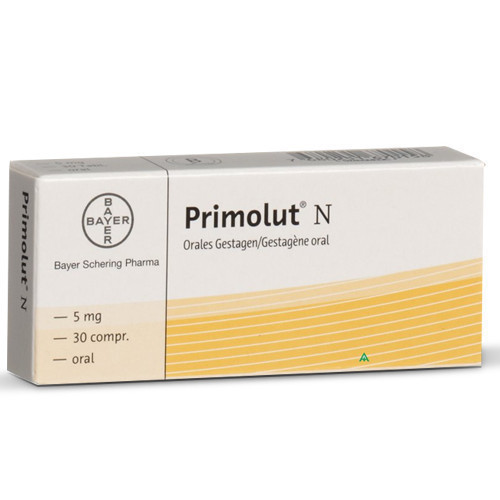
Primolut-N
Qualitative and quantitative composition
Norethisteron
Special warnings and precautions for use
WARNINGS Cardiovascular Disorders
Patients with risk factors for arterial vascular disease (e.g., hypertension, diabetes mellitus, tobacco use, hypercholesterolemia, and obesity) and/or venous thromboembolism (e.g., personal history or family history of VTE, obesity, and systemic lupus erythematosus) should be managed appropriately.
Visual Abnormalities
Discontinue medication pending examination if there is a sudden partial or complete loss of vision or if there is sudden onset of proptosis, diplopia, or migraine. If examination reveals papilledema or retinal vascular lesions, medication should be discontinued.
PRECAUTIONS General
- Because this drug may cause some degree of fluid retention, conditions which might be influenced by this factor, such as epilepsy, migraine, cardiac or renal dysfunctions, require careful observation.
- In cases of breakthrough bleeding, and in all cases of irregular bleeding per vagina, nonfunctional causes should be borne in mind. In cases of undiagnosed vaginal bleeding, adequate diagnostic measures are indicated.
- Patients who have a history of clinical depression should be carefully observed and the drug discontinued if the depression recurs to a serious degree.
- Data suggest that progestin therapy may have adverse effects on lipid and carbohydrate metabolism. The choice of progestin, its dose, and its regimen may be important in minimizing these adverse effects, but these issues will require further study before they are clarified. Women with hyperlipidemias and/or diabetes should be monitored closely during progestin therapy.
- The pathologist should be advised of progestin therapy when relevant specimens are submitted.
Information For The Patient
Healthcare providers are advised to discuss the PATIENT INFORMATION leaflet with patients for whom they prescribe AYGESTIN.
Carcinogenesis, Mutagenesis, And Impairment Of Fertility
Some beagle dogs treated with medroxyprogesterone acetate developed mammary nodules. Although nodules occasionally appeared in control animals, they were intermittent in nature, whereas nodules in treated animals were larger and more numerous, and persisted. There is no general agreement as to whether the nodules are benign or malignant. Their significance with respect to humans has not been established.
Pregnancy Category X
Norethindrone acetate is contraindicated during pregnancy as it may cause fetal harm when administered to pregnant women. Several reports suggest an association between intrauterine exposure to progestational drugs in the first trimester of pregnancy and congenital abnormalities in male and female fetuses. Some progestational drugs induce mild virilization of the external genitalia of female fetuses.
Nursing Mothers
Detectable amounts of progestins have been identified in the milk of mothers receiving them. Caution should be exercised when progestins are administered to a nursing woman.
Pediatric Use
AYGESTIN tablets are not indicated in children.
Dosage (Posology) and method of administration
Therapy with AYGESTIN must be adapted to the specific indications and therapeutic response of the individual patient.
Secondary amenorrhea, abnormal uterine bleeding due to hormonal imbalance in the absence of organic pathology
2.5 to 10 mg AYGESTIN may be given daily for 5 to 10 days to produce secretory transformation of an endometrium that has been adequately primed with either endogenous or exogenous estrogen. Progestin withdrawal bleeding usually occurs within three to seven days after discontinuing AYGESTIN therapy. Patients with a past history of recurrent episodes of abnormal uterine bleedingmay benefit from planned menstrual cycling with AYGESTIN.
Endometriosis
Initial daily dosage of 5 mg AYGESTIN for two weeks. Dosage should be increased by 2.5 mg per day every two weeks until 15 mg per day of AYGESTIN is reached. Therapy may be held at this level for six to nine months or until annoying breakthrough bleeding demands temporary termination.