Home / Medicine / Oxycort

Oxycort

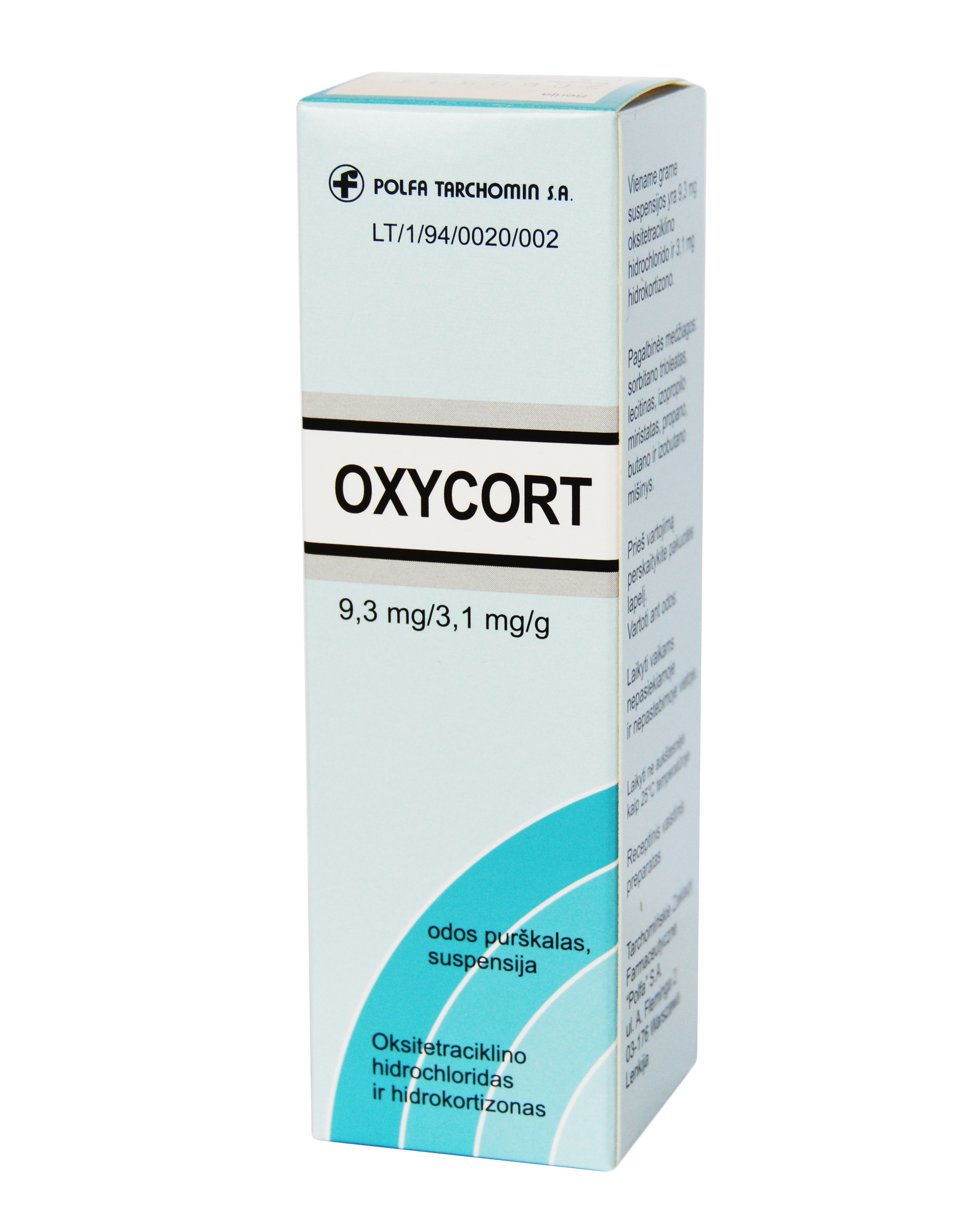
Oxycort pairs hydrocortisone with oxytetracycline hydrochloride — two ingredients in distinct pharmacological classes — within a single topical preparation aimed at inflammatory skin conditions where bacterial involvement is a concern. Combinations of this kind are used in dermatology to address two issues at once: the inflammatory and pruritic component of the skin condition itself, and the risk of secondary bacterial colonisation in compromised skin.

Hydrocortisone is a corticosteroid with antiallergic, antipruritic, and anti-inflammatory action when applied topically, while oxytetracycline is an antibacterial agent in the tetracycline family. The two are commonly co-prescribed in dermatology — particularly for eczematous and intertriginous lesions — and a combination product like Oxycort formalises that common pairing into a single application. The registered indications include dermatitis, eczema, atopic dermatitis, and intertriginous dermatitis affecting skin folds.

Oxycort is registered in seven countries, with a regional footprint concentrated in Central and Eastern Europe and parts of the post-Soviet space — including Poland, Russia, Hungary, Bulgaria, and Lithuania. Travellers familiar with Oxycort from these markets are unlikely to encounter the same brand in Western Europe, North America, or Asia, where local dermatological practice tends to rely on different combination products or on the two ingredients prescribed separately.

Combination topical products vary considerably between countries, both in the specific molecules paired and in their regulatory status, more so than single-ingredient preparations. A pharmacist in the destination country can confirm whether a comparable corticosteroid-and-antibiotic preparation is available locally. Decisions about starting, continuing, or substituting a product like Oxycort — particularly for a chronic skin condition — belong with a healthcare provider who knows the patient.

How does this drug class actually work?
Read the plain-language explainer in Pharmacology Academy (H1 antihistamines) →

Overdose

There is no specific antidote available. In case of overdosage, discontinue medication, treat symptomatically and institute supportive measures.

Contraindications

Hypersensitivity to one of the components of the preparation.

Primary bacterial infections eg impetigo, pyoderma, furunculosis.

Pregnancy, lactation and in infants and small children because of the theoretical risk of damage to permanent dentition.

Incompatibilities

None documented.

Pharmaceutical form

Aerosol for external use; Ointment for external use

Undesirable effects

Hydrocortisone and oxytetracycline are well tolerated by the epithelial tissues and may be used topically with minimal untoward effects. Allergic reactions, including contact dermatitis may occur occasionally, but are rare.

Reactions occurring most often from the presence of the anti-infective ingredients are allergic sensitisations.

The following local side effects have been reported with topical corticosteroids, especially under occlusive dressings; burning, itching, irritation, dryness, folliculitis, hypertrichosis, acneiform eruptions, hypopigmentation, perioral dermatitis, allergic contact dermatitis, maceration of the skin, secondary infection, skin atrophy, striae, miliaria.

The use of Oxycort Ointment should be discontinued if such reactions occur.

Secondary infection The development of secondary bacterial or fungal infection has occurred after use of combinations containing steroids and antimicrobials.

Reporting of suspected adverse reactions

Reporting suspected adverse reactions after authorisation of the medicinal product is important. It allows continued monitoring of the benefit/risk balance of the medicinal product. Healthcare professionals are asked to report any suspected adverse reactions via Yellow Card Scheme at: www.mhra.gov.uk/yellowcard.

Preclinical safety data

None stated

Therapeutic indications

Oxycort Ointment is indicated in the following disorders: exudative and secondarily infected eczema including atopic eczema, primary irritant dermatitis, allergic and seborrhoeic dermatitis. Secondarily infected insect bite reactions.

In exudative flexural intertrigo Oxycort Ointment can be used for up to seven days.

Like other tetracyclines, oxytetracycline is generally ineffective against Pseudomonas and Proteus species. Because these are recognised secondary infecting organisms in exudative dermatoses, preliminary identification of the organism and determination of antibiotic sensitivity is important.

Pharmacodynamic properties

Oxycort Ointment possesses both the anti-inflammatory activity of hydrocortisone and the broad spectrum antibacterial activity of oxytetracycline, which is active against a wide variety of Gram-positive and Gram-negative organisms.

Pharmacokinetic properties

Oxytetracycline There is no published information on the systemic absorption of oxytetracycline following dermal application.

Hydrocortisone Following topical steroid application, variable absorption has been reported especially when applied to large surfaces, under occlusive dressing or for prolonged periods of time.

Special warnings and precautions for use

Oxycort Ointment should not be continued for more than seven days in the absence of any clinical improvement, since in this situation occult extension of infection may occur due to the masking effect of the steroid.

Extended or recurrent application may increase the risk of contact sensitisation and should be avoided.

The use of oxytetracycline and other antibiotics may result in an overgrowth of resistant organisms - particularly Candida and staphylococci. Careful observation of the patient for this possibility is essential. If new infections due to nonsusceptible bacteria of fungi appear during therapy, Oxycort should be discontinued. If extensive areas are treated or if the occlusive technique is used, there may be increased systemic absorption of the corticosteroid and suitable precautions should be taken.

If irritation develops, the product should be discontinued.

Oxycort Ointment is not recommended for ophthalmic use.

Effects on ability to drive and use machines

Oxycort Ointment is not expected to have an influence on the ability to drive or operate machinery.

Dosage (Posology) and method of administration

After thorough cleansing of the affected skin areas, a small amount of the ointment should be applied gently. Applications should be made two to four times daily.

Oxycort Ointment is for topical administration only.

Use in the elderly No special precautions.

Use in children Not recommended. (See 'Contra-indications').

Use in renal or hepatic impairment No special precautions.

Special precautions for disposal and other handling

None
Frequently asked questions

What conditions does Oxycort treat?

Oxycort is prescribed for inflammatory and allergic skin conditions, including dermatitis, eczema, atopic dermatitis, and intertriginous dermatitis affecting skin folds. The combination is intended for situations where an inflammatory skin condition is accompanied by, or at risk of, secondary bacterial involvement. The structured indication section further down this page lists the registered uses recognised by the national regulators in the markets where Oxycort is sold.

What is Oxycort made of?

Oxycort contains two active ingredients: hydrocortisone, a corticosteroid with antiallergic, antipruritic, and anti-inflammatory action on the skin, and oxytetracycline hydrochloride, an antibacterial agent. Both molecules are widely used internationally as single-ingredient products under various brand names, and the pairing of a topical corticosteroid with a topical antibiotic is a familiar therapeutic format in dermatology across many regional markets.

In how many countries is Oxycort available?

Oxycort is registered in seven countries, with a regional footprint concentrated in Central and Eastern Europe and parts of the post-Soviet space. Examples include Poland, Russia, Hungary, Bulgaria, and Lithuania. Outside this cluster the specific brand is largely unfamiliar, although hydrocortisone and oxytetracycline are individually available in many regulated markets. If your country is not on this list, a local pharmacist can advise on comparable products.

Are there other medications with the same active ingredients as Oxycort?

Both hydrocortisone and oxytetracycline are sold separately under numerous brand names worldwide, and other combination products pairing a topical corticosteroid with a topical antibiotic also exist in different regional markets, although the specific molecules and ratios vary. To identify a regional equivalent, search either active ingredient on Pill2Trip or ask a pharmacist about combination dermatological preparations available where you are.

Should I consult a doctor before taking Oxycort?

Yes. Topical combination products containing a corticosteroid and an antibiotic differ between countries in formulation, regulatory status, and prescription requirements, often more than single-ingredient versions of the same molecules. Travellers and expatriates should expect that the same brand will not always be available abroad, and that an equivalent product locally may pair different ingredients. A healthcare provider familiar with the patient should guide any substitution.