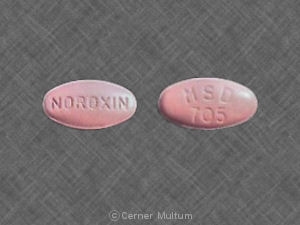
Travellers familiar with Noroxin from Australia, Spain, or Russia are unlikely to encounter the same brand elsewhere — it is registered in only nine countries. The brand has not been broadly internationalised in the way many antibacterials have, and a patient arriving in much of Western Europe, East Asia, or Africa may need to look for a different product on the local pharmacy shelf.
The active ingredient in Noroxin is norfloxacin, classified as a broad-spectrum bactericidal antibacterial. It is prescribed in the management of various bacterial infections, including urinary tract infections, prostatitis, gonorrhoea, proctitis, and certain respiratory and throat infections such as pneumonia and pharyngitis, as well as in selected infection-prevention settings. The structured indication list below this introduction details the registered uses recognised in the markets where Noroxin is sold.
The country footprint is geographically scattered rather than clustered — Argentina, Australia, Ecuador, Lebanon, Peru, Portugal, Russia, Spain, and the United States — which means a reader is most likely to encounter Noroxin in their home market and not while travelling between regions. Outside these nine countries, the brand is generally unfamiliar, although norfloxacin itself and other broad-spectrum antibacterials are widely available under different names.
A local pharmacist is usually the right first point of contact for identifying a regional equivalent, since antibacterial availability, prescription pathways, and stewardship rules differ markedly between countries. Antibacterial therapy is not a substitution to make casually: the choice of agent depends on the specific infection, and any change should be guided by the prescribing healthcare provider.