Overdose
Symptoms and Signs
In cases of overdosage with Lariam, the symptoms mentioned under ADVERSE
REACTIONS may be more pronounced.
Treatment
Patients should be managed by symptomatic and supportive care following Lariam (mefloquine) overdose. There are no specific antidotes. Monitor cardiac function (if possible by ECG) and neuropsychiatric status for at least 24 hours. Provide symptomatic and intensive supportive treatment as required, particularly for cardiovascular disturbances.
Contraindications
Use of Lariam (mefloquine) is contraindicated in patients with a known hypersensitivity to mefloquine or related compounds (eg, quinine and quinidine) or to any of the excipients contained in the formulation. Lariam (mefloquine) should not be prescribed for prophylaxis in patients with active depression, a recent history of depression, generalized anxiety disorder, psychosis, or schizophrenia or other major psychiatric disorders, or with a history of convulsions.
Undesirable effects
Clinical
At the doses used for treatment of acute malaria infections, the symptoms possibly attributable to drug administration cannot be distinguished from those symptoms usually attributable to the disease itself.
Among subjects who received mefloquine for prophylaxis of malaria, the most
frequently observed adverse experience was vomiting (3%). Dizziness, syncope,
extrasystoles and other complaints affecting less than 1% were also reported.
Among subjects who received mefloquine for treatment, the most frequently observed adverse experiences included: dizziness, myalgia, nausea, fever, headache, vomiting, chills, diarrhea, skin rash, abdominal pain, fatigue, loss of appetite, and tinnitus. Those side effects occurring in less than 1% included bradycardia, hair loss, emotional problems, pruritus, asthenia, transient emotional disturbances and telogen effluvium (loss of resting hair). Seizures have also been reported.
Two serious adverse reactions were cardiopulmonary arrest in one patient shortly
after ingesting a single prophylactic dose of mefloquine while concomitantly
using propranolol (see PRECAUTIONS: DRUG INTERACTIONS), and encephalopathy
of unknown etiology during prophylactic mefloquine administration. The relationship
of encephalopathy to drug administration could not be clearly established.
Postmarketing
Postmarketing surveillance indicates that the same kind of adverse experiences are reported during prophylaxis, as well as acute treatment. Because these experiences are reported voluntarily from a population of uncertain size, it is not always possible to reliably estimate their frequency or establish a causal relationship to Lariam (mefloquine) exposure.
The most frequently reported adverse events are nausea, vomiting, loose stools or diarrhea, abdominal pain, dizziness or vertigo, loss of balance, and neuropsychiatric events such as headache, somnolence, and sleep disorders (insomnia, abnormal dreams). These are usually mild and may decrease despite continued use. In a small number of patients it has been reported that dizziness or vertigo and loss of balance may continue for months after discontinuation of the drug.
Occasionally, more severe neuropsychiatric disorders have been reported such as: sensory and motor neuropathies (including paresthesia, tremor and ataxia), convulsions, agitation or restlessness, anxiety, depression, mood changes, panic attacks, forgetfulness, confusion, hallucinations, aggression, psychotic or paranoid reactions and encephalopathy. Rare cases of suicidal ideation and suicide have been reported though no relationship to drug administration has been confirmed.
Other infrequent adverse events include:
Cardiovascular Disorders: circulatory disturbances (hypotension,
hypertension, flushing, syncope), chest pain, tachycardia or palpitation,
bradycardia, irregular pulse, extrasystoles, A-V block, and other transient
cardiac conduction alterations
Skin Disorders: rash, exanthema, erythema, urticaria, pruritus,
edema, hair loss, erythema multiforme, and Stevens-Johnson syndrome
Musculoskeletal Disorders: muscle weakness, muscle cramps, myalgia,
and arthralgia
Respiratory Disorders: dyspnea, pneumonitis of possible allergic
etiology
Other Symptoms: visual disturbances, vestibular disorders including
tinnitus and hearing impairment, asthenia, malaise, fatigue, fever, sweating,
chills, dyspepsia and loss of appetite
Laboratory
The most frequently observed laboratory alterations which could be possibly attributable to drug administration were decreased hematocrit, transient elevation of transaminases, leukopenia and thrombocytopenia. These alterations were observed in patients with acute malaria who received treatment doses of the drug and were attributed to the disease itself.
During prophylactic administration of mefloquine to indigenous populations in malaria-endemic areas, the following occasional alterations in laboratory values were observed: transient elevation of transaminases, leukocytosis or thrombocytopenia.
Because of the long half-life of mefloquine, adverse reactions to Lariam (mefloquine) may occur or persist up to several weeks after the last dose.
Therapeutic indications
Treatment of Acute Malaria Infections
Lariam (mefloquine) is indicated for the treatment of mild to moderate acute malaria caused
by mefloquine-susceptible strains of P. falciparum (both chloroquine-susceptible
and resistant strains) or by Plasmodium vivax. There are insufficient
clinical data to document the effect of mefloquine in malaria caused by P.
ovale or P. malariae.
Note: Patients with acute P. vivax malaria, treated with Lariam (mefloquine) , are
at high risk of relapse because Lariam (mefloquine) does not eliminate exoerythrocytic (hepatic
phase) parasites. To avoid relapse, after initial treatment of the acute infection
with Lariam (mefloquine) , patients should subsequently be treated with an 8-aminoquinoline
derivative (eg, primaquine).
Prevention of Malaria
Lariam (mefloquine) is indicated for the prophylaxis of P. falciparum and P. vivax
malaria infections, including prophylaxis of chloroquine-resistant strains of
P. falciparum.
Pharmacokinetic properties
Absorption
The absolute oral bioavailability of mefloquine has not been determined since
an intravenous formulation is not available. The bioavailability of the tablet
formation compared with an oral solution was over 85%. The presence of food
significantly enhances the rate and extent of absorption, leading to about a
40% increase in bioavailability. In healthy volunteers, plasma concentrations
peak 6 to 24 hours (median, about 17 hours) after a single dose of Lariam (mefloquine). In
a similar group of volunteers, maximum plasma concentrations in µg/L are
roughly equivalent to the dose in milligrams (for example, a single 1000 mg
dose produces a maximum concentration of about 1000 µg/L). In healthy
volunteers, a dose of 250 mg once weekly produces maximum steady-state plasma
concentrations of 1000 to 2000 µg/L, which are reached after 7 to 10 weeks.
Distribution
In healthy adults, the apparent volume of distribution is approximately 20
L/kg, indicating extensive tissue distribution. Mefloquine may accumulate in
parasitized erythrocytes. Experiments conducted in vitro with human blood
using concentrations between 50 and 1000 mg/mL showed a relatively constant
erythrocyte-to-plasma concentration ratio of about 2 to 1. The equilibrium reached
in less than 30 minutes was found to be reversible. Protein binding is about
98%.
Mefloquine crosses the placenta. Excretion into breast milk appears to be minimal
(see PRECAUTIONS: Nursing Mothers).
Metabolism
Two metabolites have been identified in humans. The main metabolite, 2,8-bis-trifluoromethyl-4-quinoline
carboxylic acid, is inactive in Plasmodium falciparum. In a study in
healthy volunteers, the carboxylic acid metabolite appeared in plasma 2 to 4
hours after a single oral dose. Maximum plasma concentrations, which were about
50% higher than those of mefloquine, were reached after 2 weeks. Thereafter,
plasma levels of the main metabolite and mefloquine declined at a similar rate.
The area under the plasma concentration-time curve (AUC) of the main metabolite
was 3 to 5 times larger than that of the parent drug. The other metabolite,
an alcohol, was present in minute quantities only.
Elimination
In several studies in healthy adults, the mean elimination half-life of mefloquine varied between 2 and 4 weeks, with an average of about 3 weeks. Total clearance, which is essentially hepatic, is in the order of 30 mL/min. There is evidence that mefloquine is excreted mainly in the bile and feces. In volunteers, urinary excretion of unchanged mefloquine and its main metabolite under steady-state condition accounted for about 9% and 4% of the dose, respectively. Concentrations of other metabolites could not be measured in the urine.
Date of revision of the text
September 2008
Fertility, pregnancy and lactation
Teratogenic Effects
Pregnancy Category C. Mefloquine has been demonstrated to be teratogenic in
rats and mice at a dose of 100 mg/kg/day. In rabbits, a high dose of 160 mg/kg/day
was embryotoxic and teratogenic, and a dose of 80 mg/kg/day was teratogenic
but not embryotoxic. There are no adequate and well-controlled studies in pregnant
women. However, clinical experience with Lariam (mefloquine) has not revealed an embryotoxic
or teratogenic effect. Mefloquine should be used during pregnancy only if the
potential benefit justifies the potential risk to the fetus. Women of childbearing
potential who are traveling to areas where malaria is endemic should be warned
against becoming pregnant. Women of childbearing potential should also be advised
to practice contraception during malaria prophylaxis with Lariam (mefloquine) and for up
to 3 months thereafter. However, in the case of unplanned pregnancy, malaria
chemoprophylaxis with Lariam (mefloquine) is not considered an indication for pregnancy termination.
Special warnings and precautions for use
WARNINGS
In case of life-threatening, serious or overwhelming malaria infections
due to P. falciparum, patients should be treated with an intravenous
antimalarial drug. Following completion of intravenous treatment, Lariam (mefloquine) may
be given to complete the course of therapy.
Data on the use of halofantrine subsequent to administration of Lariam (mefloquine) suggest
a significant, potentially fatal prolongation of the QTc interval of the ECG.
Therefore, halofantrine must not be given simultaneously with or subsequent
to Lariam (mefloquine). No data are available on the use of Lariam (mefloquine) after halofantrine (see
PRECAUTIONS: DRUG INTERACTIONS).
Mefloquine may cause psychiatric symptoms in a number of patients, ranging
from anxiety, paranoia, and depression to hallucinations and psychotic behavior.
On occasions, these symptoms have been reported to continue long after mefloquine
has been stopped. Rare cases of suicidal ideation and suicide have been reported
though no relationship to drug administration has been confirmed. To minimize
the chances of these adverse events, mefloquine should not be taken for prophylaxis
in patients with active depression or with a recent history of depression, generalized
anxiety disorder, psychosis, or schizophrenia or other major psychiatric disorders.
Lariam (mefloquine) should be used with caution in patients with a previous history of depression.
During prophylactic use, if psychiatric symptoms such as acute anxiety,
depression, restlessness or confusion occur, these may be considered prodromal
to a more serious event. In these cases, the drug must be discontinued and an
alternative medication should be substituted.
Concomitant administration of Lariam (mefloquine) and quinine or quinidine may produce
electrocardiographic abnormalities.
Concomitant administration of Lariam (mefloquine) and quinine or chloroquine may increase
the risk of convulsions.
PRECAUTIONS
Hypersensitivity Reactions
Hypersensitivity reactions ranging from mild cutaneous events to anaphylaxis cannot be predicted.
In patients with epilepsy, Lariam (mefloquine) may increase the risk of convulsions. The
drug should therefore be prescribed only for curative treatment in such patients
and only if there are compelling medical reasons for its use (see PRECAUTIONS:
DRUG INTERACTIONS).
Central and Peripheral Nervous System Effects
Caution should be exercised with regard to activities requiring alertness and
fine motor coordination such as driving, piloting aircraft, operating machinery,
and deep-sea diving, as dizziness, a loss of balance, or other disorders of
the central or peripheral nervous system have been reported during and following
the use of Lariam (mefloquine). These effects may occur after therapy is discontinued due
to the long half-life of the drug. In a small number of patients, dizziness
and loss of balance have been reported to continue for months after mefloquine
has been stopped (see ADVERSE REACTIONS: Postmarketing).
Lariam (mefloquine) should be used with caution in patients with psychiatric disturbances
because mefloquine use has been associated with emotional disturbances (see
ADVERSE REACTIONS).
Use in Patients with Hepatic Impairment
In patients with impaired liver function the elimination of mefloquine may be prolonged, leading to higher plasma levels.
Long-Term Use
This drug has been administered for longer than 1 year. If the drug is to be administered for a prolonged period, periodic evaluations including liver function tests should be performed.
Although retinal abnormalities seen in humans with long-term chloroquine use
have not been observed with mefloquine use, long-term feeding of mefloquine
to rats resulted in dose-related ocular lesions (retinal degeneration, retinal
edema and lenticular opacity at 12.5 mg/kg/day and higher) (see Animal
Toxicology). Therefore, periodic ophthalmic examinations are recommended.
Cardiac Effects
Parenteral studies in animals show that mefloquine, a myocardial depressant,
possesses 20% of the anti-fibrillatory action of quinidine and produces 50%
of the increase in the PR interval reported with quinine. The effect of mefloquine
on the compromised cardiovascular system has not been evaluated. However, transitory
and clinically silent ECG alterations have been reported during the use of mefloquine.
Alterations included sinus bradycardia, sinus arrhythmia, first degree AV-block,
prolongation of the QTc interval and abnormal T waves (see also cardiovascular
effects under PRECAUTIONS: DRUG INTERACTIONS
and ADVERSE REACTIONS). The benefits of Lariam (mefloquine)
therapy should be weighed against the possibility of adverse effects in patients
with cardiac disease.
Laboratory Tests
Periodic evaluation of hepatic function should be performed during prolonged prophylaxis.
Information for Patients
Medication Guide: As required by law, a Lariam (mefloquine) Medication Guide is supplied
to patients when Lariam (mefloquine) is dispensed. An information wallet card is also supplied
to patients when Lariam (mefloquine) is dispensed. Patients should be instructed to read
the Medication Guide when Lariam (mefloquine) is received and to carry the information wallet
card with them when they are taking Lariam. The complete texts of the Medication
Guide and information wallet card are reprinted at the end of this document.
Patients should be advised:
- that malaria can be a life-threatening infection in the traveler;
- that Lariam (mefloquine) is being prescribed to help prevent or treat this serious infection;
- that in a small percentage of cases, patients are unable to take this medication
because of side effects, including dizziness and loss of balance, and it may
be necessary to change medications. Although side effects of dizziness and
loss of balance are usually mild and do not cause people to stop taking the
medication, in a small number of patients it has been reported that these
symptoms may continue for months after discontinuation of the drug.
- that when used as prophylaxis, the first dose of Lariam (mefloquine) should be taken
1 week prior to arrival in an endemic area;
- that if the patients experience psychiatric symptoms such as acute anxiety,
depression, restlessness or confusion, these may be considered prodromal to
a more serious event. In these cases, the drug must be discontinued and an
alternative medication should be substituted;
- that no chemoprophylactic regimen is 100% effective, and protective clothing,
insect repellents, and bednets are important components of malaria prophylaxis;
- to seek medical attention for any febrile illness that occurs after return
from a malarious area and to inform their physician that they may have been
exposed to malaria.
Carcinogenesis, Mutagenesis, Impairment of Fertility
Carcinogenesis
The carcinogenic potential of mefloquine was studied in rats and mice in 2-year feeding studies at doses of up to 30 mg/kg/day. No treatment-related increases in tumors of any type were noted.
Mutagenesis
The mutagenic potential of mefloquine was studied in a variety of assay systems including: Ames test, a host-mediated assay in mice, fluctuation tests and a mouse micronucleus assay. Several of these assays were performed with and without prior metabolic activation. In no instance was evidence obtained for the mutagenicity of mefloquine.
Impairment of Fertility
Fertility studies in rats at doses of 5, 20, and 50 mg/kg/day of mefloquine have demonstrated adverse effects on fertility in the male at the high dose of 50 mg/kg/day, and in the female at doses of 20 and 50 mg/kg/day. Histopathological lesions were noted in the epididymides from male rats at doses of 20 and 50 mg/kg/day. Administration of 250 mg/week of mefloquine (base) in adult males for 22 weeks failed to reveal any deleterious effects on human spermatozoa.
Pregnancy
Teratogenic Effects
Pregnancy Category C. Mefloquine has been demonstrated to be teratogenic in
rats and mice at a dose of 100 mg/kg/day. In rabbits, a high dose of 160 mg/kg/day
was embryotoxic and teratogenic, and a dose of 80 mg/kg/day was teratogenic
but not embryotoxic. There are no adequate and well-controlled studies in pregnant
women. However, clinical experience with Lariam (mefloquine) has not revealed an embryotoxic
or teratogenic effect. Mefloquine should be used during pregnancy only if the
potential benefit justifies the potential risk to the fetus. Women of childbearing
potential who are traveling to areas where malaria is endemic should be warned
against becoming pregnant. Women of childbearing potential should also be advised
to practice contraception during malaria prophylaxis with Lariam (mefloquine) and for up
to 3 months thereafter. However, in the case of unplanned pregnancy, malaria
chemoprophylaxis with Lariam (mefloquine) is not considered an indication for pregnancy termination.
Nursing Mothers
Mefloquine is excreted in human milk in small amounts, the activity of which is unknown. Based on a study in a few subjects, low concentrations (3% to 4%) of mefloquine were excreted in human milk following a dose equivalent to 250 mg of the free base. Because of the potential for serious adverse reactions in nursing infants from mefloquine, a decision should be made whether to discontinue the drug, taking into account the importance of the drug to the mother.
Pediatric Use
Use of Lariam (mefloquine) to treat acute, uncomplicated P. falciparum malaria in
pediatric patients is supported by evidence from adequate and well-controlled
studies of Lariam (mefloquine) in adults with additional data from published open-label and
comparative trials using Lariam (mefloquine) to treat malaria caused by P. falciparum
in patients younger than 16 years of age. The safety and effectiveness of Lariam (mefloquine)
for the treatment of malaria in pediatric patients below the age of 6 months
have not been established.
In several studies, the administration of Lariam (mefloquine) for the treatment of malaria
was associated with early vomiting in pediatric patients. Early vomiting was
cited in some reports as a possible cause of treatment failure. If a second
dose is not tolerated, the patient should be monitored closely and alternative
malaria treatment considered if improvement is not observed within a reasonable
period of time (see DOSAGE AND ADMINISTRATION).
Geriatric Use
Clinical studies of Lariam (mefloquine) did not include sufficient numbers of subjects aged
65 and over to determine whether they respond differently from younger subjects.
Other reported clinical experience has not identified differences in responses
between the elderly and younger patients. Since electrocardiographic abnormalities
have been observed in individuals treated with Lariam (mefloquine) (see PRECAUTIONS)
and underlying cardiac disease is more prevalent in elderly than in younger
patients, the benefits of Lariam (mefloquine) therapy should be weighed against the possibility
of adverse cardiac effects in elderly patients.
Dosage (Posology) and method of administration
(see INDICATIONS)
Adult Patients
Treatment of mild to moderate malaria in adults caused by P. vivax or
mefloquine-susceptible strains of P. falciparum
Five tablets (1250 mg) mefloquine hydrochloride to be given as a single oral dose. The drug should not be taken on an empty stomach and should be administered with at least 8 oz (240 mL) of water.
If a full-treatment course with Lariam (mefloquine) does not lead to improvement within 48 to 72 hours, Lariam (mefloquine) should not be used for retreatment. An alternative therapy should be used. Similarly, if previous prophylaxis with mefloquine has failed, Lariam (mefloquine) should not be used for curative treatment.
Note: Patients with acute P. vivax malaria, treated with Lariam (mefloquine) ,
are at high risk of relapse because Lariam (mefloquine) does not eliminate exoerythrocytic
(hepatic phase) parasites. To avoid relapse after initial treatment of the acute
infection with Lariam (mefloquine) , patients should subsequently be treated with an 8-aminoquinoline
derivative (eg, primaquine).
Malaria Prophylaxis
One 250 mg Lariam (mefloquine) tablet once weekly.
Prophylactic drug administration should begin 1 week before arrival in an endemic area. Subsequent weekly doses should be taken regularly, always on the same day of each week, preferably after the main meal. To reduce the risk of malaria after leaving an endemic area, prophylaxis must be continued for 4 additional weeks to ensure suppressive blood levels of the drug when merozoites emerge from the liver. Tablets should not be taken on an empty stomach and should be administered with at least 8 oz (240 mL) of water.
In certain cases, eg, when a traveler is taking other medication, it may be
desirable to start prophylaxis 2 to 3 weeks prior to departure, in order to
ensure that the combination of drugs is well tolerated (see PRECAUTIONS:
DRUG INTERACTIONS).
When prophylaxis with Lariam (mefloquine) fails, physicians should carefully evaluate which antimalarial to use for therapy.
Pediatric Patients
Treatment of mild to moderate malaria in pediatric patients caused by mefloquine-susceptible
strains of P. falciparum
Twenty (20) to 25 mg/kg body weight. Splitting the total therapeutic dose into 2 doses taken 6 to 8 hours apart may reduce the occurrence or severity of adverse effects. Experience with Lariam (mefloquine) in pediatric patients weighing less than 20 kg is limited. The drug should not be taken on an empty stomach and should be administered with ample water. The tablets may be crushed and suspended in a small amount of water, milk or other beverage for administration to small children and other persons unable to swallow them whole.
If a full-treatment course with Lariam (mefloquine) does not lead to improvement within 48 to 72 hours, Lariam (mefloquine) should not be used for retreatment. An alternative therapy should be used. Similarly, if previous prophylaxis with mefloquine has failed, Lariam (mefloquine) should not be used for curative treatment.
In pediatric patients, the administration of Lariam (mefloquine) for the treatment of malaria
has been associated with early vomiting. In some cases, early vomiting has been
cited as a possible cause of treatment failure (see PRECAUTIONS). If
a significant loss of drug product is observed or suspected because of vomiting,
a second full dose of Lariam (mefloquine) should be administered to patients who vomit less
than 30 minutes after receiving the drug. If vomiting occurs 30 to 60 minutes
after a dose, an additional half-dose should be given. If vomiting recurs, the
patient should be monitored closely and alternative malaria treatment considered
if improvement is not observed within a reasonable period of time.
The safety and effectiveness of Lariam (mefloquine) to treat malaria in pediatric patients below the age of 6 months have not been established.
Malaria Prophylaxis
The recommended prophylactic dose of Lariam (mefloquine) is approximately 5 mg/kg body weight once weekly. One 250 mg Lariam (mefloquine) tablet should be taken once weekly in pediatric patients weighing over 45 kg. In pediatric patients weighing less than 45 kg, the weekly dose decreases in proportion to body weight:
| 30 to 45 kg: |
3/4 tablet |
| 20 to 30 kg: |
1/2 tablet |
Experience with Lariam (mefloquine) in pediatric patients weighing less than 20 kg is limited.
Interaction with other medicinal products and other forms of interaction
).
When prophylaxis with Lariam (mefloquine) fails, physicians should carefully evaluate which antimalarial to use for therapy.
Pediatric Patients
Treatment of mild to moderate malaria in pediatric patients caused by mefloquine-susceptible
strains of P. falciparum
Twenty (20) to 25 mg/kg body weight. Splitting the total therapeutic dose into 2 doses taken 6 to 8 hours apart may reduce the occurrence or severity of adverse effects. Experience with Lariam (mefloquine) in pediatric patients weighing less than 20 kg is limited. The drug should not be taken on an empty stomach and should be administered with ample water. The tablets may be crushed and suspended in a small amount of water, milk or other beverage for administration to small children and other persons unable to swallow them whole.
If a full-treatment course with Lariam (mefloquine) does not lead to improvement within 48 to 72 hours, Lariam (mefloquine) should not be used for retreatment. An alternative therapy should be used. Similarly, if previous prophylaxis with mefloquine has failed, Lariam (mefloquine) should not be used for curative treatment.
In pediatric patients, the administration of Lariam (mefloquine) for the treatment of malaria
has been associated with early vomiting. In some cases, early vomiting has been
cited as a possible cause of treatment failure (see PRECAUTIONS). If
a significant loss of drug product is observed or suspected because of vomiting,
a second full dose of Lariam (mefloquine) should be administered to patients who vomit less
than 30 minutes after receiving the drug. If vomiting occurs 30 to 60 minutes
after a dose, an additional half-dose should be given. If vomiting recurs, the
patient should be monitored closely and alternative malaria treatment considered
if improvement is not observed within a reasonable period of time.
The safety and effectiveness of Lariam (mefloquine) to treat malaria in pediatric patients below the age of 6 months have not been established.
Malaria Prophylaxis
The recommended prophylactic dose of Lariam (mefloquine) is approximately 5 mg/kg body weight once weekly. One 250 mg Lariam (mefloquine) tablet should be taken once weekly in pediatric patients weighing over 45 kg. In pediatric patients weighing less than 45 kg, the weekly dose decreases in proportion to body weight:
| 30 to 45 kg: |
3/4 tablet |
| 20 to 30 kg: |
1/2 tablet |
Experience with Lariam (mefloquine) in pediatric patients weighing less than 20 kg is limited.
HOW SUPPLIED
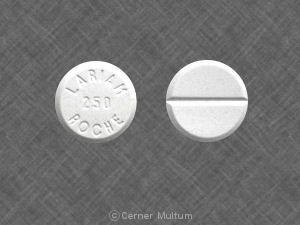
Lariam (mefloquine) is available as scored, white, round tablets, containing 250 mg of mefloquine
hydrochloride in unit-dose packages of 25 (NDC 0004-0172-02). Imprint
on tablets: LARIAM (mefloquine) 250 ROCHE
Tablets should be stored at 25°C (77°F); excursions permitted to 15° to 30°C (59° to 86°F).
Manufactured by: F. HOFFMANN-LA ROCHE LTD, Basel, Switzerland.
Distributed by: Roche Laboratories Inc. 340 Kingsland Street, Nutley, New Jersey
07110-1199.
Side Effects & Drug Interactions
SIDE EFFECTS
Clinical
At the doses used for treatment of acute malaria infections, the symptoms possibly attributable to drug administration cannot be distinguished from those symptoms usually attributable to the disease itself.
Among subjects who received mefloquine for prophylaxis of malaria, the most
frequently observed adverse experience was vomiting (3%). Dizziness, syncope,
extrasystoles and other complaints affecting less than 1% were also reported.
Among subjects who received mefloquine for treatment, the most frequently observed adverse experiences included: dizziness, myalgia, nausea, fever, headache, vomiting, chills, diarrhea, skin rash, abdominal pain, fatigue, loss of appetite, and tinnitus. Those side effects occurring in less than 1% included bradycardia, hair loss, emotional problems, pruritus, asthenia, transient emotional disturbances and telogen effluvium (loss of resting hair). Seizures have also been reported.
Two serious adverse reactions were cardiopulmonary arrest in one patient shortly
after ingesting a single prophylactic dose of mefloquine while concomitantly
using propranolol (see PRECAUTIONS: DRUG INTERACTIONS), and encephalopathy
of unknown etiology during prophylactic mefloquine administration. The relationship
of encephalopathy to drug administration could not be clearly established.
Postmarketing
Postmarketing surveillance indicates that the same kind of adverse experiences are reported during prophylaxis, as well as acute treatment. Because these experiences are reported voluntarily from a population of uncertain size, it is not always possible to reliably estimate their frequency or establish a causal relationship to Lariam (mefloquine) exposure.
The most frequently reported adverse events are nausea, vomiting, loose stools or diarrhea, abdominal pain, dizziness or vertigo, loss of balance, and neuropsychiatric events such as headache, somnolence, and sleep disorders (insomnia, abnormal dreams). These are usually mild and may decrease despite continued use. In a small number of patients it has been reported that dizziness or vertigo and loss of balance may continue for months after discontinuation of the drug.
Occasionally, more severe neuropsychiatric disorders have been reported such as: sensory and motor neuropathies (including paresthesia, tremor and ataxia), convulsions, agitation or restlessness, anxiety, depression, mood changes, panic attacks, forgetfulness, confusion, hallucinations, aggression, psychotic or paranoid reactions and encephalopathy. Rare cases of suicidal ideation and suicide have been reported though no relationship to drug administration has been confirmed.
Other infrequent adverse events include:
Cardiovascular Disorders: circulatory disturbances (hypotension,
hypertension, flushing, syncope), chest pain, tachycardia or palpitation,
bradycardia, irregular pulse, extrasystoles, A-V block, and other transient
cardiac conduction alterations
Skin Disorders: rash, exanthema, erythema, urticaria, pruritus,
edema, hair loss, erythema multiforme, and Stevens-Johnson syndrome
Musculoskeletal Disorders: muscle weakness, muscle cramps, myalgia,
and arthralgia
Respiratory Disorders: dyspnea, pneumonitis of possible allergic
etiology
Other Symptoms: visual disturbances, vestibular disorders including
tinnitus and hearing impairment, asthenia, malaise, fatigue, fever, sweating,
chills, dyspepsia and loss of appetite
Laboratory
The most frequently observed laboratory alterations which could be possibly attributable to drug administration were decreased hematocrit, transient elevation of transaminases, leukopenia and thrombocytopenia. These alterations were observed in patients with acute malaria who received treatment doses of the drug and were attributed to the disease itself.
During prophylactic administration of mefloquine to indigenous populations in malaria-endemic areas, the following occasional alterations in laboratory values were observed: transient elevation of transaminases, leukocytosis or thrombocytopenia.
Because of the long half-life of mefloquine, adverse reactions to Lariam (mefloquine) may occur or persist up to several weeks after the last dose.
DRUG INTERACTIONS
Drug-drug interactions with Lariam (mefloquine) have not been explored in detail. There
is one report of cardiopulmonary arrest, with full recovery, in a patient who
was taking a beta blocker (propranolol) (see PRECAUTIONS:
Cardiac Effects). The effects of mefloquine on the compromised cardiovascular
system have not been evaluated. The benefits of Lariam (mefloquine) therapy should be weighed
against the possibility of adverse effects in patients with cardiac disease.
Because of the danger of a potentially fatal prolongation of the QTc interval,
halofantrine must not be given simultaneously with or subsequent to Lariam (see
WARNINGS).
Concomitant administration of Lariam (mefloquine) and other related compounds (eg, quinine,
quinidine and chloroquine) may produce electrocardiographic abnormalities and
increase the risk of convulsions (see WARNINGS). If these drugs are to
be used in the initial treatment of severe malaria, Lariam (mefloquine) administration should
be delayed at least 12 hours after the last dose. There is evidence that the
use of halofantrine after mefloquine causes a significant lengthening of the
QTc interval. Clinically significant QTc prolongation has not been found with
mefloquine alone.
This appears to be the only clinically relevant interaction of this kind with
Lariam (mefloquine) , although theoretically, coadministration of other drugs known to alter
cardiac conduction (eg, anti-arrhythmic or beta-adrenergic blocking agents,
calcium channel blockers, antihistamines or H1-blocking agents, tricyclic
antidepressants and phenothiazines) might also contribute to a prolongation
of the QTc interval. There are no data that conclusively establish whether the
concomitant administration of mefloquine and the above listed agents has an
effect on cardiac function.
In patients taking an anticonvulsant (eg, valproic acid, carbamazepine, phenobarbital
or phenytoin), the concomitant use of Lariam (mefloquine) may reduce seizure control by lowering
the plasma levels of the anticonvulsant. Therefore, patients concurrently taking
antiseizure medication and Lariam (mefloquine) should have the blood level of their antiseizure
medication monitored and the dosage adjusted appropriately (see PRECAUTIONS).
When Lariam (mefloquine) is taken concurrently with oral live typhoid vaccines, attenuation of immunization cannot be excluded. Vaccinations with attenuated live bacteria should therefore be completed at least 3 days before the first dose of Lariam (mefloquine).
No other drug interactions are known. Nevertheless, the effects of Lariam (mefloquine) on travelers receiving comedication, particularly diabetics or patients using anticoagulants, should be checked before departure.
In clinical trials, the concomitant administration of sulfadoxine and pyrimethamine did not alter the adverse reaction profile.