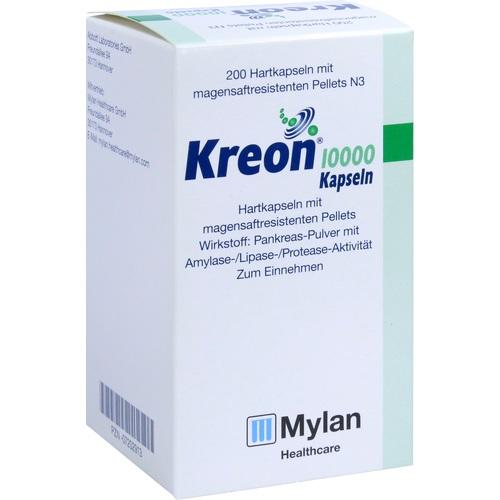
Kreon contains pancreatin, a preparation classed among enzymes used to replenish a deficiency of pancreatic enzymes, and is registered in 21 countries. Its footprint is concentrated across Central, Eastern, and Northern Europe, with additional reach into the Caucasus and parts of the Middle East — markets such as Germany, Poland, Norway, Georgia, and Lebanon all carry the brand.
Pancreatin combines amylolytic, lipolytic, and proteolytic activity, meaning it contributes enzymes that act on carbohydrates, fats, and proteins respectively. Kreon is used in the management of conditions where the pancreas cannot supply sufficient digestive enzymes on its own — including chronic pancreatitis and cystic fibrosis, as well as pancreatic insufficiency that can arise in the context of hepatitis, cirrhosis, certain cancers, or following surgery affecting the digestive tract. The structured indication list further down this page sets out the registered uses recognised by national regulators.
Because Kreon is concentrated in a specific cluster of European and neighbouring markets, travellers from outside that region may not recognise the brand, and travellers leaving that region may not find Kreon on the shelf at their destination. Pancreatin itself, however, is a well-established active ingredient and is marketed internationally under a range of other brand names. A local pharmacist is generally the right person to identify which pancreatin-containing product is available in a given country.
Other pancreatic enzyme products exist in the same therapeutic category, with differences in enzyme content and release profile that make them not freely interchangeable. Decisions about starting, continuing, or substituting enzyme replacement therapy belong with a healthcare provider who knows the patient's condition and dietary context.
Incompatibilities
None stated.
Preclinical safety data
No relevant information additional to that contained elsewhere in the Summary of Product Characteristics.
Pharmacotherapeutic group
Enzyme preparations, ATC code: A09AA02.
Pharmacokinetic properties
Absorption
The enzymes are present in the form of pH-sensitive enteric-coated minitablets, which are filled into hard gelatin capsules. The minitablets, which are released from the capsule into the stomach, are enteric coated to resist inactivation at low pH. Once released, the minitablets are distributed into the stomach and pass into the duodenum where the enteric coating begins to dissolve and the enzymes are released when the pH reaches 5.5. Duodenal availability studies in adults indicate that following oral administration of Kreon HL capsules, measurable levels of enzymes are present in the duodenum. Pancreatin is not absorbed from the gastro-intestinal tract in appreciable amounts.
Metabolism
Once they have accomplished their digestive function, the enzymes may be digested in the intestine.
Elimination
The constituents may be partially absorbed and subsequently excreted in the urine. Any undigested enzymes are excreted in the faeces.
Special populations
Paediatrics
The pharmacokinetics of pancreatin in paediatric subjects have not been investigated.
Elderly
The pharmacokinetics of pancreatin in elderly subjects have not been investigated.
Renal impairment
The pharmacokinetics of pancreatin in renally impaired subjects have not been investigated.
Hepatic impairment
The pharmacokinetics of pancreatin in hepatically impaired subjects have not been investigated.
Special precautions for disposal and other handling
Not applicable.