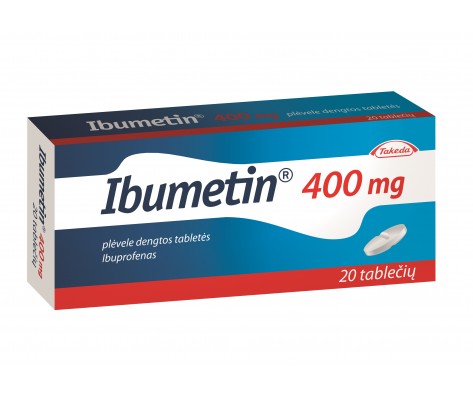
Ibumetin is essentially a regional brand. Its marketing authorisation extends to eight countries clustered tightly across the Nordic and Baltic region, and its active ingredient is ibuprofen, classified as a non-steroidal anti-inflammatory with analgesic and antipyretic properties. A traveller arriving outside this regional cluster is unlikely to see Ibumetin on a pharmacy shelf, even though ibuprofen itself is one of the most widely distributed active ingredients in the world.
Ibuprofen is used for the relief of pain and fever and is prescribed in a range of inflammatory conditions, including arthritis, osteoarthritis, and rheumatoid arthritis, as well as in contexts such as dental pain, laryngitis, and rhinitis. The structured indication list further down this page sets out each registered use as recognised in the markets where Ibumetin is sold.
The eight countries where Ibumetin is registered — Sweden, Estonia, Norway, Lithuania, Denmark, Austria, Finland, and Latvia — share regulatory traditions, and the brand has not been expanded much beyond that cluster. Patients who know Ibumetin from one of these markets and are now travelling or relocating elsewhere will generally find ibuprofen available locally, but under different brand names and sometimes through different prescription pathways.
Other medications in the non-steroidal anti-inflammatory class are sold throughout the world under many different molecules and brand names, and a pharmacist in the destination country is well placed to identify the appropriate local equivalent. Any patient managing recurrent or chronic inflammatory pain should treat the choice of product, and any substitution between brands or molecules, as a conversation with a healthcare provider rather than a shelf-side decision.