Home / Medicine / Fucidin

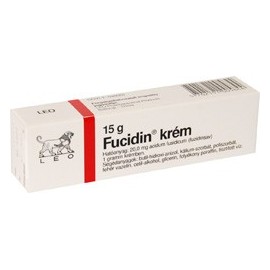
Fucidin

Marketed in 46 countries across Europe, the Americas, Asia, and parts of Africa, Fucidin is a globally distributed brand of fusidic acid, classified among antibiotics and chemotherapeutics for dermatological use. The page you are reading is intended for travellers, expatriates, and family members trying to identify whether Fucidin or an equivalent product is available in another country.

Fusidic acid is used in the management of bacterial skin and soft-tissue conditions, including impetigo, folliculitis, paronychia, infected dermatitis and contact dermatitis, and infected abrasions. The molecule is also used in ophthalmological preparations in several markets. Its mode of action is bacteriostatic, and it is positioned as a local antibacterial rather than a systemic one. The structured indication list further down this page sets out the registered uses recognised by national regulators in the markets where Fucidin is sold.

Because Fucidin has a broad international footprint, travellers frequently encounter the brand abroad — although the exact formulation, packaging, and prescription status differ from country to country. Markets where Fucidin is registered include Canada, Denmark, Egypt, Australia, and Hong Kong, alongside many European and Asian jurisdictions. In some countries the same active ingredient is also sold as a generic or under a different brand name, particularly in topical and ophthalmic forms.

Other topical antibacterials used in similar dermatological indications are available worldwide, although they belong to distinct molecular families and are not interchangeable without clinical guidance. A pharmacist in the destination country can usually confirm whether a fusidic acid product is on the local formulary and under what name. Anyone using Fucidin, considering it, or looking for a regional equivalent should treat that decision as one to take with a qualified healthcare provider.
How does this drug class actually work?
Read the plain-language explainer in Pharmacology Academy (Antibiotics) →

Frequently asked questions

What conditions does Fucidin treat?

Fucidin is used in the management of bacterial skin and soft-tissue conditions, including impetigo, folliculitis, paronychia, infected dermatitis, infected contact dermatitis, and infected abrasions. As a topical antibacterial in the dermatological category, it is positioned for localised infections of the skin rather than systemic ones. The structured indication section further down this page sets out each registered use as recognised in the markets where Fucidin is sold.

What is the active ingredient in Fucidin?

Fucidin contains fusidic acid, classified among antibiotics and chemotherapeutics for dermatological use, with a bacteriostatic mode of action and applications in topical and ophthalmological formulations. Fusidic acid is the same molecule whether sold under the Fucidin brand or as a generic — internationally, it circulates under several commercial names across the markets where it has marketing authorisation.

In how many countries is Fucidin available?

Fucidin is available across 46 countries, spanning Europe, the Americas, Asia, and parts of North Africa. Examples include Canada, Australia, Denmark, Egypt, Hong Kong, Argentina, and Belgium. If your country is not represented in the structured list on this page, a local pharmacist can usually confirm whether fusidic acid is marketed in that country under a different brand name or as a generic preparation.

Are there other medications with the same active ingredient as Fucidin?

Fusidic acid is sold under several brand names in the markets where it is registered, including ophthalmic and topical formulations. Other topical antibacterials used for similar dermatological indications also exist worldwide, although they belong to different molecular families and are not freely interchangeable. To identify a local fusidic acid product, search the active ingredient on Pill2Trip or ask a pharmacist in your country.

Should I consult a doctor before taking Fucidin?

Yes. Topical antibacterials are typically prescribed based on the clinical picture of a specific skin condition, and prescription rules for fusidic acid vary between countries — some markets supply it only by prescription, others through pharmacist consultation. For travellers and people relocating, this means familiar packaging may not appear at the destination. A healthcare provider or pharmacist familiar with local products is the right person to guide use.