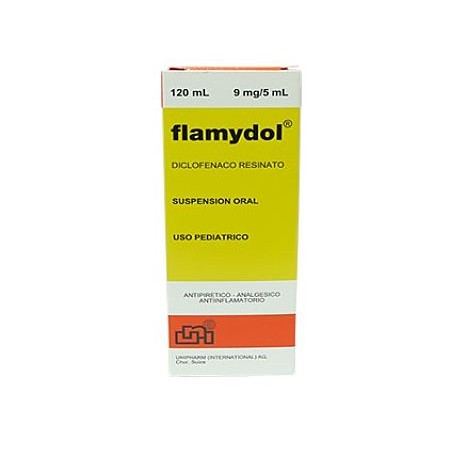
Travellers familiar with Flamydol from Central America are unlikely to encounter the same brand elsewhere — it is registered in only seven countries, all clustered in that region. The brand is available in Costa Rica, Panama, Guatemala, Honduras, Nicaragua, El Salvador, and Ecuador, and has not been internationalised beyond this footprint.
The active ingredient in Flamydol is diclofenac, classified within the non-steroidal anti-inflammatory category and carrying analgesic and antipyretic properties as well. Diclofenac is prescribed for a broad range of pain and inflammation-related indications, including rheumatoid arthritis, ankylosing spondylitis, neuralgia, bursitis, backache, headache, and symptomatic relief associated with influenza. The structured indication block further down this page lists the registered uses recognised in the markets where Flamydol is sold.
A reader who has used Flamydol in one of its Central American markets and is now travelling, relocating, or simply trying to identify the same medication abroad will generally not find this exact brand outside the region. Diclofenac itself, however, is one of the most globally distributed non-steroidal anti-inflammatory molecules, available in essentially every regulated pharmaceutical market under a wide variety of brand names and in multiple formulations — oral tablets, topical gels, injectable forms, and ophthalmic preparations among them.
Other molecules within the broader NSAID class are also represented worldwide, though they are not freely interchangeable with diclofenac without medical guidance. A local pharmacist is well placed to translate Flamydol into whatever diclofenac-containing product is registered in the destination country. Decisions to start, continue, or substitute the medication — particularly for chronic inflammatory conditions — should be made in consultation with a healthcare provider familiar with the patient.