Overdose
Acute intoxication may be manifested by headache, nausea, anorexia, vomiting
and central nervous system stimulation (including convulsions), followed by
megaloblastic anemia, leukopenia, thrombocytopenia, glossitis and crystalluria.
In acute intoxication, emesis and gastric lavage followed by purges may be of
benefit. The patient should be adequately hydrated to prevent renal damage.
The renal, hepatic, and hematopoietic systems should be monitored for at least
1 month after an overdosage. If the patient is having convulsions, the use of
parenteral diazepam or a barbiturate is indicated. For depressed platelet or
white blood cell counts, folinic acid (leucovorin) should be administered in
a dosage of 5 mg to 15 mg intramuscularly daily for 3 days or longer.
Contraindications
- Repeated prophylactic (prolonged) use of Fansidar (sulfadoxine and pyrimethamine) is contraindicated in
patients with renal or hepatic failure or with blood dyscrasias;
- Hypersensitivity to pyrimethamine, sulfonamides, or any other ingredient
of Fansidar (sulfadoxine and pyrimethamine) ;
- Patients with documented megaloblastic anemia due to folate deficiency;
- Infants less than 2 months of age;
- Prophylactic use of Fansidar (sulfadoxine and pyrimethamine) in pregnancy at term and during the nursing
period.
Undesirable effects
For completeness, all major reactions to sulfonamides and to pyrimethamine
are included below, even though they may not have been reported with Fansidar
(see WARNINGS and PRECAUTIONS: Information
For The Patient).
Hematological Changes
Agranulocytosis, aplastic anemia, megaloblastic anemia, thrombocytopenia, leukopenia,
hemolytic anemia, purpura, hypoprothrombinemia, methemoglobinemia, and eosinophilia.
Skin and Miscellaneous Sites Allergic Reactions
Erythema multiforme, Stevens-Johnson syndrome, generalized skin eruptions,
toxic epidermal necrolysis, urticaria, serum sickness, pruritus, exfoliative
dermatitis, anaphylactoid reactions, periorbital edema, conjunctival and scleral
injection, photosensitization, arthralgia, allergic myocarditis, slight hair
loss, Lyell's syndrome,
Gastrointestinal Reactions
Glossitis, stomatitis, nausea, emesis, abdominal pains, hepatitis, hepatocellular
necrosis, diarrhea, pancreatitis, feeling of fullness, and transient rise of
liver enzymes.
Central Nervous System Reactions
Headache, peripheral neuritis, mental depression, convulsions, ataxia, hallucinations,
tinnitus, vertigo, insomnia, apathy, fatigue, muscle weakness, nervousness,
and polyneuritis.
Respiratory Reactions
Pulmonary infiltrates resembling eosinophilic or allergic alveolitis.
Genitourinary
Renal failure, interstitial nephritis, BUN and serum creatinine elevation,
toxic nephrosis with oliguria and anuria, and crystalluria.
Miscellaneous Reactions
Drug fever, chills, periarteritis nodosa and LE phenomenon have occurred.
The sulfonamides bear certain chemical similarities to some goitrogens, diuretics
(acetazolamide and the thiazides), and oral hypoglycemic agents. Diuresis and
hypoglycemia have occurred rarely in patients receiving sulfonamides. Cross-sensitivity
may exist with these agents. Rats appear to be especially susceptible to the
goitrogenic effects of sulfonamides, and long-term administration has produced
thyroid malignancies in the species.
Therapeutic indications
Treatment of Acute Malaria
Fansidar (sulfadoxine and pyrimethamine) is indicated for the treatment of acute, uncomplicated P. falciparum
malaria for those patients in whom chloroquine resistance is suspected.
However, strains of P. falciparum (see CLINICAL
PHARMACOLOGY: Microbiology) may be encountered which have developed
resistance to Fansidar (sulfadoxine and pyrimethamine) , in which case alternative treatment should be administered.
Prevention of Malaria
Malaria prophylaxis with Fansidar (sulfadoxine and pyrimethamine) is not routinely recommended and should only
be considered for travelers to areas where chloroquine-resistant P. falciparum
malaria is endemic and sensitive to Fansidar (sulfadoxine and pyrimethamine) , and when alternative drugs are
not available or are contraindicated (see CONTRAINDICATIONS). However,
strains of P. falciparum may be encountered which have developed resistance
to Fansidar (sulfadoxine and pyrimethamine).
Date of revision of the text
August 2004. FDA revision date: 2/26/2004
Fertility, pregnancy and lactation
Teratogenic Effects: Pregnancy Category C
Fansidar (sulfadoxine and pyrimethamine) has been shown to be teratogenic in rats when given in weekly doses
approximately 12 times the weekly human prophylactic dose. Teratology studies
with pyrimethamine plus sulfadoxine (1:20) in rats showed the minimum oral teratogenic
dose to be approximately 0.9 mg/kg pyrimethamine plus 18 mg/kg sulfadoxine.
In rabbits, no teratogenic effects were noted at oral doses as high as 20 mg/kg
pyrimethamine plus 400 mg/kg sulfadoxine.
There are no adequate and well-controlled studies in pregnant women. However,
due to the teratogenic effect shown in animals and because pyrimethamine plus
sulfadoxine may interfere with folic acid metabolism, Fansidar (sulfadoxine and pyrimethamine) therapy should
be used during pregnancy only if the potential benefit justifies the potential
risk to the fetus. Women of childbearing potential who are traveling to areas
where malaria is endemic should be warned against becoming pregnant, and should
be advised to practice contraception during prophylaxis with Fansidar (sulfadoxine and pyrimethamine) and for
three months after the last dose.
Nonteratogenic Effects
See CONTRAINDICATIONS.
Qualitative and quantitative composition
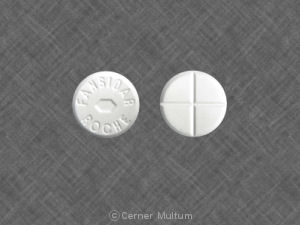
Scored tablets, containing 500 mg sulfadoxine and 25 mg pyrimethamine
— unit dose packages of 25 (NDC-0004-0161-03). Imprint on tablets: FANSIDAR (sulfadoxine and pyrimethamine)
((ROCHE LOGO)) ROCHE.
Manufactured by: F. Hoffmann-La Roche Ltd. Basel, Switzerland.
Distributed by: Roche Laboratories Inc., 340 Kingsland Street, Nutley, New Jersey,
NJ 07110-1199. Revised: August 2004. FDA revision date: 2/26/2004
Special warnings and precautions for use
WARNINGS
FATALITIES ASSOCIATED WITH THE ADMINISTRATION OF FANSIDAR (sulfadoxine and pyrimethamine) HAVE OCCURRED
DUE TO SEVERE REACTIONS, INCLUDING STEVENS-JOHNSON SYNDROME AND TOXIC EPIDERMAL
NECROLYSIS. FANSIDAR (sulfadoxine and pyrimethamine) PROPHYLAXIS MUST BE DISCONTINUED AT THE FIRST APPEARANCE
OF SKIN RASH, IF A SIGNIFICANT REDUCTION IN THE COUNT OF ANY FORMED BLOOD ELEMENTS
IS NOTED, OR UPON THE OCCURRENCE OF ACTIVE BACTERIAL OR FUNGAL INFECTIONS.
Fatalities associated with the administration of sulfonamides, although rare,
have occurred due to severe reactions, including fulminant hepatic necrosis,
agranulocytosis, aplastic anemia and other blood dyscrasias. Fansidar (sulfadoxine and pyrimethamine) prophylactic
regimen has been reported to cause leukopenia during a treatment of 2 months
or longer. This leukopenia is generally mild and reversible.
PRECAUTIONS
General
Oral Fansidar (sulfadoxine and pyrimethamine) has not been evaluated for the treatment of cerebral malaria
or other severe manifestations of complicated malaria, including hyperparasitemia,
pulmonary edema or renal failure. Patients with severe malaria are not candidates
for oral therapy. In the event of recrudescent P. falciparum infections
after treatment with Fansidar (sulfadoxine and pyrimethamine) or failure of chemoprophylaxis with Fansidar (sulfadoxine and pyrimethamine) ,
patients should be treated with a different blood schizonticide.
Fansidar (sulfadoxine and pyrimethamine) should be given with caution to patients with impaired renal or hepatic
function, to those with possible folate deficiency and to those with severe
allergy or bronchial asthma. As with some sulfonamide drugs, in glucose-6-phosphate
dehydrogenase-deficient individuals, hemolysis may occur. Urinalysis with microscopic
examination and renal function tests should be performed during therapy of those
patients who have impaired renal function. Excessive sun exposure should be
avoided.
Laboratory Tests
Regularly scheduled complete blood counts, liver enzyme tests and analysis
of urine for crystalluria should be performed whenever Fansidar (sulfadoxine and pyrimethamine) is administered
for more than three months.
Carcinogenesis, Mutagenesis, Impairment of Fertility
Pyrimethamine was not found carcinogenic in female mice or in male and female
rats. The carcinogenic potential of pyrimethamine in male mice could not be
assessed from the study because of markedly reduced life-span. Pyrimethamine
was found to be mutagenic in laboratory animals and also in human bone marrow
following 3 or 4 consecutive daily doses totaling 200 mg to 300 mg. Pyrimethamine
was not found mutagenic in the Ames test. Testicular changes have been observed
in rats treated with 105 mg/kg/day of Fansidar (sulfadoxine and pyrimethamine) and with 15 mg/kg/day of pyrimethamine
alone. Fertility of male rats and the ability of male or female rats to mate
were not adversely affected at dosages of up to 210 mg/kg/day of Fansidar (sulfadoxine and pyrimethamine). The
pregnancy rate of female rats was not affected following their treatment with
10.5 mg/kg/day, but was significantly reduced at dosages of 31.5 mg/kg/day or
higher, a dosage approximately 30 times the weekly human prophylactic dose or
higher.
Pregnancy
Teratogenic Effects: Pregnancy Category C
Fansidar (sulfadoxine and pyrimethamine) has been shown to be teratogenic in rats when given in weekly doses
approximately 12 times the weekly human prophylactic dose. Teratology studies
with pyrimethamine plus sulfadoxine (1:20) in rats showed the minimum oral teratogenic
dose to be approximately 0.9 mg/kg pyrimethamine plus 18 mg/kg sulfadoxine.
In rabbits, no teratogenic effects were noted at oral doses as high as 20 mg/kg
pyrimethamine plus 400 mg/kg sulfadoxine.
There are no adequate and well-controlled studies in pregnant women. However,
due to the teratogenic effect shown in animals and because pyrimethamine plus
sulfadoxine may interfere with folic acid metabolism, Fansidar (sulfadoxine and pyrimethamine) therapy should
be used during pregnancy only if the potential benefit justifies the potential
risk to the fetus. Women of childbearing potential who are traveling to areas
where malaria is endemic should be warned against becoming pregnant, and should
be advised to practice contraception during prophylaxis with Fansidar (sulfadoxine and pyrimethamine) and for
three months after the last dose.
Nonteratogenic Effects
See CONTRAINDICATIONS.
Nursing Mothers
See CONTRAINDICATIONS.
Pediatric Use
Fansidar (sulfadoxine and pyrimethamine) should not be given to infants less than 2 months of age because of
inadequate development of the glucuronide-forming enzyme system.
Geriatric Use
Clinical studies of Fansidar (sulfadoxine and pyrimethamine) did not include sufficient numbers of subjects
aged 65 and over to determine whether they respond differently from younger
subjects. Other reported clinical experience has not identified differences
in responses between the elderly and younger patients. In general, dose selection
for an elderly patient should be cautious, usually starting at the low end of
the dosing range, reflecting the greater frequency of decreased hepatic, renal
or cardiac function, and of concomitant disease or other drug therapy. This
drug is known to be substantially excreted by the kidney, and the risk of toxic
reactions to this drug may be greater in patients with impaired renal function.
Because elderly patients are more likely to have decreased renal function, care
should be taken in dose selection, and it may be useful to monitor renal function.
Dosage (Posology) and method of administration
(See INDICATIONS AND USAGE)
The dosage should be swallowed whole, and not chewed, with plenty of fluids
after a meal.
Treatment of Acute Malaria
| Adults |
2 to 3 tablets taken as a single dose. |
Pediatric patients
(>2 months to 18 years) |
The dosage for treatment of malaria in children is based upon body weight: |
|
Weight (kg)
|
Number of Tablets Taken as a Single Dose
|
| >45 |
3 |
| 31 to 45 |
2 |
| 21 to 30 |
1 ½ |
| 11 to 20 |
1 |
| 5 to 10 |
½ |
Prevention of Malaria
The malaria risk must be carefully weighed against the risk of serious adverse
drug reactions (see INDICATIONS AND USAGE). If Fansidar (sulfadoxine and pyrimethamine) is prescribed
for prophylaxis, it is important that the physician inquires about sulfonamide
intolerance and points out the risk and the need for immediate drug withdrawal
if skin reactions do occur.
The first dose of Fansidar (sulfadoxine and pyrimethamine) should be taken 1 or 2 days before arrival in an
endemic area; administration should be continued during the stay and for 4 to
6 weeks after return.
| |
Once Weekly |
Once Every 2 Weeks |
| Adults |
1 tablet |
2 tablets
|
Pediatric patients
(>2 months to 18 years) |
The dosage for prevention of malaria in children is based
upon body weight: |
|
Weight (kg)
|
Number of Tablets Taken Once Weekly
|
| >45 |
1½ |
| 31 to 45 |
1 |
| 21 to 30 |
¾ |
| 11 to 20 |
½ |
| 5 to 10 |
¼ |
Prophylaxis with Fansidar (sulfadoxine and pyrimethamine) should not be continued for more than two years,
since no experience of more prolonged administration is available to date.
Interaction with other medicinal products and other forms of interaction
SIDE EFFECTS
For completeness, all major reactions to sulfonamides and to pyrimethamine
are included below, even though they may not have been reported with Fansidar
(see WARNINGS and PRECAUTIONS: Information
For The Patient).
Hematological Changes
Agranulocytosis, aplastic anemia, megaloblastic anemia, thrombocytopenia, leukopenia,
hemolytic anemia, purpura, hypoprothrombinemia, methemoglobinemia, and eosinophilia.
Skin and Miscellaneous Sites Allergic Reactions
Erythema multiforme, Stevens-Johnson syndrome, generalized skin eruptions,
toxic epidermal necrolysis, urticaria, serum sickness, pruritus, exfoliative
dermatitis, anaphylactoid reactions, periorbital edema, conjunctival and scleral
injection, photosensitization, arthralgia, allergic myocarditis, slight hair
loss, Lyell's syndrome,
Gastrointestinal Reactions
Glossitis, stomatitis, nausea, emesis, abdominal pains, hepatitis, hepatocellular
necrosis, diarrhea, pancreatitis, feeling of fullness, and transient rise of
liver enzymes.
Central Nervous System Reactions
Headache, peripheral neuritis, mental depression, convulsions, ataxia, hallucinations,
tinnitus, vertigo, insomnia, apathy, fatigue, muscle weakness, nervousness,
and polyneuritis.
Respiratory Reactions
Pulmonary infiltrates resembling eosinophilic or allergic alveolitis.
Genitourinary
Renal failure, interstitial nephritis, BUN and serum creatinine elevation,
toxic nephrosis with oliguria and anuria, and crystalluria.
Miscellaneous Reactions
Drug fever, chills, periarteritis nodosa and LE phenomenon have occurred.
The sulfonamides bear certain chemical similarities to some goitrogens, diuretics
(acetazolamide and the thiazides), and oral hypoglycemic agents. Diuresis and
hypoglycemia have occurred rarely in patients receiving sulfonamides. Cross-sensitivity
may exist with these agents. Rats appear to be especially susceptible to the
goitrogenic effects of sulfonamides, and long-term administration has produced
thyroid malignancies in the species.
DRUG INTERACTIONS
There have been reports which may indicate an increase in incidence and severity
of adverse reactions when chloroquine is used with Fansidar (sulfadoxine and pyrimethamine) as compared to the
use of Fansidar (sulfadoxine and pyrimethamine) alone. Fansidar (sulfadoxine and pyrimethamine) is compatible with quinine and with antibiotics.
However, antifolic drugs such as sulfonamides, trimethoprim, or trimethoprim-sulfamethoxazole
combinations should not be used while the patient is receiving Fansidar (sulfadoxine and pyrimethamine) for
antimalarial prophylaxis. Fansidar (sulfadoxine and pyrimethamine) has not been reported to interfere with antidiabetic
agents.
If signs of folic acid deficiency develop, Fansidar (sulfadoxine and pyrimethamine) should be discontinued.
When recovery of depressed platelets or white blood cell counts in patients
with drug-induced folic acid deficiency is too slow, folinic acid (leucovorin)
may be administered in doses of 5 to 15 mg intramuscularly daily for 3 days
or longer.