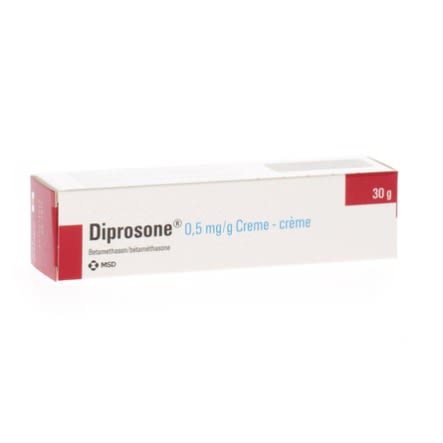
Among betamethasone-based dermatological products on the international market, Diprosone is one of the more broadly distributed brands, registered in 28 countries across Europe, the Americas, Asia, and Oceania. Its active ingredient is betamethasone dipropionate, a corticosteroid formulated for dermatological use. This page is written for travellers, expatriates, and family members trying to identify the drug across borders.
Diprosone is prescribed for a range of inflammatory and pruritic skin conditions, including dermatitis, atopic dermatitis, eczema, psoriasis, neurodermatitis, and certain fungal-associated complaints such as jock itch. As a topical corticosteroid, it sits within a category that dermatologists rely on broadly for the control of inflammatory skin disease. The structured indication list further down this page details the registered uses recognised across the markets where Diprosone is sold.
Because Diprosone is distributed across so many regulatory regimes — from Brazil and Argentina to Germany, Italy, Malaysia, and Australia — travellers frequently encounter the same medication abroad, sometimes labelled as Diprosone and sometimes as a betamethasone-containing generic or combination product. Packaging, prescription rules, and available formulations differ from one country to another, and what is sold over the counter in one market may be prescription-only in the next. A pharmacist in the destination country can confirm whether a locally available betamethasone product corresponds to what the patient is used to.
Other corticosteroids in the dermatological class are also widely available worldwide under different molecules and brand names, with meaningful differences in potency. A local pharmacist or dermatologist is the right person to identify a regional equivalent, and any decision to start, stop, or substitute a topical steroid should be made together with a healthcare provider familiar with the patient's skin condition.