Home / Medicine / Diprophos

Diprophos

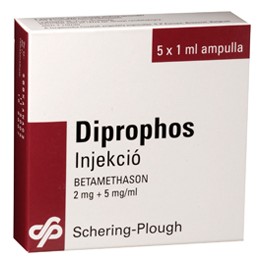
Diprophos contains betamethasone dipropionate, a corticosteroid used across a broad range of inflammatory, allergic, and immune-mediated conditions. The brand is registered in 10 countries, concentrated almost entirely across Central and Eastern Europe, with Switzerland as the western edge of that footprint. A traveller or expatriate moving outside this regional cluster is unlikely to encounter the Diprophos brand specifically, although betamethasone-containing products themselves circulate widely worldwide under other names.

Betamethasone dipropionate is a glucocorticoid with anti-inflammatory, antiallergic, antipruritic, immunosuppressive, and vasoconstrictive properties, and it appears in both dermatological preparations and corticosteroids for systemic use. The indications recognised for Diprophos span asthma, dermatitis, psoriasis, neurodermatitis and other skin conditions, as well as supportive use in contexts such as pneumonia, leukaemia, and chemotherapy. The structured indication block further down this page lists each registered use in detail.

The regional concentration of Diprophos — across markets including Poland, Hungary, Switzerland, Romania, and Serbia — reflects how this particular brand has been authorised rather than any limitation of the underlying molecule. Betamethasone is one of the more commonly stocked corticosteroids globally, and a local pharmacist outside the registered countries can almost always identify a regionally available product containing the same active ingredient, sometimes in a different formulation or strength category.

Other glucocorticoids in the broader corticosteroid class are also marketed internationally under various brand names and active ingredients, although they are not freely interchangeable: corticosteroid therapy is calibrated to the specific condition, the route of administration, and the individual patient. Anyone using Diprophos at home, prescribed it abroad, or trying to identify a local equivalent should bring that decision to a healthcare provider familiar with their full medical picture.
How does this drug class actually work?
Read the plain-language explainer in Pharmacology Academy (H1 antihistamines) →

Frequently asked questions

What conditions does Diprophos treat?

Diprophos is prescribed across a wide range of inflammatory, allergic, and immune-mediated conditions, including asthma, dermatitis, psoriasis, neurodermatitis and other skin conditions, as well as supportive use in pneumonia, leukaemia, and chemotherapy contexts. As a glucocorticoid, it acts through anti-inflammatory, antiallergic, antipruritic, and immunosuppressive pathways. The structured indication list further down this page details each registered use in the markets where Diprophos is sold.

Which active substance is in Diprophos?

Diprophos contains betamethasone dipropionate, a glucocorticoid corticosteroid with applications in both dermatological preparations and systemic-use formulations. Betamethasone is one of the more widely used corticosteroids internationally, and the same active ingredient circulates under a number of different brand names worldwide — particularly in dermatology and in injectable corticosteroid preparations used in inflammatory and allergic conditions.

In how many countries is Diprophos available?

Diprophos is registered in 10 countries, with a footprint concentrated across Central and Eastern Europe. Examples include Poland, Switzerland, Hungary, Romania, Serbia, the Czech Republic, and Austria. Outside this regional cluster the brand is rarely encountered, although betamethasone-containing products themselves are widely available globally. If your country is not on this list, a local pharmacist can identify a regionally available equivalent.

Are there other medications with the same active ingredient as Diprophos?

Betamethasone dipropionate is sold under several brand names worldwide, in both topical and systemic formulations. Other glucocorticoids within the broader corticosteroid class are also marketed internationally, although they are not freely interchangeable — different molecules and routes of administration are matched to specific conditions. To identify a local betamethasone product, search the active ingredient on Pill2Trip or ask a pharmacist in your country.

Should I consult a doctor before taking Diprophos?

Yes. Corticosteroid therapy is calibrated to the individual condition, the route of administration, and the patient's full medical picture, and it is generally not appropriate to start, stop, or substitute on one's own. Prescription requirements and available formulations vary between countries, which is particularly relevant for travellers and people relocating across regions. Any decision involving Diprophos or an equivalent corticosteroid should be made with a healthcare provider.