Home / Medicine / Diprogenta

Diprogenta

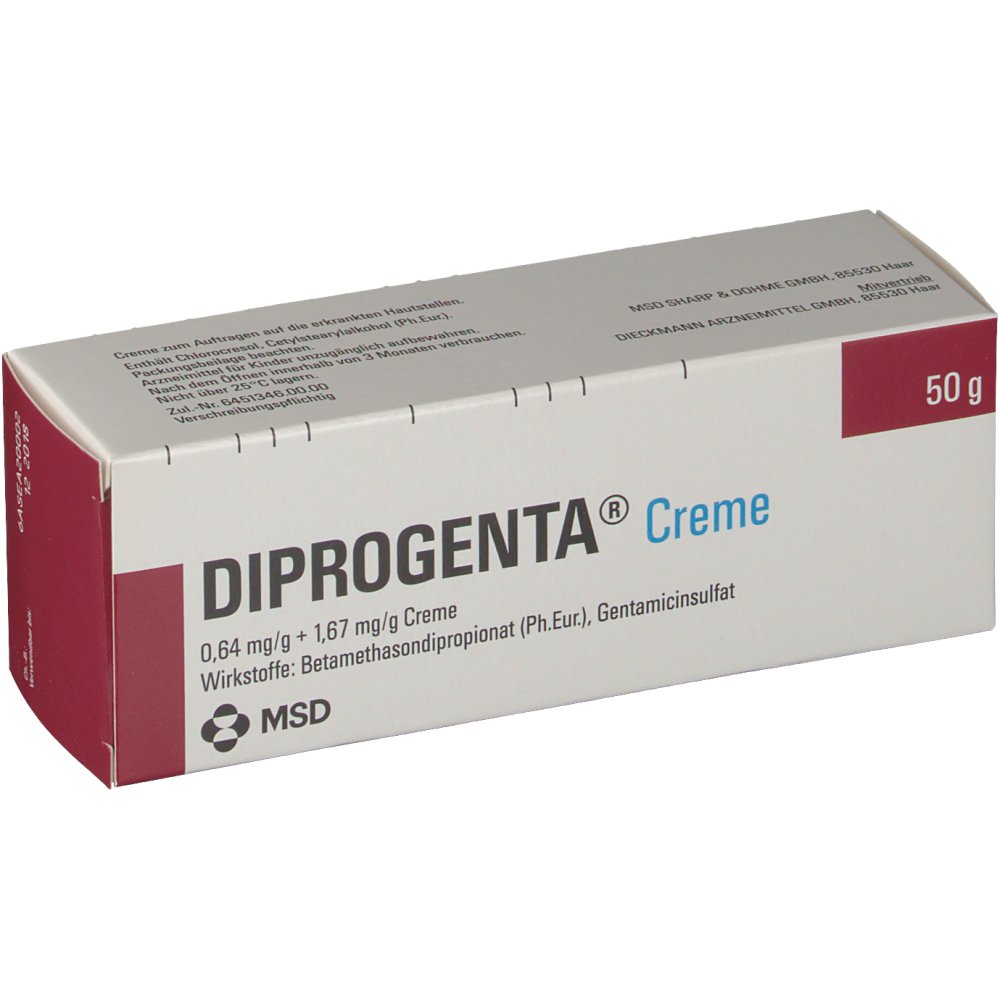
Diprogenta is a fixed-dose combination of betamethasone dipropionate and gentamicin sulfate, two active ingredients paired in a single topical dermatological preparation for the management of inflammatory skin conditions complicated by, or at risk of, bacterial infection. Combination products of this kind formalise a long-standing co-prescribing pattern in dermatology, where a potent topical corticosteroid and a topical antibiotic are often used together on the same lesion.

Betamethasone dipropionate falls within the topical glucocorticoid category, contributing anti-inflammatory, antiallergic, and antipruritic action to the formulation. Gentamicin sulfate is classified as a local antibacterial with a wide spectrum of activity. Together, the two ingredients address the registered indications listed for Diprogenta — including dermatitis, eczema, atopic dermatitis, seborrheic dermatitis, neurodermatitis, psoriasis, jock itch, and empeines — at the level of skin conditions where inflammation and possible bacterial involvement coexist.

Diprogenta is registered in 24 countries, with a footprint that spans Latin America, Central and Southeastern Europe, and parts of Asia. Representative markets include Brazil, Germany, Indonesia, Poland, Colombia, and Israel. Travellers and expatriates moving between these regions may encounter the same brand on local pharmacy shelves, though packaging, pack sizes, and prescription pathways vary from one regulator to another.

Combination dermatological products vary across countries even more than single-ingredient corticosteroids, both in the specific antibiotic paired with the steroid and in the strength of the corticosteroid component. A pharmacist in the destination country can identify whether a comparable corticosteroid-plus-antibiotic preparation is available locally. As with any prescription topical medication, the choice to start, continue, or substitute Diprogenta is best made together with a healthcare provider who knows the skin condition being treated.
How does this drug class actually work?
Read the plain-language explainer in Pharmacology Academy (H1 antihistamines) →

Pharmacotherapeutic group

-

Special precautions for storage

-

Nature and contents of container

-

Nosological classification (ICD-10)

-

ATC - Anatomical and therapeutic chemical classification

-

Frequently asked questions

What conditions does Diprogenta treat?

Diprogenta is prescribed for inflammatory and allergic skin conditions that are either complicated by, or at risk of, secondary bacterial infection. Registered indications include dermatitis, eczema, atopic dermatitis, seborrheic dermatitis, neurodermatitis, psoriasis, jock itch, and empeines. The combination is positioned in the dermatological corticosteroid plus topical antibiotic category. The structured indication block further down this page lists each registered use in the markets where Diprogenta is sold.

What is Diprogenta made of?

Diprogenta contains two active ingredients: betamethasone dipropionate, a topical glucocorticoid with anti-inflammatory, antiallergic, and antipruritic action, and gentamicin sulfate, a local antibacterial agent with a wide spectrum of activity. Each molecule is also sold internationally on its own under many brand names, but Diprogenta formalises the pairing of a potent topical corticosteroid with a topical antibiotic in a single dermatological preparation.

In how many countries is Diprogenta available?

Diprogenta is registered in 24 countries, spanning Latin America, Central and Southeastern Europe, and parts of Asia. Examples include Brazil, Germany, Indonesia, Poland, Colombia, Israel, and the Philippines. The brand is not present in every regulated market, so if your country is not on this list, a local pharmacist can confirm whether a comparable corticosteroid-and-antibiotic topical product is available under another name.

Are there other medications with the same active ingredients as Diprogenta?

Betamethasone dipropionate and gentamicin sulfate are each sold worldwide under a range of brand names, both as single-ingredient topical products and in other fixed-dose combinations that pair a topical corticosteroid with a topical antibiotic. Ratios, vehicles, and regulatory status differ from one country to another. To identify a regional equivalent, search the active ingredients on Pill2Trip or ask a pharmacist about comparable dermatological preparations available locally.

Should I consult a doctor before taking Diprogenta?

Yes. Diprogenta is a prescription dermatological product in most of the markets where it is registered, and topical corticosteroid plus antibiotic combinations are calibrated to the type, severity, location, and suspected infectious component of a skin condition. This is particularly relevant for travellers and expatriates, since available brands and prescription rules vary. Any decision to start, continue, or substitute the product should involve a healthcare provider familiar with the patient.