Overdose
Cream; Cream for external use; Medicinal shampoo; Pills; ShampooSubstance; Substance-powder; Vaginal suppository
In the event of accidental ingestion, supportive and symptomatic measures should be carried out. In order to avoid aspiration, neither emesis nor gastric lavage should be instigated.
No information provided.
Contraindications
Cream; Cream for external use; Medicinal shampoo; Pills; ShampooSubstance; Substance-powder; Vaginal suppository
Known hypersensitivity to ketoconazole or any of the excipients.
Dezor Cream 2% is contraindicated in persons who have shown hypersensitivity to the active or excipient ingredients of this formulation.
Incompatibilities
Not applicable
Undesirable effects
Cream; Cream for external use; Medicinal shampoo; Pills; ShampooSubstance; Substance-powder; Vaginal suppository
The safety of ketoconazole 2% shampoo was evaluated in 2890 subjects who participated in 22 clinical trials. Ketoconazole 2% shampoo was administered topically to the scalp and/or skin. Based on pooled safety data from these clinical trials, there were no ADRs reported with an incidence >1%.
The following table displays ADRs that have been reported with the use of Ketoconazole 2% Shampoo from either clinical trial or postmarketing experiences.
The displayed frequency categories use the following convention:
Very common (>1/10)
Common (>1/100 to <1/10)
Uncommon (>1/1,000 to <1/100)
Rare (>1/10,000 to <1/1,000)
Very rare (<1/10,000)
Not known (cannot be estimated form the available clinical trial data).
| System Organ Class | Adverse Drug Reactions |
| Frequency Category |
| Uncommon (>1/1,000 to <1/100) | Rare (>1/10,000 and <1/1,000) | Not Known |
| Immune System disorders | | Hypersensitvity | |
| Nervous System Disorders | | Dysgeusia | |
| Infections and Infestations | Folliculitis | | |
| Eye Disorders | Increased lacrimation | Eye irritation | |
| Skin and Subcutaneous Tissue Disorders | Alopecia Dry skin Hair texture abnormal Rash Skin burning sensation | Acne Dermatitis contact Skin disorder Skin exfoliation | Angioedema Urticaria Hair colour changes |
| General Disorders and Administration Site Conditions | Application site erythema Application site irritation Application site pruritus Application site reaction | Application site hypersensitivity Application site pustules | |
Reporting of suspected adverse reactions
Reporting suspected adverse reactions after authorisation of the medicinal product is important. It allows continued monitoring of the benefit/risk balance of the medicinal product. Healthcare professionals are asked to report any suspected adverse reactions via:
Yellow Card Scheme
Website: www.mhra.gov.uk/yellowcard.
During clinical trials 45 (5.0%) of 905 patients treated with Dezor Cream 2% and 5 (2.4%) of 208 patients treated with placebo reported side effects consisting mainly of severe irritation, pruritus and stinging. One of the patients treated with Dezor Cream developed a painful allergic reaction.
In worldwide postmarketing experience, rare reports of contact dermatitis have been associated with Dezor Cream or one of its excipients, namely sodium sulfite or propylene glycol.
Preclinical safety data
Effects in non-clinical studies were observed only at exposures considered sufficiently in excess of the maximum human exposure indicating little relevance to clinical use.
Therapeutic indications
Cream; Cream for external use; Medicinal shampoo; Pills; ShampooSubstance; Substance-powder; Vaginal suppository
Prevention and treatment of infections in which the yeast Malassezia (previously called Pityrosporum) is likely to be involved, such as dandruff, seborrhoeic dermatitis and tinea (pityriasis) versicolor.
Dezor Cream 2% is indicated for the topical treatment of tinea corporis, tinea cruris and tinea pedis caused by Trichophyton rubrum, T. mentagrophytes and Epidermophyton floccosum; in the treatment of tinea (pityriasis) versicolor caused by Malassezia furfur (Pityrosporum orbiculare); in the treatment of cutaneous candidiasis caused by Candida spp. and in the treatment of seborrheic dermatitis.
Pharmacotherapeutic group
Imidazole and triazole derivatives
Pharmacodynamic properties
Pharmacotherapeutic group: Imidazole and triazole derivatives
ATC Code: D01AC08
Ketoconazole is an imidazole-dioxolane antimycotic, active against yeasts, including Malassezia and dermatophytes. Its broad spectrum of activity is already well known.
Pharmacokinetic properties
Plasma concentrations of ketoconazole were not detectable after topical administration of Dezor 2% shampoo on the scalp. Plasma levels were detected after topical administration of Dezor 2% shampoo on the whole body.
Name of the medicinal product
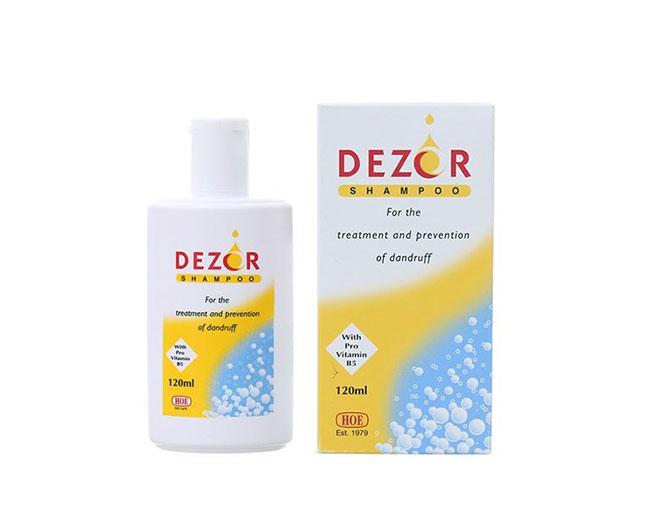
Dezor
Qualitative and quantitative composition
Ketoconazole
Special warnings and precautions for use
Cream; Cream for external use; Medicinal shampoo; Pills; ShampooSubstance; Substance-powder; Vaginal suppository
In patients who have been on prolonged treatment with topical corticosteroids, it is recommended that the steroid therapy be gradually withdrawn over a period of 2 to 3 weeks, while using Dezor 2% shampoo, to prevent any potential rebound effect.
Keep out of the eyes. If the shampoo should get into the eyes, they should be bathed with water.
WARNINGS
Dezor Cream 2% is not for ophthalmic use.
Dezor Cream 2% contains sodium sulfite anhydrous, a sulfite that may cause allergic-type reactions including anaphylactic symptoms and life-threatening or less severe asthmatic episodes in certain susceptible people. The overall prevalence of sulfite sensitivity in the general population is unknown and probably low. Sulfite sensitivity is seen more frequently in asthmatic than in nonasthmatic people.
PRECAUTIONS General
If a reaction suggesting sensitivity or chemical irritation should occur, use of the medication should be discontinued. Hepatitis (1:10,000 reported incidence) and, at high doses, lowered testosterone and ACTH induced corticosteroid serum levels have been seen with orally administered Dezor; these effects have not been seen with topical Dezor.
Carcinogenesis, Mutagenesis, Impairment Of Fertility
A long-term feeding study in Swiss Albino mice and in Wistar rats showed no evidence of oncogenic activity. The dominant lethal mutation test in male and female mice revealed that single oral doses of Dezor as high as 80 mg/kg produced no mutation in any stage of germ cell development. The Ames'Salmonella microsomal activator assay was also negative.
Pregnancy Teratogenic effects : Pregnancy Category C
Dezor has been shown to be teratogenic (syndactylia and oligodactylia) in the rat when given orally in the diet at 80 mg/kg/day, (10 times the maximum recommended human oral dose). However, these effects may be related to maternal toxicity, which was seen at this and higher dose levels.
There are no adequate and well-controlled studies in pregnant women. Dezor should be used during pregnancy only if the potential benefit justifies the potential risk to the fetus.
Nursing Mothers
It is not known whether Dezor Cream 2% administered topically could result in sufficient systemic absorption to produce detectable quantities in breast milk. Nevertheless, a decision should be made whether to discontinue nursing or discontinue the drug, taking into account the importance of the drug to the mother.
Pediatric Use
Safety and effectiveness in children have not been established.
Effects on ability to drive and use machines
Not relevant
Dosage (Posology) and method of administration
Cream; Cream for external use; Medicinal shampoo; Pills; ShampooSubstance; Substance-powder; Vaginal suppository
For topical administration.
Ketoconazole shampoo 2% is for use in adolescents and adults:
Wash affected areas and leave for 3-5 minutes before rinsing.
Treatment:
| Dandruff and seborrhoeic dermatitis: | Wash hair twice weekly for 2-4 weeks. |
| Tinea versicolor: | Once daily for a maximum of 5 days. |
Prophylaxis:
| Dandruff and seborrhoeic dermatitis: | Use once every 1-2 weeks. |
| Tinea versicolor: | Once daily for a maximum of 3 days before exposure to sunshine. |
Cutaneous candidiasis, tinea corporis, tinea cruris, tinea pedis and tinea (pityriasis) versicolor: It is recommended that Dezor Cream 2% be applied once daily to cover the affected and immediate surrounding area. Clinical improvement may be seen fairly soon after treatment is begun; however, candidal infections and tinea cruris and corporis should be treated for two weeks in order to reduce the possibility of recurrence. Patients with tinea versicolor usually require two weeks of treatment. Patients with tinea pedis require six weeks of treatment. Seborrheic dermatitis: Dezor Cream 2% should be applied to the affected area twice daily for four weeks or until clinical clearing.
If a patient shows no clinical improvement after the treatment period, the diagnosis should be redetermined.
Special precautions for disposal and other handling
No special requirements