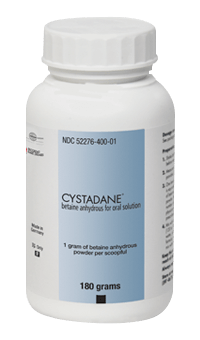
Marketed in 35 countries across much of the European Economic Area and beyond, Cystadane is an internationally distributed preparation of betaine, classified within the lipotropic and hepatoprotective category of metabolic agents. For travellers and expatriates familiar with the brand from one regulatory market, the same product — or another betaine-containing preparation — is often available across a wide swathe of neighbouring countries, although packaging, labelling language, and prescription pathways can shift considerably from one border to the next.
The active ingredient, betaine, is used in the management of conditions linked to lipid metabolism and digestive function, with registered indications spanning dyspepsia, hypertriglyceridemia, and contexts involving vitamin B12 metabolism, alongside other uses noted in the structured indication block further down this page. Its pharmacological profile sits across several overlapping categories — lipid-lowering, choleretic, lipotropic, hepatoprotective — reflecting the role betaine plays in metabolic and hepatic pathways rather than a single targeted mechanism.
Cystadane's footprint is heavily concentrated in Europe, with marketing authorisation in markets such as France, Germany, Finland, Greece, and Hungary, and extending to a number of additional jurisdictions outside that core cluster. Travellers moving between these markets may find the same brand under slightly different packaging, while in countries where Cystadane is not registered, betaine itself often circulates under other brand names or as part of regional metabolic preparations. A local pharmacist is well placed to confirm what is available under which name in any given country.
Other agents in the broader lipid-lowering and hepatoprotective categories also exist internationally, though they are not interchangeable with betaine without medical input. Anyone using Cystadane, or trying to identify a comparable product abroad, should treat the question as a clinical one and raise it with their own healthcare provider before making any change.
Shelf life
Unopened bottle: 3 years
After the first opening: 3 months.
Incompatibilities
Not applicable.
List of excipients
None.
Preclinical safety data
At high doses, a CNS depressant effect and irritation of the gastrointestinal tract was seen in rats. Long-term carcinogenicity and reproductive toxicity studies have not been conducted on betaine anhydrous. A standard battery of genotoxicity test reveals no specific hazard for humans.
Pharmacotherapeutic group
Other alimentary tract and metabolism products, ATC code: A16AA06.
Date of revision of the text
14 February 2017
Marketing authorisation holder
Orphan Europe SARL
Immeuble “Le Wilsonâ€
70, Avenue du General de Gaulle
F-92 800 Puteaux
France
Special precautions for storage
Do not store above 25°C.
Keep the bottle tightly closed in order to protect from moisture.
Nature and contents of container
HDPE bottles with a child resistant closure.
Each pack contains 1 bottle with 180 g of powder and three measuring spoons.
Marketing authorisation number(s)
EU/1/06/379/001
Special precautions for disposal and other handling
Any unused medicinal product or waste material should be disposed of in accordance with local requirements.
Date of first authorisation/renewal of the authorisation
Date of first authorisation: 15 February 2007
Date of latest renewal: 21 November 2016