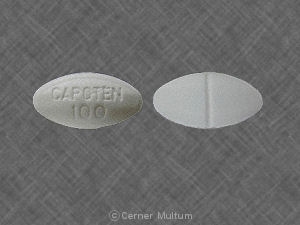
Capoten contains captopril, an agent acting in the renin-angiotensin system, and is registered in 19 countries spanning Europe, Latin America, the Middle East, and the Asia-Pacific region. It is one of the longer-established brand names within this pharmacological class, and travellers familiar with it from one market will often find that the same active ingredient is available elsewhere, even where the Capoten brand itself is not.
Capoten is prescribed in the management of hypertension, heart failure, left ventricular dysfunction following a heart attack, and certain forms of kidney disease associated with diabetes. The structured indication block further down this page lists each registered use in detail, as recognised by the national regulators in the markets where the brand is sold. Captopril belongs to a broader category of antihypertensive and vasodilator medications that act on the renin-angiotensin pathway, a mechanism widely used in cardiovascular and renal therapy.
The country footprint is geographically mixed rather than clustered: Brazil, Australia, Italy, Egypt, and China all appear among the markets where Capoten is registered, alongside several smaller European and Middle Eastern jurisdictions. Brand availability, packaging, and prescription pathways vary considerably from one country to another, so a traveller or expatriate who relies on Capoten at home should not assume the same brand will be on the shelf abroad.
Other medications acting on the renin-angiotensin system are sold in essentially every regulated market in the world, under a range of active ingredients and brand names. A local pharmacist is well placed to identify which captopril-containing or class-equivalent products are available regionally. Any decision to start, stop, switch, or substitute a cardiovascular medication of this kind belongs with a healthcare provider who knows the patient's history.
Shelf life
PVC/Al foil blister presentation:
48 months
PVC/PVDC/Al foil blister presentation:
36 months
Incompatibilities
None.
List of excipients
Lactose monohydrate, maize starch, microcrystalline cellulose, stearic acid.
Preclinical safety data
Animal studies performed during organogenesis with captopril have not shown any teratogenic effect but captopril has produced foetal toxicity in several species, including foetal mortality during late pregnancy, growth retardation and postnatal mortality in the rat. Preclinical data reveal no other specific hazard for humans based on conventional studies of safety pharmacology, repeated dose toxicology, genotoxicity and carcinogenicity.
Pharmacotherapeutic group
ACE inhibitors, plain, ATC code: C09AA01.
Pharmacokinetic properties
Captopril is an orally active agent that does not require biotransformation for activity. The average minimal absorption is approximately 75%. Peak plasma concentrations are reached within 60-90 minutes. The presence of food in the gastrointestinal tract reduces absorption by about 30-40%. Approximately 25-30% of the circulating drug is bound to plasma proteins.
The apparent elimination half-life of unchanged captopril in blood is about 2 hours. Greater than 95% of the absorbed dose is eliminated in the urine within 24 hours; 40-50% is unchanged drug and the remainder are inactive disulphide metabolites (captopril disulphide and captopril cysteine disulphide). Impaired renal function could result in drug accumulation. Therefore, in patients with impaired renal function the dose should be reduced and/or dosage interval prolonged.
Studies in animals indicate that captopril does not cross the blood-brain barrier to any significant extent.
Lactation:
In the report of twelve women taking oral captopril 100mg 3 times daily, the average peak milk level was 4.7μg/L and occurred 3.8 hours after the dose. Based on these data, the maximum daily dosage that a nursing infant would receive is less than 0.002% of the maternal daily dosage.
Date of revision of the text
January 2017
Marketing authorisation holder
E.R. Squibb & Sons Limited
Uxbridge Business Park
Sanderson Road
Uxbridge
Middlesex UB8 1DH
Special precautions for storage
PVC/Al foil blister presentation:
Store below 30°C.
Protect from moisture.
PVC/PVDC/Al foil blister presentation:
Do not store above 25°C.
Store in the original package to protect from moisture.
Nature and contents of container
The tablets are packaged in PVC/aluminium blisters or PVC/PVdC/aluminium blisters in packs of 28 or 84 tablets.
Not all pack sizes may be marketed.
Marketing authorisation number(s)
PL 00034/0193
Special precautions for disposal and other handling
No special instructions.
Any unused medicinal product or waste material should be disposed of in accordance with local requirements.
Date of first authorisation/renewal of the authorisation
Date of first authorisation: 27th March 1981
Date of latest renewal: 26th November 1996