Home / Medicine / Brufen

Brufen

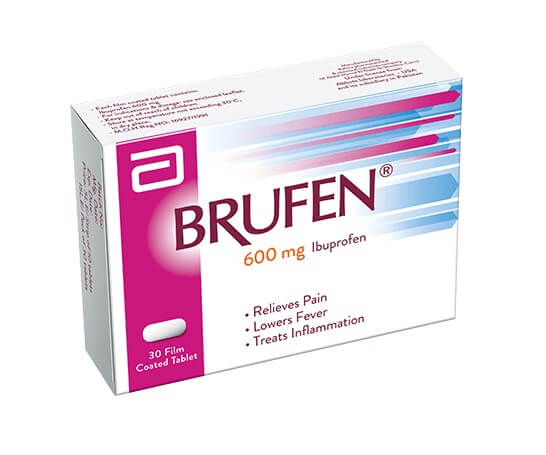
Marketed in 45 countries across Europe, the Mediterranean basin, North Africa, and the Asia-Pacific region, Brufen is a globally distributed brand of ibuprofen, classified as a non-steroidal anti-inflammatory with analgesic and antipyretic properties. It is one of the more recognisable ibuprofen brands internationally, and travellers frequently encounter the name on pharmacy shelves outside their home country.

Ibuprofen is used for the relief of pain and fever in a wide range of settings — including dental pain, neuralgia, influenza-associated symptoms, and musculoskeletal pain — and is also prescribed in inflammatory joint conditions such as osteoarthritis, rheumatoid arthritis, and ankylosing spondylitis. The structured indication list further down this page details each registered use across the markets where Brufen is sold.

Because Brufen is registered in so many countries, the same brand often appears in destinations as varied as Australia, Egypt, France, Hong Kong, and the Czech Republic. Regulatory status differs from one market to another, however: in some jurisdictions ibuprofen products are available over the counter for short-term use, while in others — particularly at higher strengths or for chronic inflammatory indications — they remain prescription-only. Packaging, pack sizes, and even the Brufen brand name itself can shift between markets, with the same molecule sold under a number of alternative commercial names.

Other non-steroidal anti-inflammatory molecules circulate worldwide alongside ibuprofen, and a local pharmacist is well placed to identify regional options when a familiar brand cannot be found. Anyone taking Brufen regularly, especially for an inflammatory condition rather than occasional pain, should treat substitution and dose decisions as a matter for their own healthcare provider.
How does this drug class actually work?
Read the plain-language explainer in Pharmacology Academy (Non-steroidal anti-inflammatory drugs) →

Frequently asked questions

What conditions does Brufen treat?

Brufen is prescribed for the relief of pain and fever across a range of contexts, including dental pain, neuralgia, influenza-associated symptoms, and inflammatory joint conditions such as osteoarthritis, rheumatoid arthritis, and ankylosing spondylitis. As a non-steroidal anti-inflammatory, it is positioned in therapy areas where pain has an inflammatory component. The structured indication block further down this page lists each registered use in the markets where Brufen is sold.

What is the active ingredient in Brufen?

Brufen contains ibuprofen, a non-steroidal anti-inflammatory with analgesic and antipyretic properties. Ibuprofen is one of the most widely distributed molecules in the world and circulates internationally under a large number of brand names, both as a prescription product and, in many jurisdictions, over the counter. The Brufen brand is one commercial presentation of that same underlying active ingredient.

In how many countries is Brufen available?

Brufen is registered for sale in 45 countries, spanning Western and Eastern Europe, parts of the Mediterranean, North Africa, and the Asia-Pacific region. Examples include Australia, France, Egypt, Hong Kong, Denmark, Hungary, and Croatia. If your country is not represented in this list, a local pharmacist can usually confirm whether ibuprofen is available locally under a different brand name or as a generic.

Are there other medications with the same active ingredient as Brufen?

Ibuprofen is sold under numerous brand names worldwide and is also broadly available as a generic, particularly in markets where the original patent has long since expired. Other molecules within the wider non-steroidal anti-inflammatory class also exist, although they are not freely interchangeable — profiles differ from one ingredient to another. To identify a local ibuprofen-containing product, search the active ingredient on Pill2Trip or ask a pharmacist.

Should I consult a doctor before taking Brufen?

Yes. Although ibuprofen is sold over the counter in many countries for short-term use, longer-term courses and use in inflammatory joint conditions such as rheumatoid arthritis or ankylosing spondylitis are managed by a healthcare provider. Prescription rules, available pack sizes, and label indications also vary across the markets where Brufen is registered, which is particularly relevant for travellers and people relocating between countries.