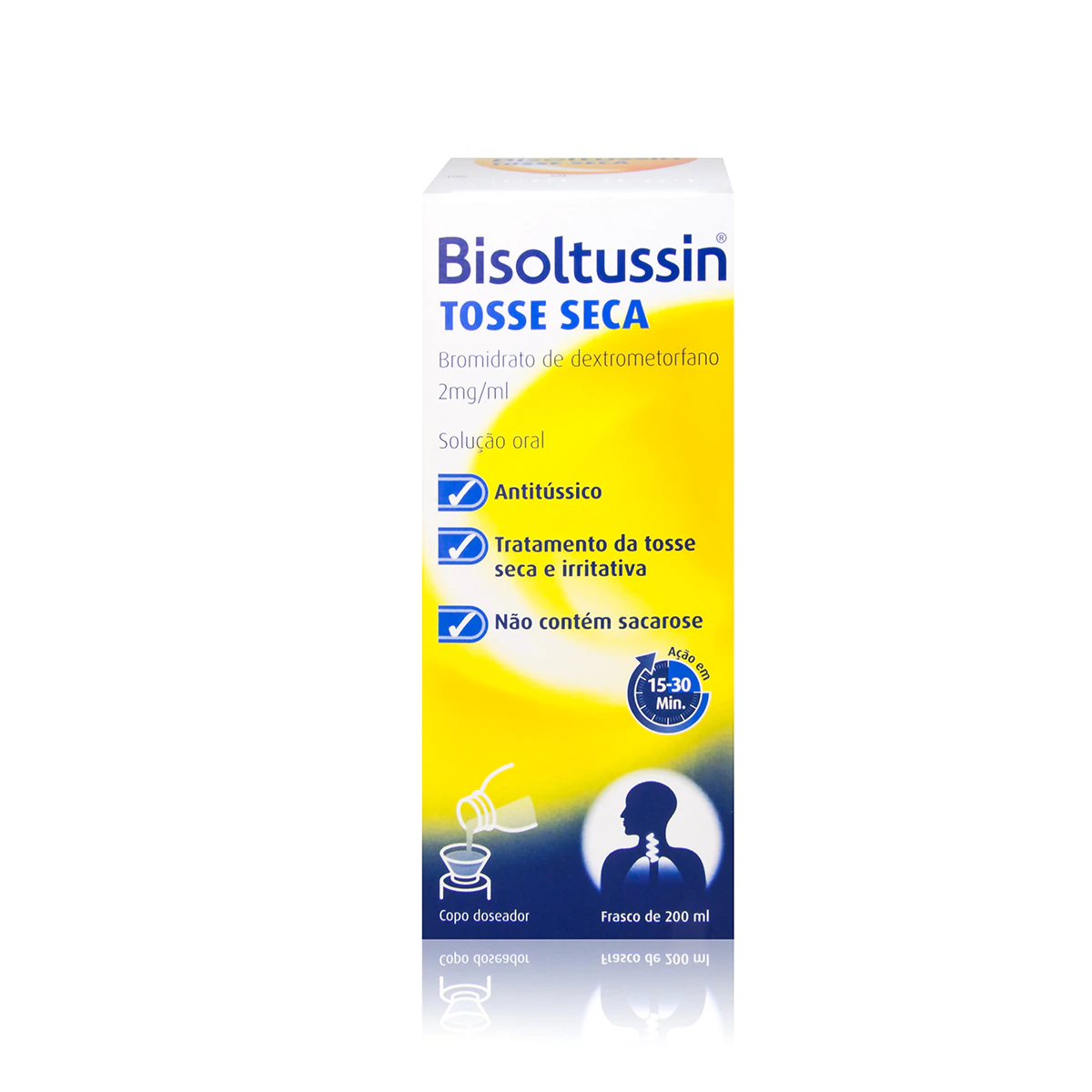
Bisoltussin is essentially a regional brand with a limited international footprint. Its marketing authorisation extends to just five countries — Vietnam, Portugal, Belgium, Indonesia, and Croatia — a mix of European and Southeast Asian markets rather than a single contiguous region. The active ingredient is dextromethorphan hydrobromide, classified as an antitussive within the broader category of cough and cold preparations.
Dextromethorphan is one of the most widely used cough-suppressant ingredients in the world, prescribed and sold for the symptomatic relief of cough — specifically the dry, non-productive type of cough that antitussive therapy is designed for. The structured indication block further down this page details the registered use recognised across the markets where Bisoltussin is sold under this specific brand name.
Travellers and expatriates familiar with Bisoltussin from one of its registered markets are unlikely to find the same brand on a pharmacy shelf elsewhere. The active ingredient itself, however, is broadly available internationally under a substantial number of other brand names, both as a single-ingredient cough syrup or lozenge and as one component of multi-symptom cold and flu formulations. A local pharmacist is well placed to identify which dextromethorphan-containing product corresponds to what the traveller is used to.
Other antitussive molecules also exist worldwide, and in some countries non-dextromethorphan cough preparations are more commonly stocked than dextromethorphan ones. Because cough has a wide range of underlying causes, and because a persistent cough sometimes calls for something other than suppression, the choice of product is best discussed with a pharmacist or treating clinician rather than made purely on brand familiarity.
Incompatibilities
None stated.
Preclinical safety data
There is no relevant information additional to that already contained elsewhere in the SmPC or of relevance to the prescriber.
Pharmacotherapeutic group
Cough suppressant
Pharmacodynamic properties
Dextromethorphan hydrobromide is a cough suppressant which has a central action on the cough centre in the medulla. It has no analgesic properties and little sedative activity.
Dextromethorphan
Pharmacotherapeutic group: Cough suppressant
ATC code: R05DA09
Pharmacokinetic properties
Dextromethorphan hydrobromide is well absorbed from the gastrointestinal tract.
Dextromethorphan undergoes rapid and extensive first-pass metabolism in the liver after oral administration. Genetically controlled O-demethylation (CYD2D6) is the main determinant of dextromethorphan pharmacokinetics in human volunteers.
It appears that there are distinct phenotypes for this oxidation process resulting in highly variable pharmacokinetics between subjects. Unmetabolised dextromethorphan, together with the three demethylated morphinan metabolites dextrorphan (also known as 3-hydroxy-N-methylmorphinan), 3- hydroxymorphinan and 3-methoxymorphinan have been identified as conjugated products in the urine.
Dextrorphan, which also has antitussive action, is the main metabolite. In some individuals metabolism proceeds more slowly and unchanged dextromethorphan predominates in the blood and urine.
Special precautions for disposal and other handling
No special requirements
ADMINISTRATIVE DATA