Home / Medicine / Beprosone

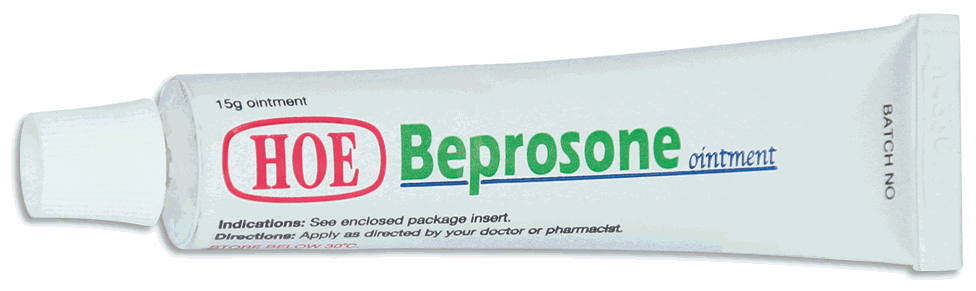
Beprosone

Travellers familiar with Beprosone from Southeast Asia are unlikely to encounter the same brand elsewhere — it is registered in only six countries. The brand's footprint sits almost entirely within Asia, covering Hong Kong, Singapore, Malaysia, Indonesia, the Philippines, and Pakistan, and it has not been broadly internationalised under this name into European, North American, or African markets.

The active ingredient in Beprosone is betamethasone dipropionate, a corticosteroid used in dermatological preparations and, more broadly, classified within the glucocorticoid family. Products based on this molecule are typically used in the management of inflammatory skin conditions such as dermatitis, psoriasis, and neurodermatitis, alongside other registered uses listed in the structured indication block on this page. The class as a whole carries anti-inflammatory, antiallergic, antipruritic, and immunosuppressive properties, which is why it appears across several different therapeutic settings.

Outside its core Asian markets, the Beprosone brand is rarely seen, but betamethasone dipropionate itself is widely available worldwide under a number of other brand names and as part of combination products. A traveller or expatriate moving between regions will usually find an equivalent corticosteroid preparation in the destination country, although the specific formulation, strength, and prescription pathway can vary considerably from one regulator to the next.

A local pharmacist is generally the most efficient first point of contact for translating a Beprosone prescription into a regionally available equivalent, whether that means an alternative brand of the same molecule or another corticosteroid in the same class. Decisions about starting, continuing, or substituting a corticosteroid should be made together with a healthcare provider familiar with the patient's situation.
How does this drug class actually work?
Read the plain-language explainer in Pharmacology Academy (H1 antihistamines) →

Frequently asked questions

What conditions does Beprosone treat?

Beprosone is prescribed for a range of conditions where corticosteroid therapy is appropriate, including inflammatory skin disorders such as dermatitis, psoriasis, and neurodermatitis, as well as other indications listed in the structured section of this page. Its active ingredient belongs to the glucocorticoid class, which carries anti-inflammatory, antiallergic, antipruritic, and immunosuppressive properties — the basis for its use across several therapeutic categories.

Which active substance is in Beprosone?

Beprosone contains betamethasone dipropionate, a corticosteroid used in dermatological preparations and classified more broadly within the glucocorticoid family. The same molecule circulates internationally under a number of different brand names and also appears in combination products alongside other ingredients, particularly in topical formulations addressing inflammatory skin conditions.

In how many countries is Beprosone available?

Beprosone is registered in six countries, all of them in Asia: Hong Kong, Singapore, Malaysia, Indonesia, the Philippines, and Pakistan. The brand has not been internationalised beyond this regional cluster. If you are looking for an equivalent in a country not listed here, a local pharmacist can usually identify a betamethasone-containing product or another suitable corticosteroid available in that market.

Are there other medications with the same active ingredient as Beprosone?

Betamethasone dipropionate is sold under several brand names worldwide, both as a single-ingredient product and as part of combination preparations, particularly for topical use. Other corticosteroids in the same broader class are also widely available internationally, although molecules within the class are not freely interchangeable. To identify a regional equivalent, search the active ingredient on Pill2Trip or ask a local pharmacist.

Is Beprosone a prescription medication?

Beprosone is a corticosteroid product, and corticosteroid therapy is generally calibrated to the patient's condition, the body area being treated, and concurrent health factors. Prescription rules differ from one country to another — a product available behind the counter in one market may require a prescription in another. Travellers and expatriates should confirm both the legal status and the appropriate equivalent with a healthcare provider or pharmacist locally.