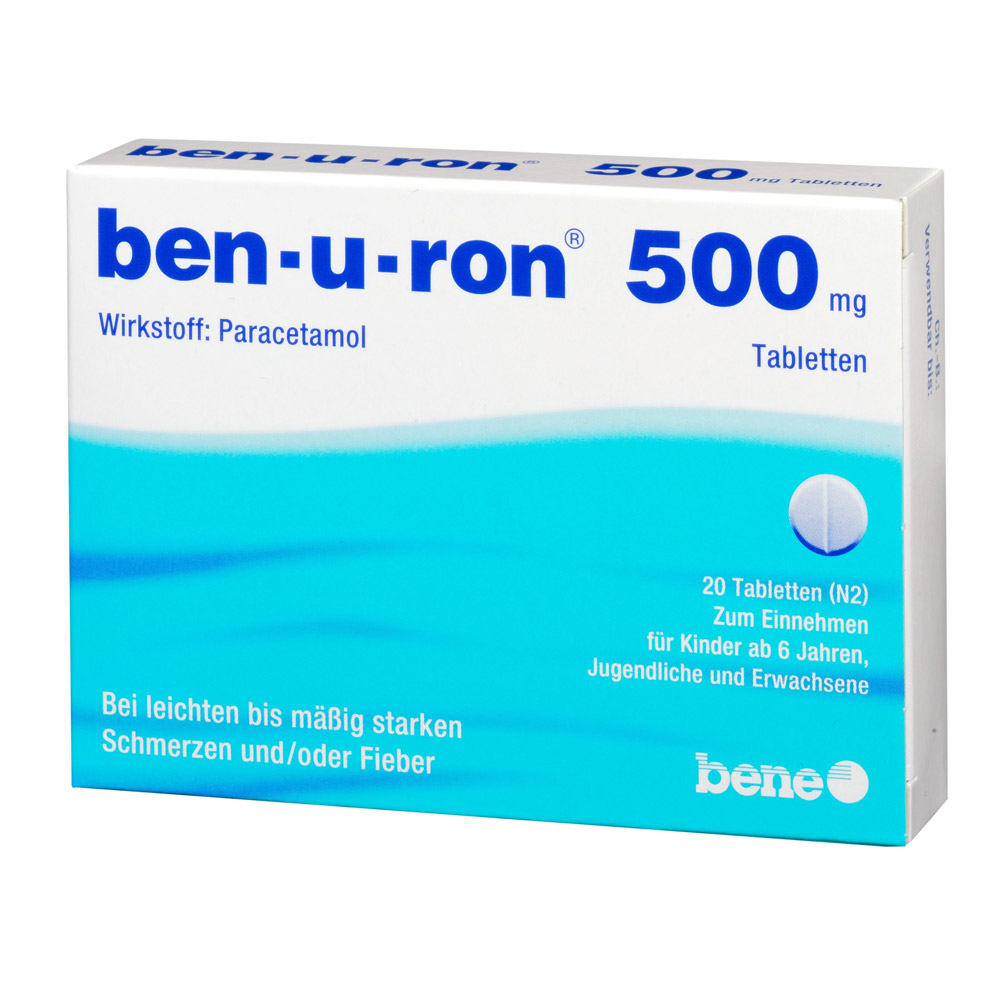
Ben-u-ron is essentially a regional brand. Its marketing authorisation extends to six countries clustered largely around German-speaking Central Europe, and its active ingredient is acetaminophen — the same molecule known internationally as paracetamol. Travellers who recognise Ben-u-ron from a pharmacy in Austria, Germany, or Switzerland will not generally see this specific brand on shelves further afield, even though the underlying ingredient is one of the most universally available analgesics in the world.
Acetaminophen is classified as an analgesic and antipyretic, and Ben-u-ron is used for the relief of pain and fever in a range of everyday situations — including headache, neuralgia, sore throat, backache, period pain, and the general aches associated with influenza. The structured indication block further down this page lists the registered uses recognised across the markets where Ben-u-ron is sold.
The brand's distribution reflects its origins: alongside Austria, Germany, Switzerland, and Hungary in Central Europe, Ben-u-ron also carries marketing authorisation in Cyprus and China. Outside this footprint the brand is unfamiliar, but acetaminophen itself circulates worldwide under a long list of other brand names and as a generic. A pharmacist in almost any country can identify a locally available acetaminophen-containing product, whether on prescription or over the counter depending on the regulatory regime.
Other analgesics and antipyretics — including molecules in the non-steroidal anti-inflammatory class — are also widely available globally and are sometimes used for similar everyday indications, though they are not freely interchangeable with acetaminophen. Anyone using Ben-u-ron at home and looking for an equivalent abroad, or seeing it prescribed in a new country, should make decisions about pain or fever management with input from a qualified healthcare provider.