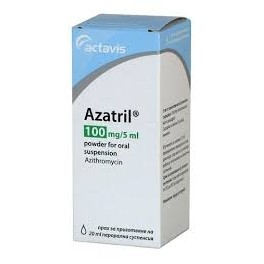
Travellers familiar with Azatril from parts of Central and Eastern Europe are unlikely to encounter the same brand elsewhere — it is registered in only eight countries. The footprint clusters across the Balkans and the Baltic region, with Vietnam as the one outlier outside Europe, covering markets such as Romania, Bulgaria, Lithuania, Macedonia, and Georgia.
The active ingredient in Azatril is azithromycin, a bactericidal antibiotic from the macrolide family. Azithromycin-containing products are prescribed for a range of bacterial infections, including community-acquired pneumonia, bronchitis, soft-tissue infections, middle-ear infections in both acute and chronic presentations, and Lyme disease. The structured indication block further down this page lists each registered use as recognised by the national regulators in the markets where Azatril is sold.
Outside its core regional markets, the Azatril brand itself is unfamiliar, but the underlying molecule is one of the most widely distributed antibiotics in the world. A traveller who has been prescribed Azatril at home and needs to continue or refill therapy abroad will almost always find azithromycin available in the destination country, although it will typically be under a different brand name or as a generic. A local pharmacist is well placed to act as translator between the home-country brand and the locally registered equivalent.
Other antibiotics in adjacent classes are also stocked internationally for overlapping indications, but they are not interchangeable with azithromycin without medical guidance — antibiotic choice depends on the specific infection, local resistance patterns, and patient history. Anyone taking Azatril, considering it, or trying to identify a regional substitute should rely on a healthcare provider to make the clinical call, with a pharmacist confirming which azithromycin product is on the local formulary.