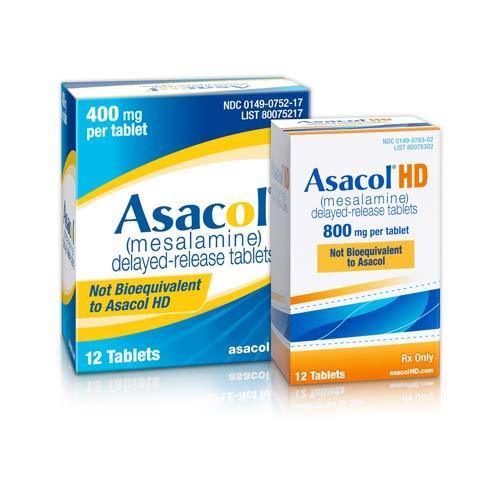
Asacol is a widely registered nonsteroidal anti-inflammatory preparation based on mesalazine, with marketing authorisation in 36 countries — a footprint that puts it in front of travellers and expatriates across Europe, North America, the Middle East, and parts of Asia. Its active ingredient is classified as a locally acting anti-inflammatory used in inflammatory bowel disease, and this page is written for international readers trying to match Asacol to what is available in the country they are currently in.
Mesalazine is prescribed in the management of ulcerative colitis and related inflammatory conditions of the colon, typically as a long-term controller medication aimed at reducing intestinal inflammation and maintaining remission. The structured indication list further down this page details the registered uses recognised across the markets where Asacol is sold.
Because Asacol is broadly distributed, travellers and expatriates often encounter the same molecule abroad — sometimes under the Asacol brand, sometimes as a different mesalazine-containing product in a different release format. Markets where Asacol is registered include Japan, Canada, Germany, Egypt, and Italy, but regulatory packaging, release profiles, and prescription pathways vary considerably between countries. A pharmacist in the destination market can confirm whether a locally available mesalazine product is an appropriate match.
Other medications within the same anti-inflammatory category used for inflammatory bowel disease also circulate internationally under various active ingredients and brand names, although they are not freely interchangeable. For anyone managing ulcerative colitis while crossing borders, decisions about substitution or continuation of therapy belong with a gastroenterologist or general practitioner who knows the patient's history, not with the pharmacy counter alone.
Overdose
There is no specific antidote.
Shelf life
3 years
Incompatibilities
Not applicable.
List of excipients
Witepsol W45 (Hard Fat).
Undesirable effects
The side effects are predominantly gastrointestinal, including nausea, diarrhoea and abdominal pain. Headache has also been reported.
There have been rare reports of leucopenia, neutropenia, agranulocytosis, aplastic anaemia and thrombocytopenia, alopecia, peripheral neuropathy, pancreatitis, abnormalities of hepatic function and hepatitis, myocarditis and pericarditis, allergic and fibrotic lung reactions, lupus erythematosus-like reactions and rash (including urticaria), interstitial nephritis and nephrotic syndrome with oral mesalazine treatment, usually reversible on withdrawal. Renal failure has been reported. Mesalazine-induced nephrotoxicity should be suspected in patients developing renal dysfunction during treatment.
Mesalazine may very rarely be associated with an exacerbation of the symptoms of colitis, Stevens Johnson syndrome and erythema multiforme.
Other side effects observed with sulphasalazine such as depression of sperm count and function, have not been reported with Asacol.
Rarely, local irritation may occur after administration of rectal dosage forms containing mesalazine.
Reporting of suspected adverse reactions
Reporting suspected adverse reactions after authorisation of the medicinal product is important. It allows continued monitoring of the benefit/risk balance of the medicinal product. Healthcare professionals are asked to report any suspected adverse reactions via the Yellow Card Scheme; website: www.mhra.gov.uk/yellowcard
Preclinical safety data
There are no preclinical data of relevance to the prescriber which are additional to that already included in other sections of the SPC.
Pharmacodynamic properties
Mesalazine is one of the two components of sulphasalazine, the other being sulphapyridine. It is the latter which is responsible for the majority of the side effects associated with sulphasalazine therapy whilst mesalazine is known to be the active moiety in the treatment of ulcerative colitis. Asacol consists only of this active component which is delivered directly by the suppositories.
Pharmacokinetic properties
The suppository is designed to deliver mesalazine directly to the proposed site of action in the distal bowel.
Date of revision of the text
February 2016
Marketing authorisation holder
Allergan Pharmaceuticals International Limited
Clonshaugh Industrial Estate
Coolock
Dublin 17
Ireland
Special precautions for storage
Store below 25°C. Protect from light.
Nature and contents of container
Cartoned plastic moulds (OP), each containing 20 suppositories.
Marketing authorisation number(s)
PL 45496/0003
Effects on ability to drive and use machines
Not applicable.
Special precautions for disposal and other handling
For rectal administration.
Date of first authorisation/renewal of the authorisation
20th April 1988 / 21st May 2002