Overdose
Overdoses, including doses up to 50 mg/day for 16 days, have been reported.
Immediate effects are likely to be vomiting, ulceration of the mouth, diarrhea,
and hemorrhage of the gastrointestinal tract. The principal toxic effect is
bone marrow suppression. Hematologic parameters should be closely followed for
3 to 6 weeks. An uncontrolled study suggests that administration of autologous
bone marrow or hematopoietic growth factors (i.e., sargramostim, filgrastim)
may shorten the period of pancytopenia. General supportive measures, together
with appropriate blood transfusions and antibiotics, should be instituted as
deemed necessary by the physician. This drug is not removed from plasma to any
significant degree by hemodialysis.
Contraindications
ALKERAN should not be used in patients whose disease has demonstrated a prior
resistance to this agent. Patients who have demonstrated hypersensitivity to
melphalan should not be given the drug.
Undesirable effects
Hematologic
The most common side effect is bone marrow suppression leading to leukopenia,
thrombocytopenia, and anemia. Although bone marrow suppression frequently occurs,
it is usually reversible if melphalan is withdrawn early enough. However, irreversible
bone marrow failure has been reported.
Gastrointestinal
Nausea, vomiting, diarrhea, and oral ulceration occur. Hepatic disorders ranging
from abnormal liver function tests to clinical manifestations such as hepatitis
and jaundice have been reported.
Miscellaneous
Other reported adverse reactions include: pulmonary fibrosis (including fatal
outcomes) and interstitial pneumonitis, skin hypersensitivity, maculopapular
rashes, vasculitis, alopecia, and hemolytic anemia. Allergic reactions, including
urticaria, edema, skin rashes, and rare anaphylaxis, have occurred after multiple
courses of treatment. Cardiac arrest has also been reported rarely in association
with such reports.
Therapeutic indications
ALKERAN (melphalan) Tablets are indicated for the palliative treatment of multiple myeloma and for the palliation of non-resectable epithelial carcinoma of the ovary.
Fertility, pregnancy and lactation
Pregnancy Category D. ALKERAN may cause fetal harm when administered to a pregnant
woman. Melphalan was embryolethal and teratogenic in rats following oral (6
to 18 mg/m²/day for 10 days) and intraperitoneal (18 mg/m²) administration.
Malformations resulting from melphalan included alterations of the brain (underdevelopment,
deformation, meningocele, and encephalocele) and eye (anophthalmia and microphthalmos),
reduction of the mandible and tail, as well as hepatocele (exomphaly).
There are no adequate and well-controlled studies in pregnant women. If this
drug is used during pregnancy, or if the patient becomes pregnant while taking
this drug, the patient should be apprised of the potential hazard to the fetus.
Women of childbearing potential should be advised to avoid becoming pregnant.
PRECAUTIONS
Qualitative and quantitative composition
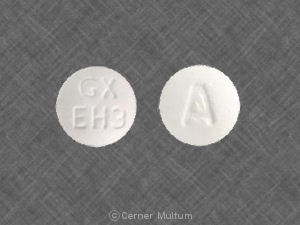
ALKERAN (melphalan) is supplied as white, film-coated, round, biconvex tablets containing
2 mg melphalan in amber glass bottles with child-resistant closures. One side
is engraved with "GX EH3" and the other side is engraved with an "A."
Bottle of 50 (NDC 59572-302-50).
Store in a refrigerator, 2° to 8° C (36° to 46° F). Protect from light.
REFERENCES
1. ONS Clinical Practice Committee. Cancer Chemotherapy Guidelines and Recommendations
for Practice. Pittsburgh, PA: Oncology Nursing Society;1999:32-41.
2. Recommendations for the safe handling of parenteral antineoplastic drugs.
Washington, DC: Division of Safety, Clinical Center Pharmacy Department and
Cancer Nursing Services, National Institutes of Health; 1992. US Dept of Health
and Human Services. Public Health Service publication NIH 92-2621.
3. AMA Council on Scientific Affairs. Guidelines for handling parenteral antineoplastics.
JAMA. 1985;253:1590-1591.
4. National Study Commission on Cytotoxic Exposure. Recommendations for handling
cytotoxic agents. 1987. Available from Louis P. Jeffrey, Chairman, National
Study Commission on Cytotoxic Exposure. Massachusetts College of Pharmacy and
Allied Health Sciences, 179 Longwood Avenue, Boston, MA 02115.
5. Clinical Oncological Society of Australia. Guidelines and recommendations
for safe handling of antineoplastic agents. Med J Australia. 1983;1:426-428.
6. Jones RB, Frank R, Mass T. Safe handling of chemotherapeutic agents: a report
from the Mount Sinai Medical Center. CA-A Cancer J for Clin. 1983;33:258-263.
7. American Society of Hospital Pharmacists. ASHP technical assistance bulletin
on handling cytotoxic and hazardous drugs. Am J Hosp Pharm. 1990;47:1033-1049.
8. Controlling Occupational Exposure to Hazardous Drugs. (OSHA Work-Practice
Guidelines.) Am J Health-Syst Pharm. 1996;53:1669-1685.
GlaxoSmithKline, Research Triangle Park, NC 27709. Distributed
by Celgene Corporation Summit, NJ 07901. June 2007. FDA Rev date: 6/9/2005
Special warnings and precautions for use
WARNINGS
ALKERAN should be administered in carefully adjusted dosage by or under
the supervision of experienced physicians who are familiar with the drug's actions
and the possible complications of its use.
As with other nitrogen mustard drugs, excessive dosage will produce marked
bone marrow suppression. Bone marrow suppression is the most significant toxicity
associated with ALKERAN in most patients. Therefore, the following tests should
be performed at the start of therapy and prior to each subsequent course of
ALKERAN: platelet count, hemoglobin, white blood cell count, and differential.
Thrombocytopenia and/or leukopenia are indications to withhold further therapy
until the blood counts have sufficiently recovered. Frequent blood counts are
essential to determine optimal dosage and to avoid toxicity (see PRECAUTIONS:
Laboratory Tests). Dose adjustment on the basis of blood counts at the
nadir and day of treatment should be considered.
Hypersensitivity reactions, including anaphylaxis, have occurred rarely (see
ADVERSE REACTIONS). These reactions have occurred after multiple courses
of treatment and have recurred in patients who experienced a hypersensitivity
reaction to IV ALKERAN. If a hypersensitivity reaction occurs, oral or IV ALKERAN
should not be readministered.
Carcinogenesis
Secondary malignancies, including acute nonlymphocytic leukemia, myeloproliferative
syndrome, and carcinoma have been reported in patients with cancer treated with
alkylating agents (including melphalan). Some patients also received other chemotherapeutic
agents or radiation therapy. Precise quantitation of the risk of acute leukemia,
myeloproliferative syndrome, or carcinoma is not possible. Published reports
of leukemia in patients who have received melphalan (and other alkylating agents)
suggest that the risk of leukemogenesis increases with chronicity of treatment
and with cumulative dose. In one study, the 10-year cumulative risk of developing
acute leukemia or myeloproliferative syndrome after melphalan therapy was 19.5%
for cumulative doses ranging from 730 mg to 9,652 mg. In this same study, as
well as in an additional study, the 10-year cumulative risk of developing acute
leukemia or myeloproliferative syndrome after melphalan therapy was less than
2% for cumulative doses under 600 mg. This does not mean that there is a cumulative
dose below which there is no risk of the induction of secondary malignancy.
The potential benefits from melphalan therapy must be weighed on an individual
basis against the possible risk of the induction of a second malignancy.
Adequate and well-controlled carcinogenicity studies have not been conducted
in animals. However, i.p. administration of melphalan in rats (5.4 to 10.8 mg/m²)
and in mice (2.25 to 4.5 mg/m²) 3 times per week for 6 months followed
by 12 months post-dose observation produced peritoneal sarcoma and lung tumors,
respectively.
Mutagenesis
ALKERAN has been shown to cause chromatid or chromosome damage in humans. Intramuscular
administration of ALKERAN at 6 and 60 mg/m² produced structural aberrations
of the chromatid and chromosomes in bone marrow cells of Wistar rats.
Impairment of Fertility
ALKERAN causes suppression of ovarian function in premenopausal women, resulting
in amenorrhea in a significant number of patients. Reversible and irreversible
testicular suppression have also been reported.
Pregnancy
Pregnancy Category D. ALKERAN may cause fetal harm when administered to a pregnant
woman. Melphalan was embryolethal and teratogenic in rats following oral (6
to 18 mg/m²/day for 10 days) and intraperitoneal (18 mg/m²) administration.
Malformations resulting from melphalan included alterations of the brain (underdevelopment,
deformation, meningocele, and encephalocele) and eye (anophthalmia and microphthalmos),
reduction of the mandible and tail, as well as hepatocele (exomphaly).
There are no adequate and well-controlled studies in pregnant women. If this
drug is used during pregnancy, or if the patient becomes pregnant while taking
this drug, the patient should be apprised of the potential hazard to the fetus.
Women of childbearing potential should be advised to avoid becoming pregnant.
PRECAUTIONS
General
In all instances where the use of ALKERAN is considered for chemotherapy, the
physician must evaluate the need and usefulness of the drug against the risk
of adverse events. ALKERAN should be used with extreme caution in patients whose
bone marrow reserve may have been compromised by prior irradiation or chemotherapy,
or whose marrow function is recovering from previous cytotoxic therapy. If the
leukocyte count falls below 3,000 cells/mcL, or the platelet count below 100,000
cells/mcL, ALKERAN should be discontinued until the peripheral blood cell counts
have recovered.
A recommendation as to whether or not dosage reduction should be made routinely
in patients with renal insufficiency cannot be made because:
- There is considerable inherent patient-to-patient variability in the systemic
availability of melphalan in patients with normal renal function.
- Only a small amount of the administered dose appears as parent drug in the
urine of patients with normal renal function.
Patients with azotemia should be closely observed, however, in order to make
dosage reductions, if required, at the earliest possible time.
Administration of live vaccines to immunocompromised patients should be avoided.
Laboratory Tests
Periodic complete blood counts with differentials should be performed during
the course of treatment with ALKERAN. At least one determination should be obtained
prior to each treatment course. Patients should be observed closely for consequences
of bone marrow suppression, which include severe infections, bleeding, and symptomatic
anemia (see WARNINGS).
Carcinogenesis, Mutagenesis, Impairment of Fertility
See WARNINGS section.
Pregnancy
Teratogenic Effects
Pregnancy Category D: See WARNINGS section.
Nursing Mothers
It is not known whether this drug is excreted in human milk. ALKERAN should
not be given to nursing mothers.
Pediatric Use
The safety and effectiveness of ALKERAN in pediatric patients have not been
established.
Geriatric Use
Clinical studies of ALKERAN Tablets did not include sufficient numbers of subjects
aged 65 and over to determine whether they respond differently from younger
subjects. Other reported clinical experience has not identified differences
in responses between the elderly and younger patients. In general, dose selection
for an elderly patient should be cautious, usually starting at the low end of
the dosing range, reflecting the greater frequency of decreased hepatic, renal,
or cardiac function, and of concomitant disease or other drug therapy.
Dosage (Posology) and method of administration
Multiple Myeloma: The usual oral dose is 6 mg (3 tablets) daily. The
entire daily dose may be given at one time. The dose is adjusted, as required,
on the basis of blood counts done at approximately weekly intervals. After 2
to 3 weeks of treatment, the drug should be discontinued for up to 4 weeks,
during which time the blood count should be followed carefully. When the white
blood cell and platelet counts are rising, a maintenance dose of 2 mg daily
may be instituted. Because of the patient-to-patient variation in melphalan
plasma levels following oral administration of the drug, several investigators
have recommended that the dosage of ALKERAN (melphalan) be cautiously escalated until some
myelosuppression is observed in order to assure that potentially therapeutic
levels of the drug have been reached.
Other dosage regimens have been used by various investigators. Osserman and
Takatsuki have used an initial course of 10 mg/day for 7 to 10 days. They report
that maximal suppression of the leukocyte and platelet counts occurs within
3 to 5 weeks and recovery within 4 to 8 weeks. Continuous maintenance therapy
with 2 mg/day is instituted when the white blood cell count is greater than
4,000 cells/mcL and the platelet count is greater than 100,000 cells/mcL. Dosage
is adjusted to between 1 and 3 mg/day depending upon the hematological response.
It is desirable to try to maintain a significant degree of bone marrow depression
so as to keep the leukocyte count in the range of 3,000 to 3,500 cells/mcL.
Hoogstraten et al have started treatment with 0.15 mg/kg/day for 7 days. This
is followed by a rest period of at least 14 days, but it may be as long as 5
to 6 weeks. Maintenance therapy is started when the white blood cell and platelet
counts are rising. The maintenance dose is 0.05 mg/kg/day or less and is adjusted
according to the blood count.
Available evidence suggests that about one third to one half of the patients
with multiple myeloma show a favorable response to oral administration of the
drug.
One study by Alexanian et al has shown that the use of ALKERAN (melphalan) in combination
with prednisone significantly improves the percentage of patients with multiple
myeloma who achieve palliation. One regimen has been to administer courses of
ALKERAN (melphalan) at 0.25 mg/kg/day for 4 consecutive days (or, 0.20 mg/kg/day for 5 consecutive
days) for a total dose of 1 mg/kg/course. These 4- to 5-day courses are then
repeated every 4 to 6 weeks if the granulocyte count and the platelet count
have returned to normal levels.
It is to be emphasized that response may be very gradual over many months;
it is important that repeated courses or continuous therapy be given since improvement
may continue slowly over many months, and the maximum benefit may be missed
if treatment is abandoned too soon.
In patients with moderate to severe renal impairment, currently available pharmacokinetic
data do not justify an absolute recommendation on dosage reduction to those
patients, but it may be prudent to use a reduced dose initially.
Epithelial Ovarian Cancer: One commonly employed regimen for the treatment
of ovarian carcinoma has been to administer ALKERAN (melphalan) at a dose of 0.2 mg/kg daily
for 5 days as a single course. Courses are repeated every 4 to 5 weeks depending
upon hematologic tolerance.
Administration Precautions: Procedures for proper handling and disposal
of anticancer drugs should be considered. Several guidelines on this subject
have been published.1-8 There is no general agreement that all of
the procedures recommended in the guidelines are necessary or appropriate.
Interaction with other medicinal products and other forms of interaction
SIDE EFFECTS
Hematologic
The most common side effect is bone marrow suppression leading to leukopenia,
thrombocytopenia, and anemia. Although bone marrow suppression frequently occurs,
it is usually reversible if melphalan is withdrawn early enough. However, irreversible
bone marrow failure has been reported.
Gastrointestinal
Nausea, vomiting, diarrhea, and oral ulceration occur. Hepatic disorders ranging
from abnormal liver function tests to clinical manifestations such as hepatitis
and jaundice have been reported.
Miscellaneous
Other reported adverse reactions include: pulmonary fibrosis (including fatal
outcomes) and interstitial pneumonitis, skin hypersensitivity, maculopapular
rashes, vasculitis, alopecia, and hemolytic anemia. Allergic reactions, including
urticaria, edema, skin rashes, and rare anaphylaxis, have occurred after multiple
courses of treatment. Cardiac arrest has also been reported rarely in association
with such reports.
DRUG INTERACTIONS
There are no known drug/drug interactions with oral ALKERAN.